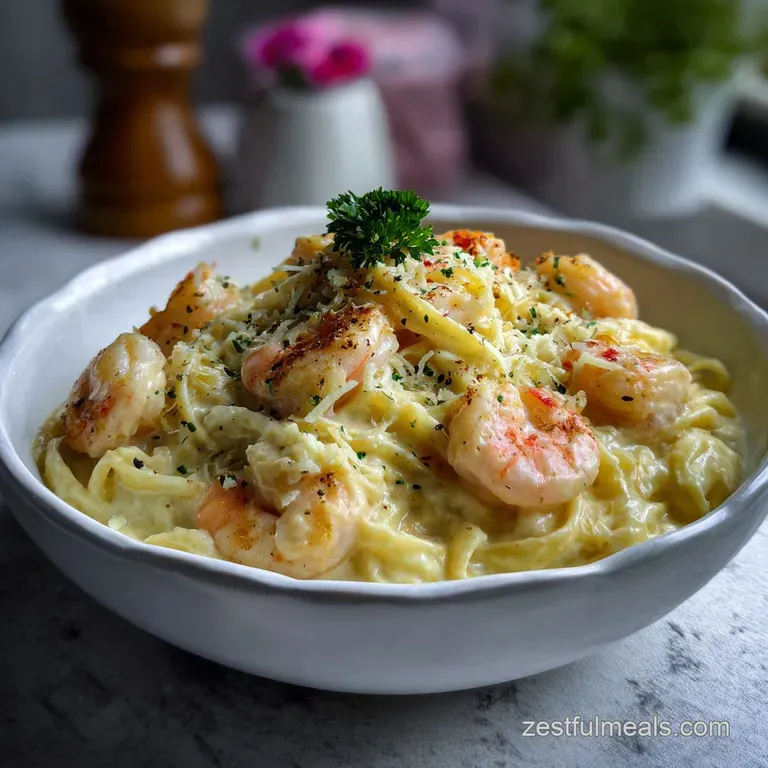
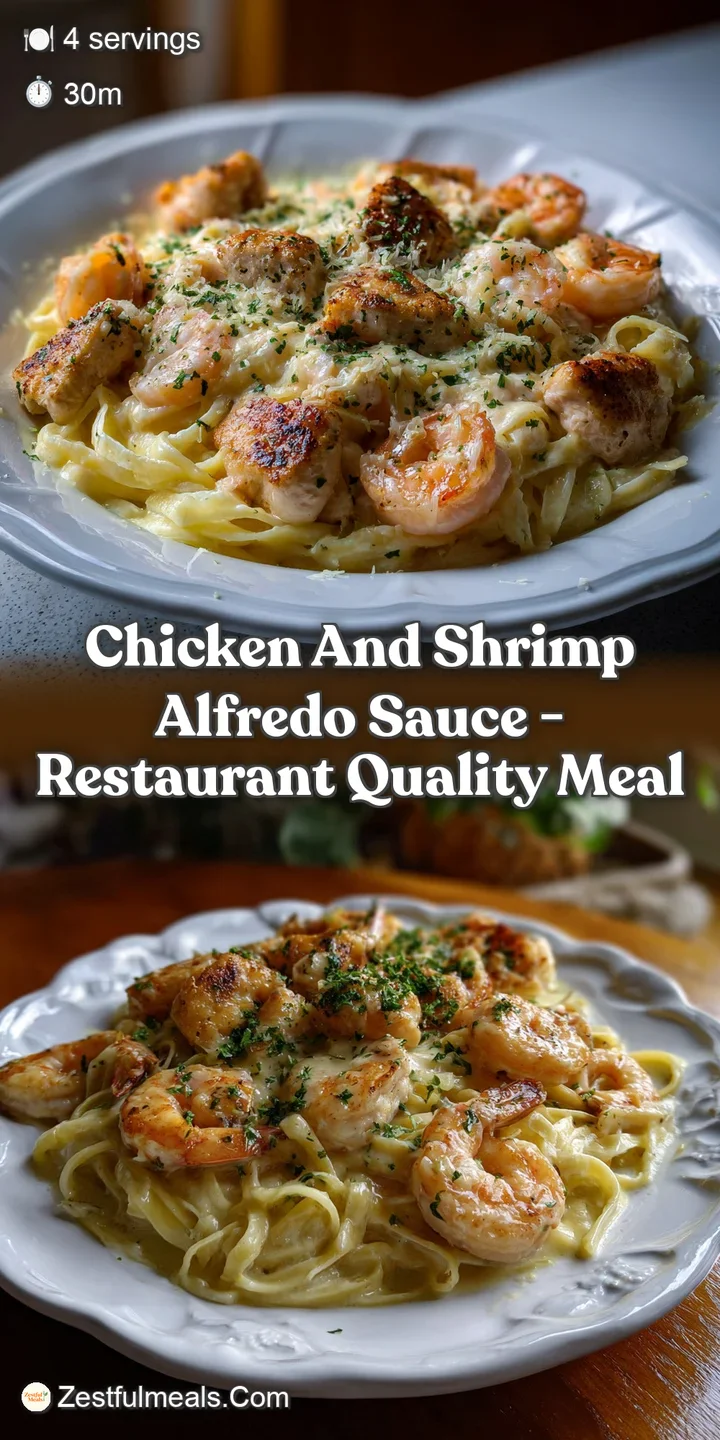
Restaurant Style Chicken and Shrimp Alfredo
- Time: Active 15 minutes, Passive 15 minutes, Total 30 minutes
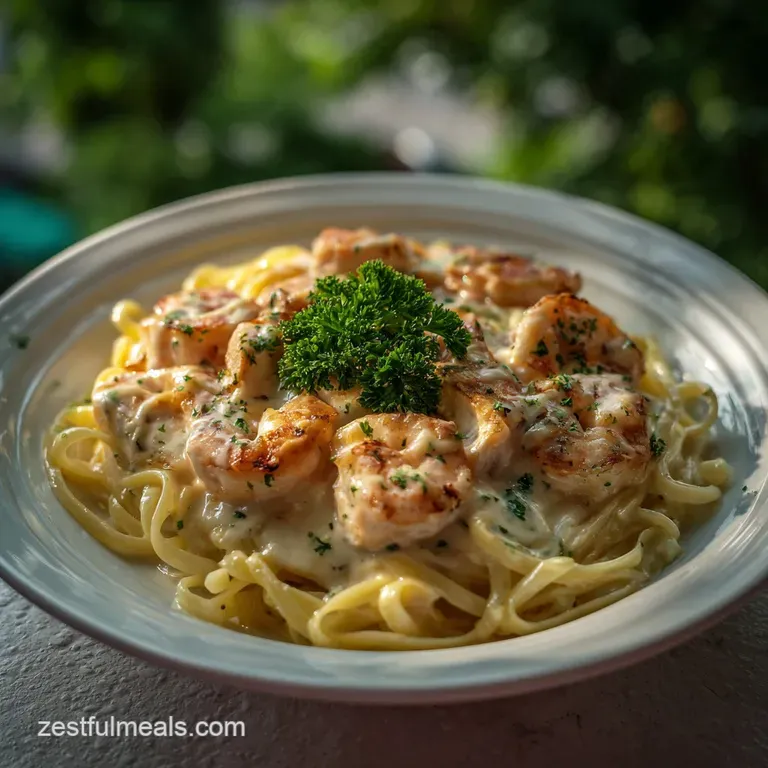
- Flavor/Texture Hook: Shatter crisp seared chicken meets tender, buttery shrimp in a garlicky cream sauce.
- Perfect for: Busy weeknight dinners where you need a big win with minimal cleanup.
- Make Your Own chicken and shrimp alfredo sauce
- The Science of Silky Results
- Essential Statistics for This Recipe
- Quality Ingredients for Family Meals
- Simple Tools for Busy Cooks
- Step by Step Success
- Avoiding the Gritty Texture Trap
- Fresh Variations to Try
- Storing and Warming Instructions
- Sides for a Complete Meal
- Solving Common Cooking Myths
- Recipe FAQs
- 📝 Recipe Card
Make Your Own chicken and shrimp alfredo sauce
Imagine the sizzle as the shrimp hits the hot butter, turning pink and curled in seconds while the aroma of toasted garlic fills your kitchen. We have all been there, standing over a stove on a Tuesday night, wondering if we can actually pull off a meal that feels special without spending two hours doing dishes.
This chicken and shrimp alfredo sauce is my personal answer to that "nothing in the fridge" panic, even though it tastes like it cost forty dollars at a bistro.
The beauty here lies in the contrast between the seasoned chicken and the delicate shrimp. Most people worry about overcooking the seafood or ending up with a sauce that looks more like oil than cream, but we are going to fix that.
By the time you finish this, you will have a silky, gold flecked sauce that clings to every bite of protein.
Right then, let's get into the details of why this works so well for a hungry family. We are using heavy cream and real Parmigiano Reggiano because, honestly, don't even bother with low-fat cheese here. It won't melt right, and you deserve the real deal.
Trust me on this, the fat content is exactly what keeps the texture from becoming gritty.
The Science of Silky Results
The Emulsification Secret
To get that velvety finish, we rely on emulsification, which is just a fancy way of saying we are forcing fat and water to be friends. The proteins in the Parmigiano Reggiano act as a bridge, holding the heavy cream and butter together so they don't separate into a greasy mess.
If the heat is too high when you add the cheese, those proteins tighten up and squeeze out the fat, which is exactly why some sauces turn "broken" or oily.
The Maillard Reaction Base
When we sear the chicken strips in the pan, we are looking for that golden brown crust. This is the Maillard reaction, a chemical dance between amino acids and reducing sugars. It doesn't just look good, it creates a deep, savory foundation that flavors the entire sauce.
This is also why we don't crowd the pan, because if the chicken steams instead of sears, you lose all that complex flavor.
Protein Denaturation and Timing
Shrimp and chicken cook at vastly different speeds. Chicken needs more time to reach a safe internal temperature, while shrimp can turn into rubbery little hockey pucks if they spend more than three minutes in the heat.
By cooking them separately and then folding them back into the finished sauce, we ensure both stay tender and juicy.
Essential Statistics for This Recipe
| Feature | Requirement |
|---|---|
| Chicken Temp | 165°F (Internal) |
| Shrimp Texture | Opaque and "C" shaped |
| Sauce Consistency | Coats the back of a spoon |
Scaling for Your Family
If you need to feed a larger crowd, scaling up is pretty straightforward. For a 2x batch, increase the spices and salt to only 1.5x to avoid over seasoning, as salt can become aggressive in larger volumes. Work in batches when searing the proteins to maintain pan heat.
If you are scaling down to half, reduce the cooking time by about 20% since a smaller volume of sauce will thicken much faster in a wide pan.
Quality Ingredients for Family Meals
Selecting the right components makes the difference between a bland meal and a favorite. I usually grab Tyson Chicken Breasts because they are easy to slice into those thin, bite sized strips that cook quickly.
For the butter, Land O'Lakes Unsalted Butter is my go to so I can control the salt level myself.
- 1 lb chicken breast: Sliced into thin bite sized strips Why this? Quick cooking ensures the meat stays juicy, not dry. (Substitute: Chicken thighs for more fat/flavor).
- 1 lb large shrimp: Peeed and deveined Why this? Large shrimp provide a better texture against the chicken. (Substitute: Bay scallops).
- 1 tsp McCormick Smoked Paprika: Why this? Adds a subtle earthiness and color to the sauce. (Substitute: Sweet paprika).
- 1 tsp garlic powder: Why this? Coats the meat more evenly than fresh garlic during searing. (Substitute: Onion powder).
- 0.5 tsp salt: Why this? Standard seasoning to draw out natural protein flavors. (Substitute: Sea salt).
- 0.5 tsp black pepper: Why this? Adds a sharp bite to cut through the cream. (Substitute: White pepper).
- 2 cups heavy whipping cream: Why this? High fat content is required for a stable emulsion. (Substitute: Full fat coconut milk - adds nutty/tropical notes).
- 0.5 cup unsalted butter: Why this? Provides the richness and "mouthfeel" of classic Alfredo. (Substitute: Margarine - results in less depth).
- 4 cloves garlic: Minced Why this? Fresh garlic provides a pungent, aromatic base for the cream. (Substitute: Jarred minced garlic).
- 0.5 tsp freshly grated nutmeg: Why this? This is the secret "restaurant" ingredient for cream sauces. (Substitute: Mace).
- 1.5 cups freshly grated Parmigiano Reggiano: Why this? high-quality aged cheese melts smoother than pre shredded bags. (Substitute: Pecorino Romano - adds a saltier, sharper tang).
- 0.25 cup fresh Italian parsley: Why this? Cuts through the richness with a bright, herbal finish. (Substitute: Fresh basil).
Ingredient Deep Dive
| Ingredient | Science Role | Pro Secret |
|---|---|---|
| Heavy Cream | Fat in-water emulsion | Use room temp cream to prevent the sauce from breaking. |
| Parmigiano Reggiano | Protein stabilizer | Grate it yourself; pre shredded has cornstarch that ruins texture. |
| Smoked Paprika | Surface caramelization | Pat chicken dry before seasoning to help it stick and sear. |
Simple Tools for Busy Cooks
You don't need a kitchen full of gadgets for this. I use a Lodge 12 inch Enameled Cast Iron Skillet because it holds heat beautifully, ensuring the chicken sears rather than boils.
A simple KitchenAid Garlic Press saves me a ton of time on the prep work, and a Microplane Zester is the best tool for getting that Parmigiano Reggiano into a fine fluff that melts instantly.
If you don't have a cast iron skillet, a heavy bottomed stainless steel pan works too. Just stay away from thin aluminum pans; they have "hot spots" that will burn your garlic before the cream even gets warm.
step-by-step Success
- Season the proteins. Toss your 1 lb chicken strips and 1 lb shrimp with the 1 tsp smoked paprika, 1 tsp garlic powder, 0.5 tsp salt, and 0.5 tsp black pepper. Note: This creates a flavorful crust during searing.
- Sear the chicken. Heat a splash of oil in your skillet over medium high heat. Add chicken and cook for 5-6 minutes until golden and no longer pink. Remove and set aside.
- Sizzle the shrimp. In the same pan, add the shrimp. Cook for 2-3 minutes until they turn opaque and pink. Note: Don't overcook or they will get rubbery. Remove and set aside with the chicken.
- Melt the butter. Reduce heat to medium and add the 0.5 cup unsalted butter. Wait until the foam subsides.
- Aromatize the garlic. Stir in the 4 cloves of minced garlic. Cook for 1 minute until fragrant but not browned.
- Pour the cream. Gradually whisk in the 2 cups heavy whipping cream. Bring to a gentle simmer.
- Thicken the base. Let the cream simmer for 3-5 minutes until it slightly reduces and coats a spoon.
- Add the aromatics. Stir in the 0.5 tsp nutmeg. Note: This adds that classic Italian depth.
- Emulsify the cheese. Turn the heat to low. Whisk in the 1.5 cups Parmigiano Reggiano in small handfuls until completely melted and smooth.
- Combine and garnish. Fold the cooked chicken and shrimp back into the sauce. Sprinkle with 0.25 cup Italian parsley and serve immediately until the sauce is glossy and warm.
Avoiding the Gritty Texture Trap
Nothing ruins a meal like a sauce that feels like sand on your tongue. This usually happens because the cheese was added to a boiling liquid, causing the proteins to clump.
The Gritty Sauce Trap
If your sauce is gritty, it’s likely because the cheese didn't melt properly. This happens when you use "shaker" cheese or pre shredded blends. The cellulose they add to prevent clumping in the bag also prevents it from melting into a smooth liquid.
Three Signs Shrimp is Done
Watch for the "C" shape. A "U" is undercooked, a "C" is perfect, and an "O" is overcooked. Look for a matte pink color and a firm, but not hard, texture. If you've ever made a Shrimp Stir Fry recipe, you know that the transition from perfect to overdone happens in a blink.
The Heat Management Rule
Never boil the sauce once the cheese is in. High heat is for searing the meat; low, gentle heat is for the dairy. This is a common technique I use in my Chicken Salad Sandwich recipe when mixing mayo based bases to keep them from separating.
| Problem | Cause | Fix | Pro Tip |
|---|---|---|---|
| Sauce is too thin | Not simmered long enough | Simmer 2 more mins before adding cheese | Whisk constantly to avoid burning |
| Sauce is greasy | Heat was too high | Add a splash of cold cream and whisk | Use a heavy bottomed pan |
| Chicken is tough | Overcooked or sliced too thick | Cut into 1/2 inch strips | Use a meat thermometer |
Fresh Variations to Try
The Cajun Kick
If your family likes a bit of heat, swap the smoked paprika for two teaspoons of Cajun seasoning. It pairs brilliantly with the shrimp and gives the sauce a beautiful orange hue. This variation reminds me of the bold flavors in a quick Lunch Wraps recipe.
The Garden Twist
For some extra nutrition, stir in two cups of fresh baby spinach at the very end. The residual heat from the cream will wilt the greens in about thirty seconds, adding color and fiber without changing the flavor profile significantly.
Fresh vs. Frozen Shrimp
Honestly, unless you live on the coast, "fresh" shrimp at the counter is often just thawed frozen shrimp. Buying high-quality frozen, shell on shrimp and thawing them yourself usually results in a better snap.
Storing and Warming Instructions
Store any leftovers in an airtight container in the fridge for up to 3 days. I don't recommend freezing this sauce. Because it is a high fat dairy emulsion, it will likely separate and become grainy when thawed, losing that velvety texture we worked so hard for.
Stovetop vs. Oven Reheating
| Method | Time | Best For | Result |
|---|---|---|---|
| Stovetop | 5 mins | Small portions | Best texture; allows you to add milk to loosen. |
| Oven | 15 mins | Large batches | Cover with foil to prevent the top from drying out. |
When reheating on the stove, add a tablespoon of milk or water to the pan first. Use low heat and stir constantly. This "shocks" the fat back into the liquid and prevents the butter from pooling at the bottom.
Sides for a Complete Meal
While this sauce is the star, you need something to soak it up. The classic choice is fettuccine pasta, cooked al dente so it has a bit of "tooth" to it. If you want to keep things lighter, this sauce is incredible over roasted spaghetti squash or even steamed broccoli.
Actually, it pairs perfectly with a Broccoli Casserole recipe if you want to double down on the comfort food vibes. For a low carb alternative, try serving the chicken and shrimp over a bed of sautéed zoodles. The crunch of the zucchini offers a nice break from the rich, heavy sauce.
Chef's Note: Freeze your block of Parmigiano Reggiano for 10 minutes before grating. It makes the cheese firmer and prevents it from gumming up your grater, giving you those perfect, airy shreds.
Solving Common Cooking Myths
Myth: Adding oil to the pasta water prevents sticking. This is a mistake I once made! The oil actually creates a slick coating on the pasta, which prevents this beautiful and shrimp alfredo sauce from clinging to the noodles.
Instead, just use a large pot with plenty of salted water and give it a stir in the first two minutes.
Myth: You must wash your chicken before cooking. Please don't do this. Washing chicken just splashes bacteria around your sink and counters. The heat of the pan is what kills any bacteria, and patting the chicken dry with paper towels is the real secret to getting that golden sear.
Myth: Searing meat "seals in" the juices. Moisture loss happens no matter what. The real reason we sear the chicken in this shrimp alfredo sauce is purely for the flavor development of the crust. If you want juicy chicken, the secret is not overcooking it, not the sear itself.
Decision Shortcut: If you want a thicker sauce, whisk in an extra 1/4 cup of cheese at the end. If you want a lighter feel, use half and half (just be aware it may be slightly thinner).
If you want maximum flavor, use the fond (brown bits) left in the pan after searing the chicken to start your sauce.
This homemade chicken and shrimp alfredo sauce is a staple in our house because it’s fast, reliable, and everyone cleans their plate. Whether it's a hectic Monday or a quiet Sunday, the combination of garlicky cream and perfectly cooked proteins never fails.
Give it a try, and you'll see why we stopped ordering this at restaurants years ago!
Recipe FAQs
Can I substitute low-fat cream or milk for the heavy whipping cream?
No, this is not recommended. low-fat dairy lacks the necessary fat content to form a stable, velvety emulsion when combined with butter and cheese.
What is the main reason Alfredo sauce turns greasy or "broken"?
The heat was too high when the cheese was added. If the temperature spikes, the cheese proteins tighten up and squeeze out the fat, causing separation.
How far in advance can I safely cook the chicken and shrimp?
You can season the proteins up to 4 hours ahead. For the best texture, cook them just before assembling the sauce, as cooked seafood can dry out quickly.
Is it necessary to use freshly grated Parmigiano Reggiano?
Yes, absolutely necessary for best results. Pre-shredded cheese contains anti caking agents like cellulose that prevent it from melting smoothly into the sauce.
How do I ensure the shrimp and chicken are both tender when finished?
Cook them separately and only add them back at the very end. Shrimp require much less time than chicken, so pull them out once they are opaque and "C" shaped.
Can I make a large batch of this sauce and freeze the leftovers?
No, freezing is generally not advised for this specific sauce. High fat dairy emulsions tend to separate and become grainy upon thawing, ruining the smooth texture.
What is the single most important ingredient for that "restaurant" taste?
Freshly grated nutmeg is the secret ingredient. It adds a warmth and complexity that cuts through the richness of the cream and butter base.
Chicken Shrimp Alfredo Sauce
Ingredients:
Instructions:
Nutrition Facts:
| Calories | 1074 kcal |
|---|---|
| Protein | 79.8 g |
| Fat | 81.3 g |
| Carbs | 5.1 g |
| Fiber | 0.4 g |
| Sugar | 3.2 g |
| Sodium | 985 mg |
