Cinnamon Roll Casserole Recipe
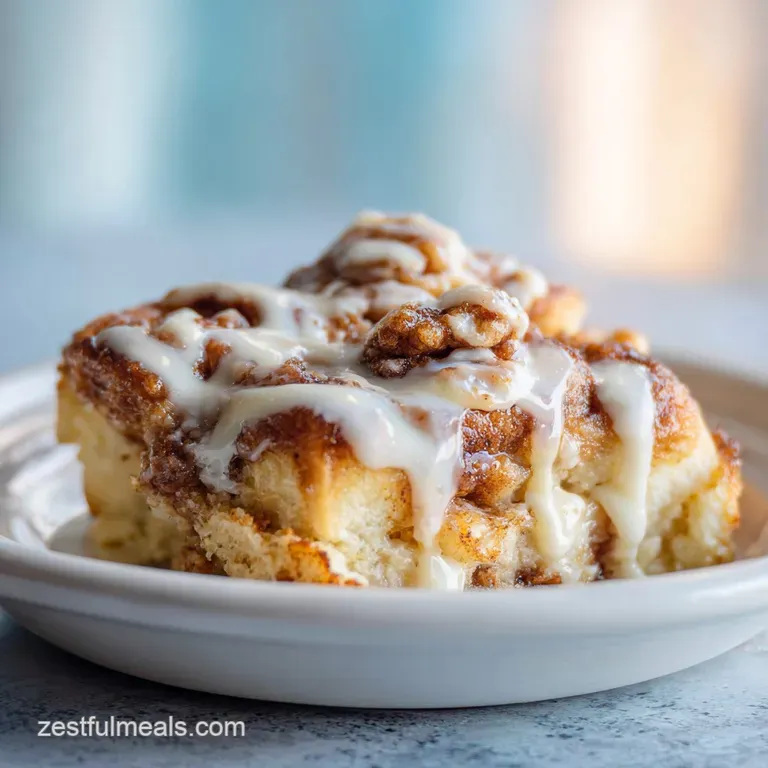
- Time: Active 10 minutes, Passive 30 minutes, Total 40 minutes
- Flavor/Texture Hook: Shatter crisp golden edges with a velvety, spice drenched center
- Perfect for: Lazy holiday mornings or stress free weekend brunches
- Bake This Easy Cinnamon Roll Casserole Recipe
- Why This Morning Bake Works So Well
- Essential Components for Your Sweet Breakfast
- Necessary Tools for Your Kitchen Counter
- Step by Step Guide to Golden Bites
- Solving Common Texture and Flavor Issues
- Creative Flavor Twists for Your Brunch
- Scaling for Large or Small Crowds
- Storage Tips for Fresh Tasting Leftovers
- Delicious Pairings for a Complete Breakfast
- Debunking Morning Baking Myths
- Recipe FAQs
- 📝 Recipe Card
Bake This Easy Cinnamon Roll Casserole Recipe
The moment that scent hits warm yeast, spicy cinnamon, and melting sugar my brain finally switches from "zombie" to "morning person." There is something fundamentally comforting about a tray of sweet rolls bubbling away in the oven.
I remember the first time I tried this; it was a rainy Sunday, and the house felt cold until that heady aroma started drifting from the kitchen, wrapping everyone in a literal blanket of cinnamon and vanilla.
We aren't just baking rolls here; we're creating a texture rich experience that bridges the gap between a classic roll and a decadent bread pudding. It is the kind of dish that makes people linger at the table, picking at the little caramelized bits left in the corners of the pan.
Trust me, the way the heavy cream mingles with the maple syrup creates a sauce that is pure gold.
This cinnamon roll casserole recipe is my go to because it looks like you spent hours proofing dough, but it actually lets you stay in your pajamas for the entire process. We've all had those mornings where we want something spectacular without the four hour commitment. This is the answer.
It’s reliable, it’s fast, and it honestly tastes better than the individual rolls ever could on their own.
Why This Morning Bake Works So Well
The Custard Tension: Heavy cream and eggs fill the microscopic air pockets in the dough, preventing the centers from drying out during the bake.
Osmotic Balance: Adding a pinch of kosher salt and maple syrup draws out the deep spice notes of the cinnamon without making it cloying.
Maillard Reaction: The butter and sugar on the surface undergo rapid browning, creating that specific shatter crisp texture on the top peaks.
Protein Networking: Room temperature eggs emulsify better with the cream, ensuring the custard sets into a silky crumb rather than a rubbery layer.
| Cook Method | Total Time | Texture Outcome | Best Occasion |
|---|---|---|---|
| Conventional Oven | 40 minutes | Crispy tops, soft centers | Standard weekend brunch |
| Convection Oven | 32 minutes | Maximum crunch, even browning | When you're in a hurry |
| Slow Cooker | 3 hours | Uniformly soft, pudding like | Keeping it warm for a party |
Choosing your method depends on how much you value those crunchy bits. For me, the oven is the only way to go because I live for that contrast between the velvety middle and the toasted exterior. If you’re looking for something to serve alongside this, the tartness of my Recipe for Fried Apples makes a legendary topping that cuts through the richness beautifully.
Essential Components for Your Sweet Breakfast
| Ingredient | Science Role | Pro Secret |
|---|---|---|
| Heavy Cream | Provides fat for a velvety mouthfeel | Use cold cream to slow the initial dough rise |
| Large Eggs | Acts as the structural binder | Whisk until no streaks remain for a smooth set |
| Maple Syrup | Lowers the freezing point of the glaze | Real Grade A syrup adds woody, complex notes |
- Pillsbury Cinnamon Rolls: Two cans (12.4 oz each) provide the yeasty base and the essential icing. Why this? The pre measured spice ratios ensure consistent flavor every single time. (Substitute: Store brand rolls; they work fine but might have less cinnamon).
- Unsalted Butter: 1/4 cup, melted. Why this? Controls salt levels while adding a rich, toasted flavor profile. (Substitute: Salted butter; just skip the extra kosher salt).
- Heavy Cream: 1/2 cup for the soak. Why this? Higher fat content creates a custard that won't turn watery. (Substitute: Full fat coconut milk; adds a subtle tropical nuttiness).
- Pure Vanilla Extract: 2 tsp for aromatic depth. Why this? Alcohol based extract carries the spice aromas to your palate faster. (Substitute: Vanilla bean paste for those beautiful black flecks).
- Ground Cinnamon & Nutmeg: 1 tsp and 1/4 tsp respectively. Why this? Freshly ground spices provide a much stronger olfactory punch. (Substitute: Apple pie spice mix for a fruitier undertone).
- Kosher Salt: 1/4 tsp to balance. Why this? Large crystals dissolve slowly, hitting different flavor receptors. (Substitute: Fine sea salt; use slightly less).
- Chopped Pecans: 2 tbsp for crunch. Why this? Adds a savory, earthy element to break up the sweetness. (Substitute: Chopped walnuts; they offer a similar bite with more tannins).
Necessary Tools for Your Kitchen Counter
You don't need a professional bakery setup for this, but a few specific tools make the process much smoother. A 9x13-inch glass baking dish is the gold standard here. Glass conducts heat more slowly than metal, which is exactly what we want to prevent the bottom from burning before the custard in the middle has a chance to set.
I also highly recommend using a sharp pair of kitchen shears or a serrated knife. When you cut the raw dough rolls, a regular flat blade tends to squish the delicate layers of the cinnamon roll casserole. A serrated edge saw through the dough without compressing the air pockets, keeping everything light and airy.
Finally, grab a sturdy balloon whisk to ensure your eggs and cream are perfectly emulsified before they hit the pan.
step-by-step Guide to Golden Bites
- Preheat and Prep. Set your oven to 350°F and grease your 9x13 dish thoroughly with butter or non stick spray. Note: A well greased pan ensures those caramelized sugar bits don't stay stuck to the glass.
- Butter the Foundation. Pour the 1/4 cup of melted butter evenly across the bottom of the baking dish.
- Divide the Dough. Open both cans of rolls and cut each individual roll into six even pieces using your shears or serrated knife.
- Arrange the Pieces. Scatter the dough chunks into the pan, ensuring they are distributed in a single, somewhat even layer.
- Whisk the Custard. In a medium bowl, combine the 3 eggs, 1/2 cup heavy cream, 2 tsp vanilla, 1 tsp cinnamon, 1/4 tsp nutmeg, 1/4 tsp salt, and 1 tbsp maple syrup.
- Infuse the Dough. Pour the egg mixture slowly over the dough pieces, making sure to hit every corner of the pan.
- Add the Crunch. Sprinkle the 2 tbsp of chopped pecans over the top of the mixture.
- Bake for Completion. Place in the center rack for 30 minutes until the center is set and the tops are mahogany brown.
- Prepare the Glaze. While the bake is hot, open the reserved icing containers from the cans.
- Apply the Finish. Drizzle the icing over the warm casserole until it melts into a glossy, semi translucent coating.
Wait at least five minutes before slicing into it. That resting period is crucial because it allows the custard to fully firm up. If you cut into it immediately, the velvety sauce might run, leaving the top pieces a bit dry. Patience pays off with a much better texture.
Solving Common Texture and Flavor Issues
Why Your Casserole Is Soggy
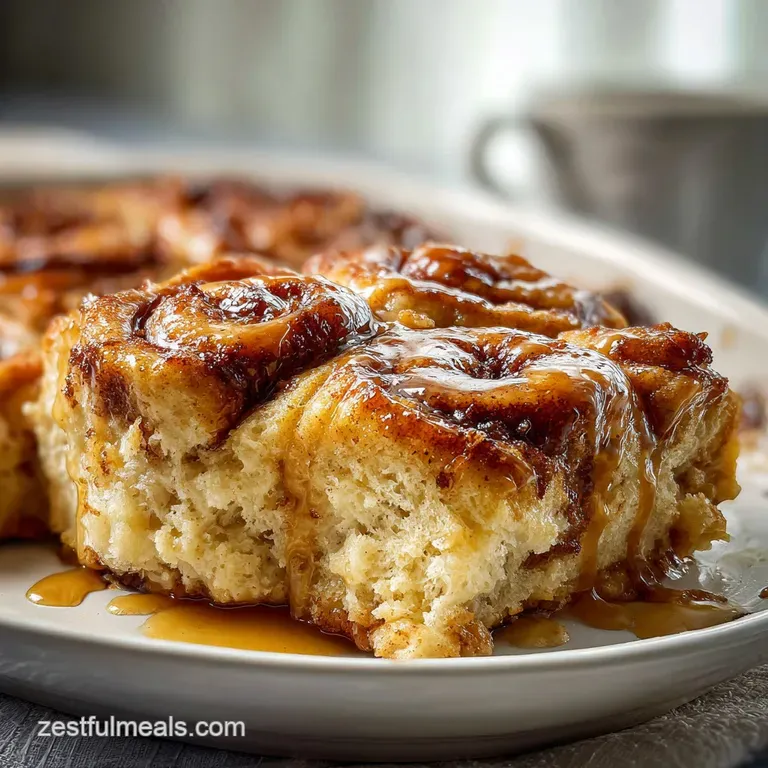
The most common culprit is underbaking or using eggs that were too large. If the center feels "jiggly" like liquid rather than "bouncy" like a sponge, it needs more time. Also, ensure you aren't using more cream than the recipe calls for, as the dough can only absorb so much moisture before it gives up.
Dealing with Overbrowned Edges
Sugar burns quickly, and since this dish is loaded with it, the edges can sometimes get dark before the middle is done. If you notice the corners getting too brown around the 20 minute mark, simply tent the dish loosely with aluminum foil.
This reflects the direct heat while allowing the ambient temperature to continue cooking the center.
| Problem | Root Cause | Solution |
|---|---|---|
| Dry, tough dough | Overbaking or lack of cream | Check at 25 mins; ensure custard covers all pieces |
| Bland flavor | Skipping the salt or vanilla | Never skip the salt; it bridges the sugar and spice |
| Glaze disappears | Applying to a scorching hot pan | Wait 5 minutes before icing to keep it creamy |
Common Mistakes Checklist - ✓ Always use room temperature eggs to ensure the custard doesn't "break" or curdle. - ✓ Don't over crowd the pan; if the pieces are packed too tight, the heat can't circulate.
- ✓ Avoid "light" or fat free creams, as they lack the stability to hold the custard together. - ✓ Make sure to cut the rolls into small pieces (sixths) to maximize the surface area for the soak. - ✓ Check the expiration date on your dough; old dough won't rise properly, leading to a dense brick.
Creative Flavor Twists for Your Brunch
If you've made this a few times and want to shake things up, the possibilities are endless. I love adding a cup of fresh blueberries or raspberries right before pouring the custard. The berries burst during the bake, creating little pockets of tart jam that contrast the sugary glaze. It’s a trick I learned when making my Recipe Pineapple Stuffing, where fruit adds that essential brightness.
For a more "adult" version, try swapping the vanilla extract for a tablespoon of bourbon or dark rum. The alcohol burns off, but the smoky, oaky notes remain, pairing beautifully with the nutmeg. If you're a fan of texture, you can also toss in some white chocolate chips.
They melt into the custard and create a creamy, buttery surprise in every bite.
Scaling for Large or Small Crowds
If you’re just cooking for two, you can easily halve this cinnamon roll casserole recipe. Use an 8x8-inch square pan and one can of rolls. For the eggs, beat one egg in a cup and use half of it along with one whole egg to get the ratio right.
Reduce the baking time by about 5 to 7 minutes, but keep a close eye on it.
When doubling the recipe for a big holiday crowd, use two separate 9x13 dishes rather than one giant pan. This ensures even heat distribution. If you try to bake a double batch in a very deep dish, the outside will burn to a crisp before the middle even thinks about setting.
Just remember to rotate the pans halfway through the bake if your oven has "hot spots."
| Goal | Adjustment | Effect |
|---|---|---|
| Extra Crispy | Use 1/2 cup pecans and bake 3 mins longer | Adds a massive textural shatter to every bite |
| Extra Gooey | Increase heavy cream to 3/4 cup | Creates a more bread pudding like consistency |
| Lower Sugar | Use only one icing packet and skip syrup | Highlights the natural spice of the dough |
Storage Tips for Fresh Tasting Leftovers
Leftover casserole stays good in the fridge for up to 3 days. Make sure to cover the dish tightly with plastic wrap or transfer pieces to an airtight container. The sugar in the glaze acts as a mild preservative, but the dairy in the custard means you shouldn't leave it out on the counter for more than two hours.
To reheat, avoid the microwave if possible, as it can make the dough rubbery. Instead, pop a slice into the oven at 350°F for about 10 minutes. This recrisps the edges and restores that "just baked" feel.
For zero waste, if you have tiny scraps left over, crumble them over vanilla ice cream for a dessert that will honestly change your life.
Delicious Pairings for a Complete Breakfast
Since this bake is quite sweet and rich, you’ll want to pair it with something that provides a savory or acidic balance. A side of thick cut, crispy bacon or salty breakfast sausage is the classic choice. The saltiness cuts right through the maple and cinnamon, resetting your palate for the next bite.
If you’re serving this as part of a larger brunch spread, a simple fruit salad with a lime and mint dressing works wonders. The acidity of the citrus wakes up the taste buds. And of course, a strong, dark roast coffee is non negotiable.
The bitterness of the coffee beans is the perfect foil for the velvety sweetness of the glazed rolls.
Debunking Morning Baking Myths
One big misconception is that you need to use "from scratch" dough to get a gourmet result. In reality, the high-quality fats and leavening agents in refrigerated dough provide a consistent structure that actually holds up better to a heavy custard soak than many homemade recipes.
The "hack" isn't cheating; it's a smart use of food science to ensure a repeatable texture.
Another myth is that you can't prep this the night before. While you shouldn't let it sit for 12 hours (the dough will lose its leavening power), you can absolutely cut the rolls and whisk the custard the night before.
Just store them in separate containers and combine them right before you preheat the oven. This keeps the dough from becoming a mushy mess while still saving you precious minutes in the morning.

Recipe FAQs
What does pouring heavy cream over cinnamon rolls do?
It creates a rich, custard like sauce. The heavy cream soaks into the dough, preventing dryness and infusing the rolls with a velvety texture as they bake.
What is the Cinnabon secret ingredient?
There isn't one single "secret" ingredient, but a combination of techniques. Cinnabon uses a specific blend of high-quality cinnamon, a generous amount of butter, and a specific baking temperature to achieve their signature gooey center and crisp edges.
What is a Cinnamon Roll Casserole?
It's a deconstructed cinnamon roll baked in a dish. Refrigerated cinnamon roll dough is cut into pieces and baked in a custard base, transforming individual rolls into a cohesive, decadent casserole perfect for sharing.
What are some common mistakes when making cinnamon rolls?
Over proofing, using cold ingredients, and incorrect baking temperatures are common pitfalls. Over proofing can lead to a collapsed bake, while cold ingredients can affect dough texture, and wrong temperatures result in unevenly cooked rolls.
Can I use a different type of milk in the custard?
Yes, but heavy cream is ideal for richness. While whole milk or half and-half can work, they will result in a less decadent and slightly thinner custard, similar to how using Pineapple Tea Recipe: Vibrant & Spicy adds a different flavor profile than plain water.
How do I prevent the cinnamon roll casserole from being dry?
Ensure adequate custard soak and avoid overbaking. Pouring enough heavy cream and egg mixture to saturate the dough pieces and baking until the center is just set, not dry, is key.
What can I serve with cinnamon roll casserole?
Savory breakfast meats or a fresh fruit salad are excellent pairings. The richness of the casserole is balanced by the saltiness of bacon or sausage, or the bright acidity of fruit, much like how the tang in our Banana Brown Sugar Muffins in 30 Minutes complements their sweetness.
Cinnamon Roll Casserole Recipe
Ingredients:
Instructions:
Nutrition Facts:
| Calories | 429 kcal |
|---|---|
| Protein | 6.1 g |
| Fat | 24.1 g |
| Carbs | 47.6 g |
| Fiber | 1.4 g |
| Sugar | 20.8 g |
| Sodium | 772 mg |
