Almond Milk: Velvety and Homemade
- Time: Active 10 minutes, Passive 8 hours, Total 8 hours 10 mins
- Flavor/Texture Hook: Velvety, nutty, and refreshingly clean
- Perfect for: Budget conscious families and morning coffee enthusiasts
Why You'll Love This Almond Milk
You know that slightly chemical, "thin" taste you get from the almond milk in the supermarket? I used to just accept it as the price of convenience until one Saturday morning when the kids wanted smoothies and we were completely out.
I found a dusty bag of raw almonds in the back of the pantry, threw them in some water, and honestly, our breakfast routine changed forever right then.
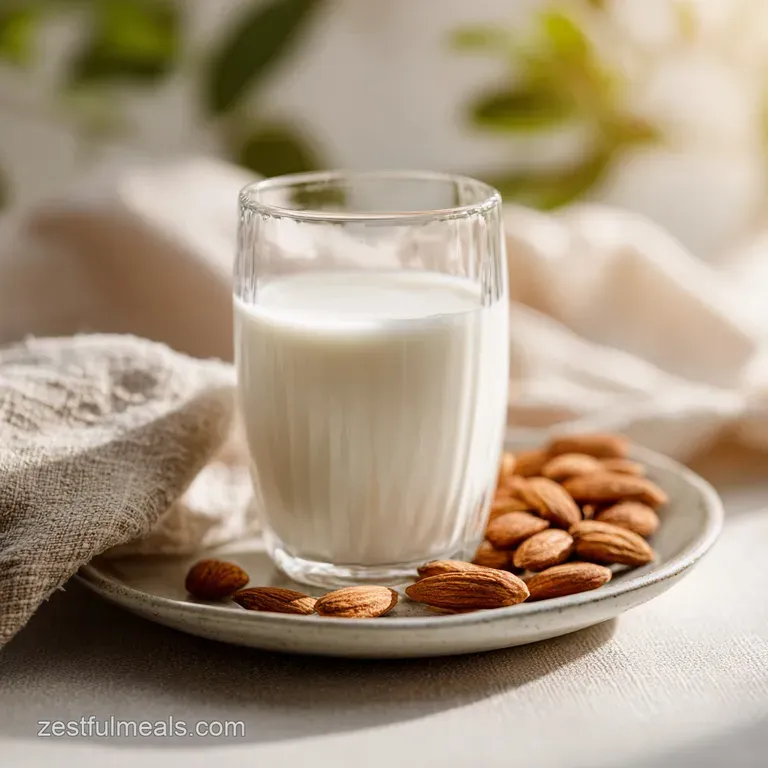
The first thing you notice is the aroma - it actually smells like fresh nuts, not vanilla scented cardboard. When you pour it, it has this beautiful, silky body that clings slightly to the glass. It's thick enough to feel satisfying but light enough that it doesn't weigh down your morning oats.
Plus, seeing my kids actually ask for the "homemade white milk" because it tastes better is a huge win for any parent trying to keep things simple and healthy.
We're going for a ratio here that prioritizes a rich mouthfeel while keeping your grocery bill in check. It's about getting that premium, barista style quality without the premium price tag. Once you see how easy it is to make almond milk at home, those $5 cartons start looking a lot less appealing.
We'll walk through the whole process together, from the long soak to the final squeeze.
Essential Specs and Prep Times
The Physics of Nut Hydration
Osmotic Equilibrium: Soaking allows water to penetrate the dense cellular structure of the nut, softening the proteins and fats for easier extraction. This process also neutralizes phytic acid, making the nutrients more accessible to your body while ensuring a smooth, non gritty texture.
| Method | Time | Texture | Best For |
|---|---|---|---|
| Classic Soak | 8 hours | Velvety and rich | Daily drinking and coffee |
| Quick Blanch | 15 minutes | Thinner, slightly earthy | Last minute baking needs |
| Boiling Soak | 1 hour | Smooth but less sweet | Smoothies and protein shakes |
I usually start the soak right after I finish cleaning up the dinner dishes. It takes about thirty seconds to dump them in a bowl and cover them with water. By the time the coffee pot is chirping the next morning, the almonds are plump, hydrated, and ready to go.
If you're in a rush, you can use the boiling method, but you'll lose a bit of that natural sweetness that comes with a slow, cold hydration.
Smart Shopping List Breakdown
For a batch that feeds my family of four for a few days, we keep the ingredient list tight. I recommend buying your almonds in the bulk section to save money. Look for "raw" and "unsalted" specifically. If you accidentally buy roasted ones, the milk will taste more like a liquid snack than a neutral dairy substitute.
| Ingredient | Science Role | Pro Secret |
|---|---|---|
| Raw Almonds | Primary fat/protein source | Use "pasteurized" over "steam treated" for better creaminess |
| Filtered Water | Extraction solvent | Cold water prevents the nut fats from turning rancid during blending |
| Medjool Dates | Natural emulsifier/sweetener | Remove the pits and soak them with the nuts to soften the fibers |
- 1 cup (145g) raw, unsalted almonds: The base of our milk. Why this? Raw nuts provide the most neutral, creamy flavor profile.
- Substitute: Raw cashews (no soaking required, but produces a much thicker milk).
- 3 cups (710ml) filtered water: For the actual blending. Why this? Filtered water ensures no chlorine taste interferes with the nut flavor.
- Substitute: Coconut water for an electrolyte rich, tropical twist.
- 1 pinch Himalayan pink salt: To sharpen the flavors. Why this? Salt acts as a flavor enhancer, cutting through the natural fat.
- Substitute: Sea salt or regular table salt (use a tiny bit less).
- 2 Medjool dates, pitted: For a hint of sweetness. Why this? Dates provide a caramel like sweetness without refined sugars.
- Substitute: 1 tablespoon of maple syrup or honey.
- 0.5 tsp pure vanilla bean paste: For that classic aroma. Why this? Paste contains the tiny seeds which add a premium look and deep flavor.
- Substitute: Vanilla extract or a scraped vanilla bean pod.
Essential Tools for Silky Milk
You don't need a kitchen full of gadgets to make this happen, but a high speed blender (like a Vitamix or Blendtec) really does make the difference between "milky water" and a truly "velvety" drink.
If you have a standard blender, you'll just need to run it for an extra minute or two to make sure those nuts are completely pulverized.
Chef Tip: If you don't own a nut milk bag, don't panic. You can use a clean, thin cotton tea towel or even several layers of cheesecloth. Just make sure it hasn't been washed with heavily scented fabric softener, or your milk will taste like "Spring Meadow" laundry detergent!
The only other thing you really need is a large bowl and a glass jar for storage. I love using old quart sized mason jars because they're easy to shake before serving. Speaking of sweet treats, if you have extra vanilla paste, it works beautifully in my White Almond Bark recipe, which is a huge hit during the holidays.
Bringing the Recipe Together
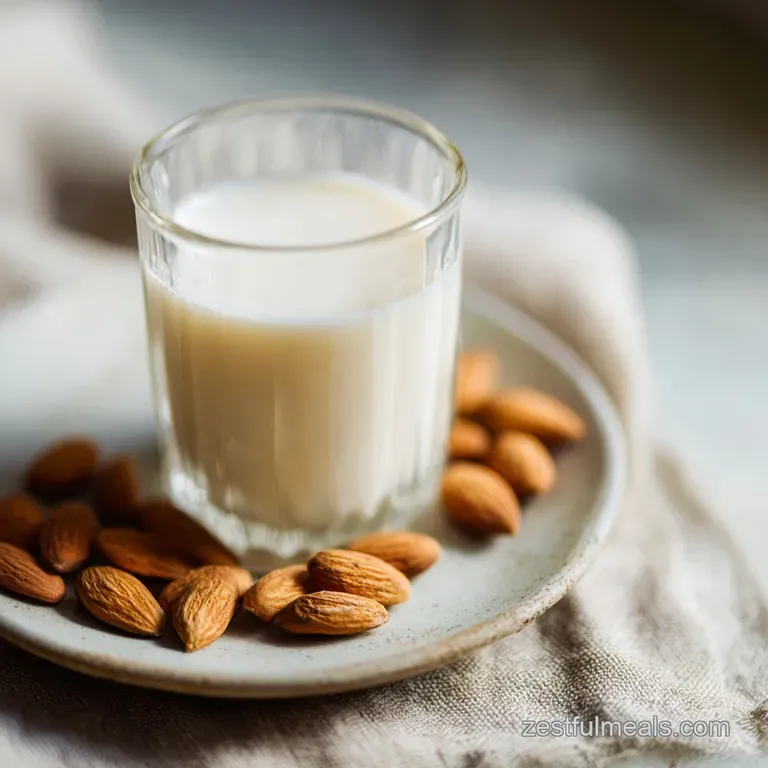
- Hydrate the almonds. Place 1 cup (145g) raw almonds in a bowl and cover with water by at least two inches. Note: They will expand as they drink up the liquid.
- Wait 8 hours. Leave the bowl on the counter or in the fridge overnight until the nuts feel plump and the skins slip off easily.
- Rinse thoroughly. Drain the soaking water and rinse the almonds under cold running water until the water runs completely clear.
- Load the blender. Combine the soaked almonds, 3 cups (710ml) filtered water, pink salt, 2 pitted dates, and vanilla paste in your blender. Note: Adding the salt now ensures it dissolves completely.
- Blitz on high. Pulse a few times, then blend on the highest speed for 60 to 90 seconds until the mixture looks frothy and white.
- Set up the strainer. Place a nut milk bag or cloth over a large bowl and pour the mixture in slowly.
- Squeeze with intent. Use your hands to squeeze the bag, working from the top down until the almond pulp feels like dry sand.
- Bottle it up. Pour the strained milk into a clean glass jar and seal tightly.
- Chill and settle. Place in the fridge for at least 1 hour until the liquid is cold and refreshing.
- Shake before use. Give the jar a good rattle to re incorporate any natural fats that settled.
Fix Common Texture Problems
Why Your Almond Milk Separates
It is completely normal for homemade nut milk to separate into a watery layer and a creamy layer. Unlike the stuff from the store, we aren't adding lecithin or guar gum to force the fat and water to stay married. A quick five second shake of the jar will fix this immediately.
If it's separating instantly, you might need to blend for a longer duration next time.
| Problem | Root Cause | Solution |
|---|---|---|
| Gritty Texture | Weak blender or coarse bag | Blend for 2 full mins and use a finer mesh bag |
| Bitter Aftertaste | Poor quality or old nuts | Taste a dry nut first; if it's bitter, the milk will be too |
| Watery Consistency | Too much water added | Stick to the 1:3 ratio for a whole milk thickness |
Why Your Almond Milk Curdles
If you pour cold almond milk into piping hot coffee, it might "feather" or curdle. This happens because of the high acidity and temperature of the coffee. To prevent this, try warming the milk slightly before adding it to your mug, or pour the coffee into the milk rather than the other way around.
Common Mistakes Checklist
- ✓ Never use the soaking water for the final blend (it contains bitter tannins).
- ✓ Always remove the pits from dates to avoid shattering your blender blades.
- ✓ Don't skip the salt; it's the difference between "bland" and "bright."
- ✓ Squeeze the bag gently at first to avoid a "milk explosion" out the top.
- ✓ Wash your nut milk bag immediately after use to prevent sour smells.
Creative Twists and Swaps
If you want to vary the flavor, the possibilities are basically endless. For a "Golden Milk" version, add half a teaspoon of turmeric and a crack of black pepper. For the kids, I sometimes add a tablespoon of cocoa powder and an extra date to make a healthy chocolate milk that rivals anything in a carton.
- If you want it richer: Reduce the filtered water to 2 cups for a "half and half" consistency.
- If you want it nut free: Swap the almonds for 1 cup of sunflower seeds (soak for 4 hours).
- If you want it savory: Omit the dates and vanilla; add a clove of garlic for a creamy soup base.
This milk is a fantastic base for weekend breakfasts, especially when paired with something hearty like my Recipe Pineapple Stuffing for a sweet and salty brunch spread.
| Original Ingredient | Substitute | Why It Works |
|---|---|---|
| Medjool Dates | Maple Syrup (1 tbsp) | Dissolves instantly. Note: Adds a distinct "pancake" flavor to the milk |
| Vanilla Paste | Ground Cinnamon (1/2 tsp) | Adds warmth. Note: Doesn't dissolve, will settle at the bottom |
| Filtered Water | Strong Cold Brew | Creates an instant "latte" base. Note: Shortens shelf life to 2 days |
Storage and Zero Waste Tips
Storage: Keep your fresh almond milk in the back of the fridge (where it's coldest) for up to 4 or 5 days. Because there are no preservatives, it will eventually go sour just like dairy. If you see the bottle puffing out or smell anything "funky," it's time to toss it.
You can also freeze the milk in ice cube trays! These are perfect for dropping into hot coffee or blending into smoothies without watering them down.
Zero Waste: Please, don't throw away that leftover almond pulp! It's basically almond flour that’s just a bit damp. I spread it out on a baking sheet and dry it in a low oven (about 95°C) until it's crumbly.
You can toss it into oatmeal, add it to muffin batter, or use it as a binder for meatballs. It’s free nutrition that most people just rinse down the drain.
Family Friendly Serving Ideas
My favorite way to serve this is straight from the fridge in a cold glass, but it's also the secret to the best overnight oats you've ever had. Since it has a higher fat content than the watered down store versions, it makes oats incredibly creamy. We also love using it as the liquid base for a 5Minute Fruit Smoothie Bowl recipe because it adds a subtle nuttiness that balances out tart berries perfectly.
If you have family members who are skeptical about "nut juice," try serving it in a blind taste test with their favorite cereal. Most people find that once the cereal sugar hits the milk, they can't even tell the difference except that the homemade version doesn't leave that weird film on the roof of your mouth.
It’s a small change that makes a big impact on your kitchen’s health and budget.
- To make a half batch
- Use 1/2 cup almonds and 1.5 cups water. Use a smaller blender jar if possible to ensure the blades catch the nuts.
- To double the recipe
- Use 2 cups almonds and 6 cups water. You will likely need to blend this in two separate batches to avoid overflowing your blender and straining in stages.
- Spices
- When doubling, start with only 1.5x the salt and vanilla, then taste and adjust. Spices can become overwhelming when doubled perfectly.
The Myth of "Activating" Nuts You might hear people say you must soak nuts to "activate" them or they are toxic. Let's be real: people have been eating raw almonds for centuries without issue. The soaking is primarily about texture and ease of digestion.
While it does reduce phytic acid, the main benefit for us home cooks is getting that silky, velvety pour that makes the effort worth it.
The Heat Myth Some folks think you can't use homemade almond milk for cooking because it will break. While it's true it doesn't have the stabilizers of dairy, it works beautifully in pancakes, cakes, and even creamy pasta sauces.
Just avoid boiling it violently for long periods, which can cause the proteins to clump together. Keep it to a gentle simmer, and you'll be golden.

Recipe FAQs
How do you make milk from an almond?
Soak, blend, and strain. First, soak raw almonds for at least 8 hours to soften them; then, blend the soaked nuts with filtered water until completely smooth. Finally, strain the mixture through a fine nut milk bag to separate the liquid from the pulp.
Is it worth making your own almond milk?
Yes, it is worth the time. Homemade milk tastes significantly fresher and avoids the stabilizers and thickeners common in store-bought versions, offering a superior creamy texture.
How exactly is almond milk made?
The process relies on hydration and mechanical extraction. Soaking the almonds softens their cellular structure, allowing high speed blending to release the fats and proteins into the water. Mastering this initial blending stage is similar to mastering the blending for stable emulsions in recipes like dairy-free Chocolate Buttercream Frosting recipe.
How much almond milk does 1 cup of almonds make?
One cup of raw almonds yields approximately 3 to 4 cups of finished milk. This depends heavily on the hydration level of the nuts and how aggressively you squeeze the bag during filtration.
Should I use the soaking water to blend the milk?
No, discard the soaking water immediately. This water contains phytic acid and tannins released from the nuts during the soak, which can introduce a bitter or chalky flavor to your final product.
What is the best ratio for creamy almond milk?
Aim for a 1:3 ratio of almonds to water for creaminess. Use 1 cup of soaked almonds to 3 cups of fresh filtered water, which achieves a satisfying body perfect for coffee or cereal.
Why does my homemade almond milk separate in the fridge?
Separation is natural without commercial stabilizers. Homemade milk lacks emulsifiers like guar gum, meaning the fat naturally rises to the top, so you must vigorously shake the jar before pouring.
Easy Homemade Almond Milk
Ingredients:
Instructions:
Nutrition Facts:
| Calories | 118 kcal |
|---|---|
| Protein | 2.4 g |
| Fat | 10.6 g |
| Carbs | 10.8 g |
| Fiber | 1.2 g |
| Sugar | 8.9 g |
| Sodium | 52 mg |
