Eggnog Flan: Silky Holiday Custard
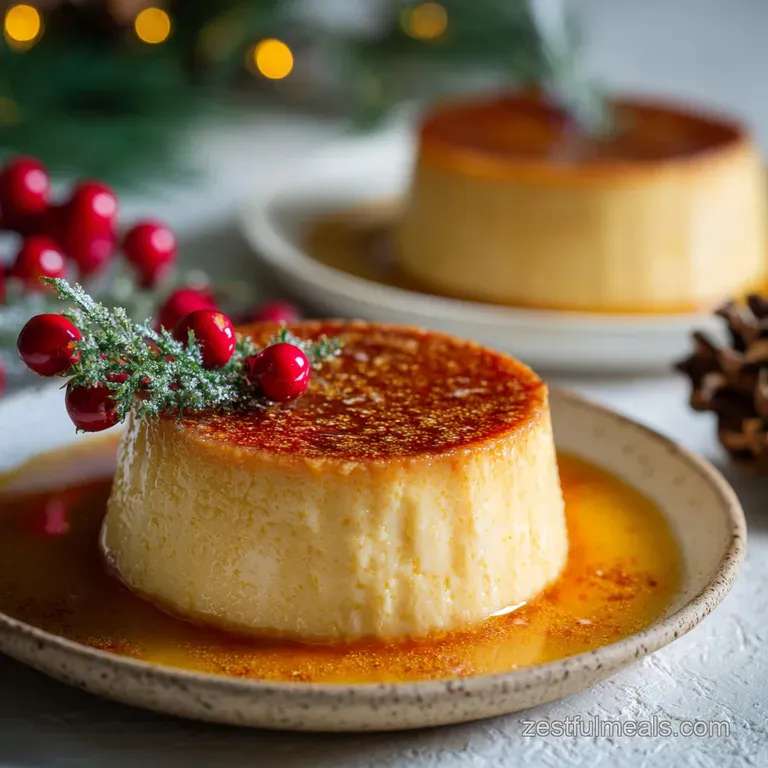
- Time: Active 20 minutes, Passive 1 hours, Total 1 hours 20 mins
- Flavor/Texture Hook: Velvety custard topped with a bitter sweet amber shatter
- Perfect for: Holiday dinner parties or a special Christmas dessert
- Creating a Silky Smooth Eggnog Flan
- Exploring the Custard Setting Process
- Vital Recipe Measurement Standards
- Analyzing the Essential Components
- Required Minimal Tool Kit
- Selecting Your Custard Elements
- Stepwise Baking Process Guide
- Correcting Common Custard Errors
- Adjusting the Recipe Size
- Debunking Traditional Custard Myths
- Storage and Leftover Management
- Complementary Flavor Pairings
- Recipe FAQs
- 📝 Recipe Card
Creating a Silky Smooth Eggnog Flan
The first time I tried making a flan for Christmas, it was a disaster. I remember the sound of my whisk hitting the bowl too hard, creating a foam that turned the top of my dessert into a spongy, bubbly mess.
I pulled it out of the oven, and instead of a wobbly, elegant custard, I had something that looked like sweet, nutmeg scented scrambled eggs. I almost gave up on the dish entirely until I realized that the secret isn't in the ingredients themselves, but in how you treat them.
The smell of bubbling sugar is one of those scents that fills the whole house. When you hit that stage where the sugar turns a deep, mahogany amber, it’s a sensory rush. You have to move fast before it burns, pouring it into the mold where it creates a satisfying crackling sound as it hardens.
That brittle layer of caramel is what eventually melts into that famous dark sauce we all love.
We are going to walk through this together so you don't repeat my early mistakes. This isn't just a recipe; it's a way to bring those cozy holiday vibes to the table without the stress of fancy equipment. We will focus on the small things, like the temperature of your eggs and why we never, ever skip the strainer.
Trust me on this, once you see that clean release from the mold, you'll feel like a pro.
Exploring the Custard Setting Process
Protein Denaturation Control: Adding extra egg yolks lowers the overall coagulation temperature, which keeps the custard from becoming rubbery or tough.
Thermal Buffer: The water bath, or bain marie, acts as an insulator that keeps the internal temperature of the flan from exceeding 100°C, ensuring the eggs set into a smooth gel rather than boiling.
Inversion Science: The lemon juice in the caramel breaks down sucrose into glucose and fructose, which stops the sugar from forming hard crystals and helps it stay liquid under the custard.
| Method | Time | Texture | Best For |
|---|---|---|---|
| Classic Oven | 1 hours | Velvety and consistent | Large dinner parties |
| Pressure Cooker | 20 minutes | Dense and heavy | Last minute prep |
The choice between methods really depends on how much time you have, though the oven method is much more reliable for a perfectly even bake. Using a water bath in the oven is the gold standard for achieving that signature wobble without any air pockets.
Vital Recipe Measurement Standards
This section outlines the specific targets you need to hit for a successful outcome. Precision with temperature and timing is the difference between a grainy mess and a silky masterpiece.
| Feature | Target Metric | Visual Cue | Importance |
|---|---|---|---|
| Caramel Color | 170°C | Deep amber/Mahogany | Prevents overly sweet sauce |
| Internal Temp | 80-82°C | Jiggles like Jell O | Ensures the center is set |
| Chill Time | 6 hours | Firm to the touch | Allows caramel to liquefy |
Setting these benchmarks helps you stay on track, especially if you are new to working with custards. If you pull the flan too early, it will collapse into a puddle when you flip it.
Analyzing the Essential Components
Selecting high-quality dairy is non negotiable for this dish. Since the eggnog is the star of the show, pick a brand that you would actually enjoy drinking on its own.
| Ingredient | Science Role | Pro Secret |
|---|---|---|
| Granulated Sugar | Caramelizes for sauce | Add lemon juice to prevent grit |
| Full Fat Eggnog | Provides fat and spice | Use refrigerated, not shelf stable |
| Large Egg Yolks | Emulsifies the mixture | Use room temperature for even mixing |
| Aged Rum | Thins the proteins | Adds a smoky depth to the spice |
The interaction between the alcohol in the rum and the egg proteins actually helps produce a more tender crumb. It prevents the proteins from bonding too tightly, which keeps the texture soft.
Required Minimal Tool Kit
You don't need a kitchen full of gadgets for this. A simple whisk, a heavy bottomed saucepan, and a 20cm round cake pan or a specialized flan mold will do the job perfectly.
- Heavy Saucepan: Essential for melting sugar evenly without hot spots that cause burning.
- Fine Mesh Strainer: This is the most important tool for removing any chalazae (egg bits) or air bubbles.
- Large Roasting Pan: You need this to hold the water for your water bath.
- Whisk: Use a wire whisk but don't beat the mixture; we want to stir, not aerate.
Having your tools ready before you start the caramel is vital. Once that sugar hits the right color, you have about ten seconds to pour it before it becomes too thick to work with.
Selecting Your Custard Elements
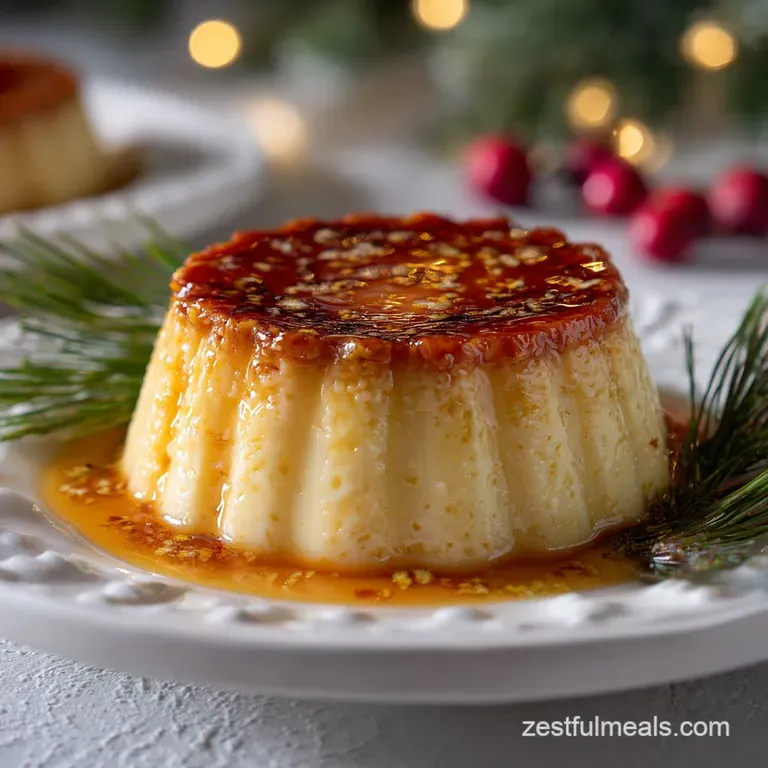
Here is everything you need to grab from the store. Stick to these measurements for the best results, as custards are sensitive to moisture ratios.
- 1 cup (200g) Granulated white sugar: Why this? Creates the essential caramel base (Sub: Light brown sugar for a toffee note)
- 1/4 cup (60ml) Water: Why this? Dissolves sugar for even melting (Sub: None)
- 1/2 tsp Lemon juice: Why this? Prevents sugar crystallization (Sub: Cream of tartar pinch)
- 2 cups (480ml) high-quality refrigerated eggnog: Why this? Main flavor and fat source (Sub: Heavy cream with nutmeg)
- 1 can (12 oz / 354ml) Evaporated milk: Why this? Provides concentrated dairy solids (Sub: Whole milk, but thinner)
- 4 Large eggs (room temperature): Why this? Structural binder (Sub: None)
- 2 Large egg yolks (room temperature): Why this? Adds richness and softness (Sub: 1 whole egg)
- 1/2 cup (100g) Granulated sugar: Why this? Sweetens the custard base (Sub: Honey, but use 1/4 cup)
- 1 tsp Vanilla bean paste: Why this? Adds visual flecks and flavor (Sub: Vanilla extract)
- 1/2 tsp Freshly grated nutmeg: Why this? Enhances the eggnog profile (Sub: Ground mace)
- 1 tbsp Aged rum or bourbon: Why this? Cuts through the heavy fat (Sub: Apple juice)
| Original Ingredient | Substitute | Why It Works |
|---|---|---|
| Evaporated Milk | Coconut Milk (354ml) | Similar fat content. Note: Adds tropical flavor notes |
| Aged Rum | Apple Cider | Maintains acidity without the alcohol content |
| White Sugar | Maple Syrup | Liquid sugar works but creates a softer caramel |
Make sure your eggs are truly at room temperature. Cold eggs can cause the fat in the eggnog to seize slightly, making the mixture harder to strain properly.
Stepwise Baking Process Guide
Before you start, preheat your oven to 165°C. This lower temperature is key for a slow, even bake that prevents the edges from overcooking while the middle stays raw.
Mastering the Amber Caramel
- Combine 200g sugar, 60ml water, and lemon juice in a saucepan.
- Heat over medium until the sugar turns deep amber. Note: Do not stir, just swirl the pan.
- Pour immediately into your mold until the bottom is fully coated.
- Let the caramel sit for 10 minutes until it is hard and brittle.
Preparing the Spiced Liquid
- Whisk 4 eggs, 2 yolks, and 100g sugar gently in a large bowl.
- Slowly pour in 480ml eggnog and 354ml evaporated milk until the color is uniform.
- Add vanilla, nutmeg, and rum until the spices are distributed.
The Triple Strain Trick
- Pour the mixture through a fine mesh strainer into a clean pitcher.
- Repeat the straining process twice more until no bubbles remain on top. Note: This ensures the silky texture we want.
Monitoring the Water Bath
- Place the caramel lined mold into a roasting pan and fill the pan with hot water until it reaches halfway up the mold.
- Bake for 1 hours until the edges are set but the center jiggles.
- Remove from the water bath and cool until it reaches room temperature.
- Refrigerate for 6 hours until the caramel has liquefied beneath the flan.
Chef's Tip: If you see bubbles forming on the surface before baking, lightly run a kitchen torch over them or pop them with a toothpick to ensure a smooth top.
Correcting Common Custard Errors
Even seasoned cooks run into trouble with flan. The most common issues usually stem from temperature fluctuations or over mixing, which introduces air into the structure.
Grainy Texture Concerns
If your flan feels gritty on the tongue, you likely overcooked it. When the eggs get too hot, they curdle and separate from the fats. Always check the jiggle at the 50 minute mark to ensure you aren't overdoing it.
A grainy texture can also happen if you whisked too much air into the eggs, creating tiny holes that feel like sand.
Caramel Release Issues
Sometimes the flan won't slide out of the mold. This usually happens if the caramel wasn't cooked long enough or if the flan hasn't chilled for the full 6 hours. The caramel needs time to absorb moisture from the custard to turn back into a liquid sauce.
| Problem | Root Cause | Solution |
|---|---|---|
| Large bubbles on sides | Oven temperature too high | Lower heat and use more water in bath |
| Caramel stuck to pan | Not enough chill time | Dip the bottom of the pan in hot water |
| Liquid in the center | Underbaked custard | Bake until only the very center jiggles |
Common Mistakes Checklist
- ✓ Stop whisking as soon as the eggs and sugar are combined to avoid foam.
- ✓ Always use hot water for the water bath to start the cooking process immediately.
- ✓ Strain the custard mixture at least twice to remove air and egg solids.
- ✓ Don't skip the room temperature cooling before putting it in the fridge.
- ✓ Use a thin knife to run around the edge before flipping to break the vacuum.
Adjusting the Recipe Size
If you are cooking for a smaller crowd, you can easily halve this recipe. Use a smaller dish, like a loaf pan, and check for doneness at 40 minutes instead of an hour.
For larger parties, I suggest making two separate flans rather than one giant one, as the middle of a very large flan often stays liquid while the edges overcook.
| Servings | Ingredient Adjustments | Pan Size | Cook Time |
|---|---|---|---|
| 4 people | Half all ingredients | 3-4 Ramekins | 35 minutes |
| 8 people | Use Schema quantities | 20cm round pan | 1 hours |
| 16 people | Double ingredients (2x) | Two 20cm pans | 1 hours 10 mins |
When doubling the recipe, do not double the nutmeg or rum exactly; start with 1.5 times the amount and taste. Spices and alcohol can become overwhelming very quickly in large batches.
Debunking Traditional Custard Myths
One major misconception is that you must use heavy cream for a rich flan. In reality, evaporated milk provides more dairy solids without the excess grease, leading to a cleaner mouthfeel. The fat in the eggnog already provides enough richness.
Another myth is that you should stir the sugar while it is melting into caramel. Stirring actually promotes crystallization, which results in a grainy sauce. Just let it melt naturally and swirl the pan occasionally to distribute the heat.
Storage and Leftover Management
Storage: Store the flan in the refrigerator for up to 4 days. Keep it in the mold until you are ready to serve to keep the caramel from drying out. Once flipped, cover it tightly with plastic wrap to prevent it from absorbing fridge odors.
Freezing: I don't recommend freezing flan. The ice crystals will break the delicate protein structure, and when it thaws, it will release all its water and turn into a spongy mess.
Zero Waste: If you have leftover caramel stuck in the pan, don't scrub it away! Add a little water, bring it to a boil, and you’ve got a simple caramel syrup you can use in your morning coffee or over oatmeal.
Leftover custard can also be blended into a milkshake for a "flan shake" that is honestly better than it sounds.
Complementary Flavor Pairings
To balance the heavy, sweet nature of the eggnog, serve this with something acidic or tart. A pile of fresh raspberries or blackberries on top provides a beautiful color contrast and cuts through the fat.
- Spiced Whipped Cream: Whip some heavy cream with a pinch of cinnamon and no sugar. Since the flan is very sweet, the unsweetened cream helps balance the palate.
- Gingerbread Crumbles: Toasted gingerbread crumbs sprinkled on top just before serving add a necessary crunch to the soft custard.
- Strong Espresso: The bitterness of a dark roast coffee is the perfect partner for the creamy, nutmeg heavy flavors of the eggnog.
If you want to get really fancy, a sprig of fresh mint or a few pomegranate seeds can add that final holiday touch that makes the dish look like it came from a high end bakery. Just remember to flip the flan onto a plate with a slight lip to catch all that glorious caramel sauce. Enjoy!
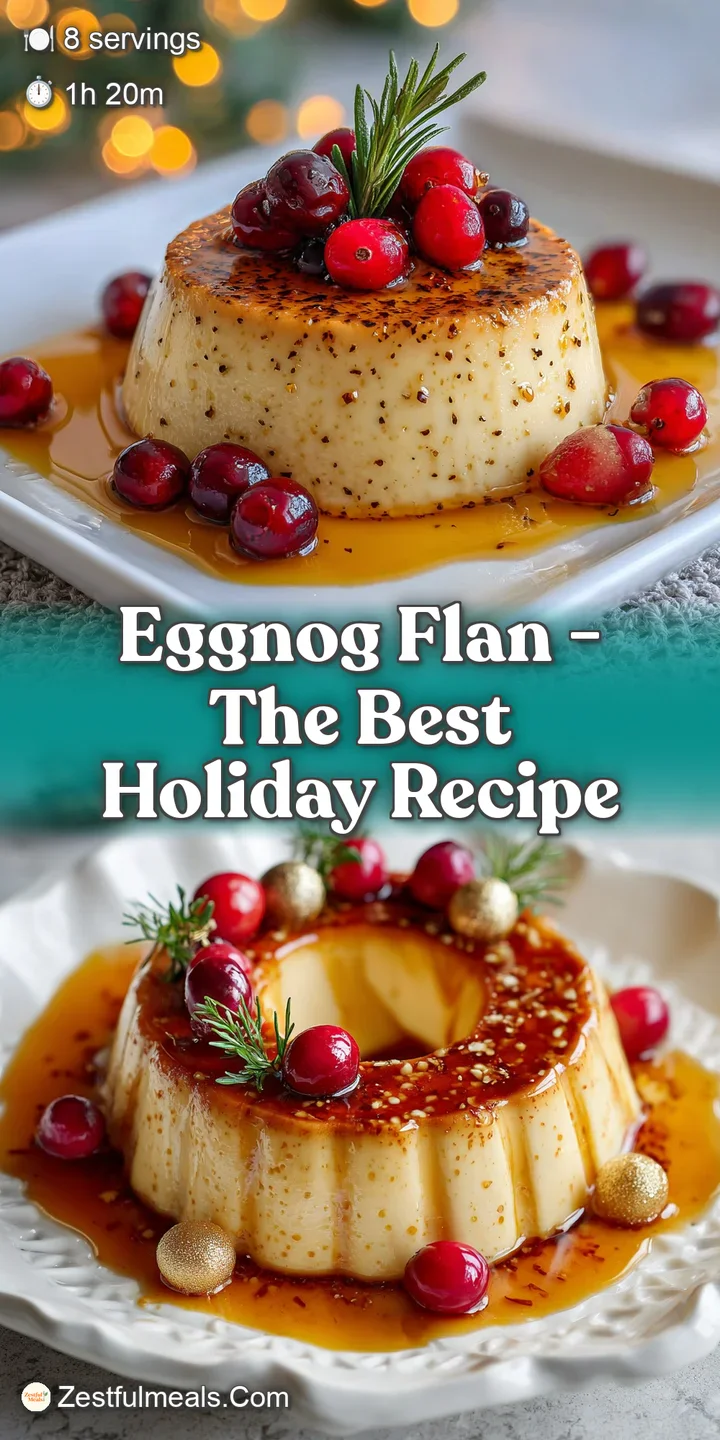
Recipe FAQs
Can I use eggnog instead of milk in baking?
Yes, with adjustments. Eggnog can replace milk in many recipes, but it's richer due to its fat and sugar content. You may need to reduce other added sugars or fats in the recipe and consider its distinct spice flavor profile.
What is the difference between Mexican and Spanish flan?
Mexican flan often includes evaporated milk and condensed milk for richness. Spanish flan traditionally uses only milk and eggs, resulting in a lighter, more delicate custard.
What are some common flan mistakes?
Over whisking eggs, high oven temperatures, and not using a water bath are common mistakes. Over whisking introduces air bubbles that create a spongy texture, high heat cooks the eggs too quickly causing curdling, and skipping the water bath leads to uneven cooking and potential cracking.
Can eggnog be used in baking?
Yes, eggnog adds richness, spice, and moisture to baked goods. It's particularly effective in custards, cakes, and cookies, contributing holiday flavors like nutmeg and cinnamon.
Why is my flan grainy?
Your flan is likely grainy due to overcooking. When eggs are heated too much, they curdle, separating into a grainy texture. Ensure you're baking at a low, steady temperature and remove it when the center is just set but still jiggles.
How do I get my flan to release from the mold cleanly?
Chill the flan thoroughly for at least 6 hours and dip the mold briefly in hot water. Proper chilling allows the caramel to liquefy beneath the custard. A quick dip in hot water helps loosen any caramel that might be sticking to the mold's edges.
Should I stir the sugar when making caramel for flan?
No, avoid stirring the sugar directly while it melts for caramel. Stirring can cause sugar crystals to form, leading to a grainy or hardened caramel. Instead, swirl the saucepan gently to ensure even heating and melting.
Eggnog Flan
Ingredients:
Instructions:
Nutrition Facts:
| Calories | 412 calories |
|---|---|
| Protein | 9.6g |
| Fat | 18.4g |
| Carbs | 52.8g |
| Fiber | 0.1g |
| Sugar | 51.5g |
| Sodium | 132mg |
