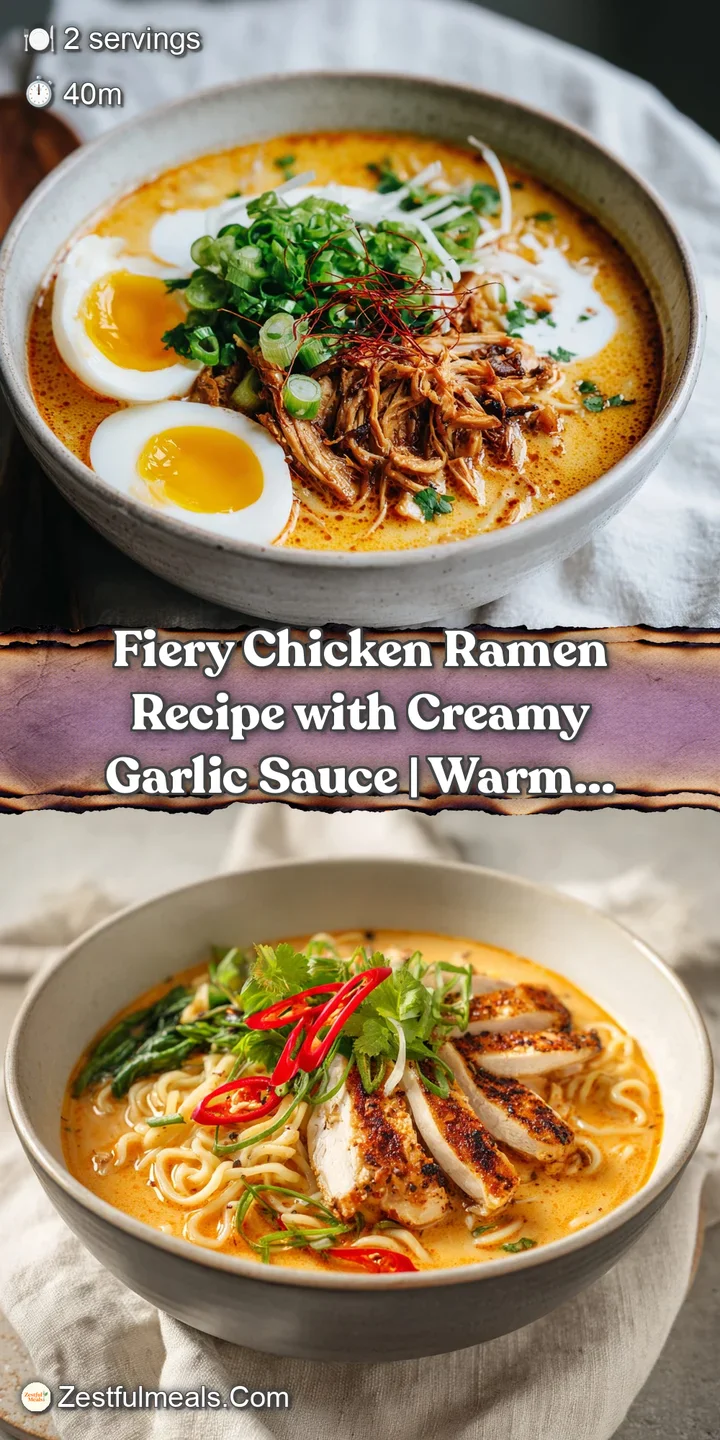
Fiery Chicken Ramen Recipe with Creamy Garlic Sauce
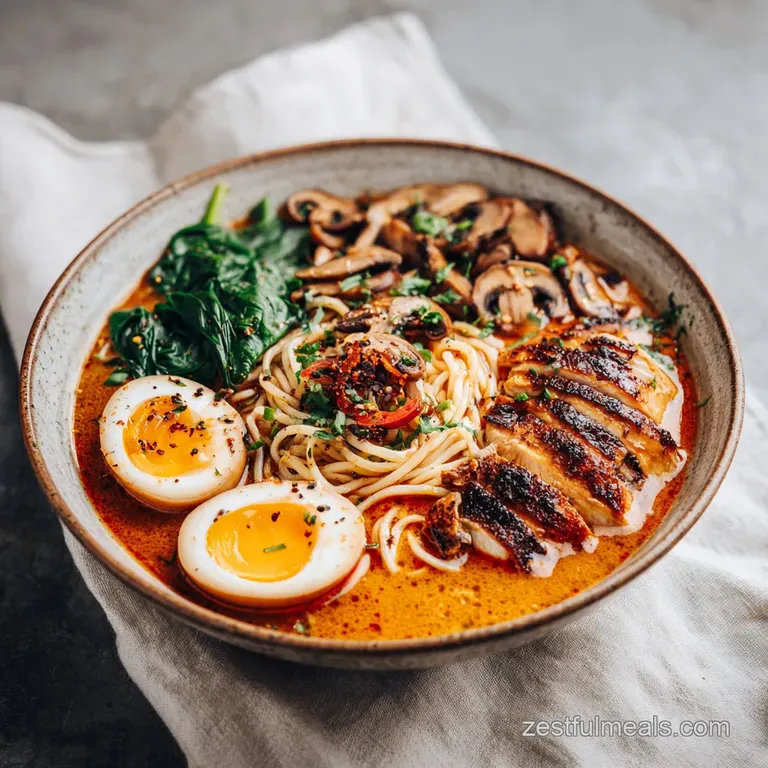
- Time: Active 15 minutes, Passive 25 minutes, Total 40 minutes
- Flavor/Texture Hook: Silky cream meets a bold, spicy kick
- Perfect for: Budget-friendly weeknight comfort or a cozy date night
- Fiery Chicken Ramen Recipe with Creamy Garlic Sauce
- Why This Recipe Works
- Component Analysis
- Ingredients and Smart Substitutes
- Step-By-Step Cooking Guide
- Solving Common Ramen Mistakes
- Adjusting for Family Size
- Common Kitchen Legends Debunked
- Storage and Zero Waste
- Very High in Sodium
- Recipe FAQs
- 📝 Recipe Card
Fiery Chicken Ramen Recipe with Creamy Garlic Sauce
Picture this: It’s a Tuesday, the rain is drumming against the window, and everyone in the house is hungry and cranky. I was standing in my kitchen last week, staring at a pack of plain instant noodles and a couple of chicken breasts, wondering how to make them actually exciting.
I started whisking sriracha and honey together, and the moment that mixture hit the hot vegetable oil, the whole kitchen filled with this incredible sweet and spicy aroma that brought the kids running.
This article shares a knockout fiery chicken ramen recipe with creamy garlic sauce you'll crave. It isn't your average watery soup; it’s thick, rich, and has just enough heat to make things interesting without being overwhelming.
We’ve all made the mistake of using those salty little flavor packets, but once you try this creamy garlic base, you’ll never go back to the foil squares again. Trust me, it’s the ultimate way to turn basic ingredients into something that feels special.
We’re going to focus on building layers of flavor here. By searing the chicken first, we leave behind all those golden, tasty bits in the pan that eventually melt into the cream sauce. It’s a one pot-adjacent method that keeps the cleanup manageable, which is a huge win for any busy home cook.
Let’s get that pan nice and hot and transform your dinner routine.
Why This Recipe Works
- Fat Soluble Capsaicin: The heat from the sriracha dissolves into the heavy cream, mellowing the sharp burn into a steady, warming glow.
- Maillard Reaction: Searing the honey marinated chicken creates a deep, caramelized crust that adds a savory sweet complexity to the broth.
- Starch Emulsification: Residual starch from the ramen noodles helps bind the chicken bone broth and cream, preventing the sauce from separating.
- Aromatic Infusion: Grating fresh ginger and garlic directly into the fat allows their essential oils to bloom before the liquid is added.
| Cooking Method | Time | Texture | Best For |
|---|---|---|---|
| Stovetop Skillet | 25 minutes | Crispy, charred edges | Maximum flavor development |
| oven-roasted | 20 minutes | Tender and juicy | Hands off multitasking |
| Air Fryer | 12 minutes | Very firm and snappy | Quickest protein prep |
Whether you choose the skillet or the air fryer, the goal is to get that chicken cooked through while keeping the center moist. If you're looking for something with a different flavor profile, you might enjoy my Chicken Fillet in recipe which uses a similar cream based approach but with a different spice blend.
Component Analysis
| Ingredient | Science Role | Pro Secret |
|---|---|---|
| Heavy Cream | Provides fat for emulsification | Use room temp to prevent curdling |
| Chicken Bone Broth | Adds gelatin and deep protein base | Choose low sodium to control salt |
| Honey | Promotes rapid browning (caramelization) | Adds a gloss to the sauce |
| Fresh Ginger | Breaks down tough protein fibers | Freeze the root for easier grating |
Each of these components plays a specific part in making the sauce feel luxurious. The bone broth isn't just liquid; it's the backbone of the entire dish, providing a richness that standard water just can't match.
Ingredients and Smart Substitutes
- 400g chicken breasts: Sliced thin. Why this? They cook fast and absorb the marinade perfectly.
- Substitute: Chicken thighs (boneless) for more moisture and fat.
- 2 tbsp low sodium soy sauce: Adds umami.
- Substitute: Tamari if you need a gluten-free option.
- 2 tbsp sriracha: The "fiery" element.
- Substitute: Gochujang for a thicker, fermented funk.
- 1 tbsp honey: Balances the heat.
- Substitute: Maple syrup or brown sugar.
- 1 tbsp toasted sesame oil: Nutty aroma.
- Substitute: Peanut oil if sesame allergies are a concern.
- 6 garlic cloves: Finely minced. Why this? This is a "Garlic Sauce" recipe, after all!
- Substitute: 2 tsp garlic powder in a pinch, but fresh is better.
- 1 tbsp fresh ginger: Grated.
- Substitute: 1/2 tsp ground ginger.
- 1 cup heavy cream: Creates the velvety texture.
- Substitute: Full fat coconut milk for a dairy-free twist.
- 2 cups chicken bone broth: The liquid base.
- Substitute: Vegetable broth for a lighter feel.
- 1 tbsp vegetable oil: For over high heat searing.
- Substitute: Canola or grapeseed oil.
- 2 packs ramen noodles: Discard the packets.
- Substitute: Udon or even spaghetti with a pinch of baking soda.
- 2 soft boiled eggs: Classic topping.
- 2 green onions: Sliced for freshness.
- 1 tsp black sesame seeds: For crunch.
- 1 tsp chili oil: Final heat boost.
step-by-step Cooking Guide
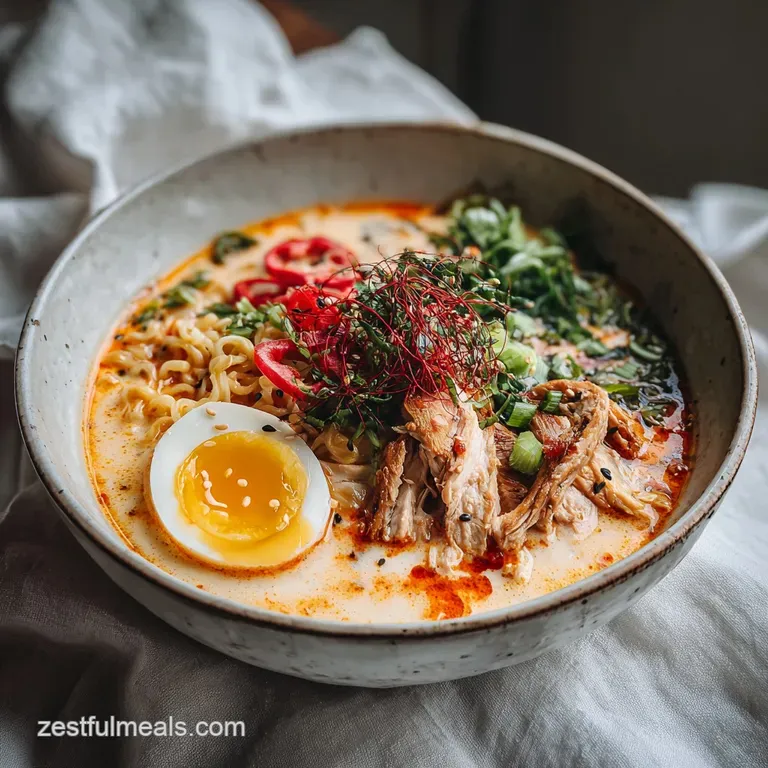
- Marinate the chicken. Toss the sliced chicken with soy sauce, sriracha, honey, and sesame oil in a bowl. Note: 15 minutes is enough, but longer is better.
- Sear the protein. Heat vegetable oil in a large skillet over medium high heat. Add the chicken in a single layer.
- Create the crust. Cook for 3-4 minutes per side until the edges are dark and caramelized. Remove and set aside.
- Sauté aromatics. In the same pan, lower the heat to medium and add the garlic and ginger.
- Deglaze the pan. Stir for 1 minute until fragrant and golden, scraping up the stuck bits from the chicken.
- Build the base. Pour in the chicken bone broth and bring to a gentle simmer.
- Temper the cream. Slowly whisk in the heavy cream. Note: Keeping the heat at a simmer prevents the dairy from breaking.
- Cook the noodles. Add the ramen blocks directly into the bubbling sauce.
- Hydrate and soften. Cook for 3 minutes until the noodles are tender and the sauce has thickened slightly.
- Final assembly. Divide the noodles and broth into two bowls, top with the seared chicken, halved eggs, onions, seeds, and chili oil.
Chef's Tip: If the sauce gets too thick while you're waiting to serve, just splash in a little more broth or hot water to loosen it back up. It absorbs quickly!
If you find yourself making stir fries often, you'll see a lot of similar steps in my Chicken and Broccoli recipe, specifically how we handle the aromatics to build flavor without burning the garlic.
Solving Common Ramen Mistakes
Why Your Sauce Curdled
Sometimes the sauce looks grainy instead of smooth. This usually happens if the cream is added to a boiling liquid that is too acidic or if the cream was cold from the fridge. Temperature shock is the enemy of a silky sauce. Always aim for a gentle simmer, not a rolling boil, when the dairy hits the pan.
| Problem | Root Cause | Solution |
|---|---|---|
| Rubbery Chicken | Overcooked or sliced too thick | Slice thin and sear fast over high heat |
| Bland Broth | Not enough salt or aromatics | Add a splash of soy sauce or extra ginger |
| Mushy Noodles | Cooked too long in the liquid | Pull them off the heat while they still have a "bite" |
Common Mistakes Checklist
- ✓ Pat the chicken dry if it’s been sitting in a lot of liquid (though the marinade helps, too much moisture prevents searing).
- ✓ Don't discard the chicken bits in the pan; that's where the flavor lives.
- ✓ Use room temperature cream to ensure a smooth emulsion.
- ✓ Cook noodles last so they don't sit and soak up all your delicious broth.
- ✓ Hard boil your eggs in advance to save time during the final assembly.
Adjusting for Family Size
If you're cooking for a larger crowd, doubling this recipe is straightforward, but you need to be careful with the skillet space. Do not crowd the pan when searing the chicken, or it will steam instead of brown. Work in batches to keep that "fiery" crust intact.
For the broth, you don't always need to double the spices perfectly start with 1.5x the sriracha and honey, then taste before adding more.
| Servings | Chicken Amount | Broth Volume | Cook Time |
|---|---|---|---|
| 1 Person | 200g | 1 cup | 20 minutes |
| 2 People | 400g | 2 cups | 25 minutes |
| 4 People | 800g | 4 cups | 35 minutes |
When scaling down for one, use a smaller pot to ensure the noodles are fully submerged in the broth. If you’re scaling up for a family dinner, you might want to use a large Dutch oven to give the noodles plenty of room to expand without sticking together.
| Problem | Cause | Fix |
|---|---|---|
| Too Spicy | Too much sriracha | Add a teaspoon of sugar or more cream |
| Too Salty | Broth was too concentrated | Add a splash of water or unsalted broth |
| Sauce too thin | Broth didn't reduce enough | Simmer for 2 extra minutes without a lid |
If you want a different experience next time: If you want it extra creamy, add a tablespoon of butter at the very end. If you want it healthier, swap half the cream for extra broth and add baby spinach.
If you want it crunchier, top with crushed peanuts or fried shallots.
Common Kitchen Legends Debunked
Many people believe that you must boil ramen noodles in separate water and then add them to the broth to keep the soup clear. While that's true for traditional clear broths, for a creamy garlic sauce, we actually want the starch from the noodles.
It helps thicken the sauce and ensures the flavor actually sticks to the strands rather than sliding off.
Another myth is that searing meat "seals in the juices." Science shows that's not true meat actually loses moisture as it browns. However, we sear the chicken because the Maillard reaction creates hundreds of new flavor compounds that make the dish taste savory and complex.
The "juice" stays because we don't overcook it, not because the crust acts as a seal.
Storage and Zero Waste
Storage: This ramen is best eaten fresh. The noodles will continue to absorb the broth as they sit, turning into a thick pasta like dish the next day. If you have leftovers, store the chicken and broth together in the fridge for up to 3 days.
When reheating, add a splash of milk or water to loosen the sauce. I don't recommend freezing the assembled dish as the noodles will become mushy.
Zero Waste: Don't throw away those green onion roots! Put them in a small jar of water on your windowsill, and they’ll regrow in a week. If you have leftover ginger, peel it with a spoon and freeze the knob; it’s much easier to grate when it’s solid.
The chicken bones from the broth (if you made it yourself) can be composted, and any leftover heavy cream can be whipped into a quick topping for coffee or dessert.
Very High in Sodium
1280 mg mg of sodium per serving (56% of daily value)
The American Heart Association recommends limiting sodium intake to about 2,300mg per day.
Sodium Reduction Tips for Your Ramen:
-
Broth Swap-30%
Replace the 2 cups of regular chicken bone broth with unsalted or low-sodium chicken broth. This can significantly lower the sodium content without sacrificing flavor.
-
Soy Sauce Substitute-20%
Even low-sodium soy sauce contributes sodium. Try using a sodium free soy sauce alternative or reduce the amount used to 1 tbsp. Consider adding a splash of rice vinegar for a similar tangy flavor.
-
DIY Sriracha-15%
Sriracha can be high in sodium. Make your own homemade version with less salt or use a smaller amount. Alternatively, use chili flakes for some heat.
-
Noodle Choice-10%
Ramen noodles themselves can contain sodium. Explore fresh ramen noodle options (often lower in sodium) or alternative noodles like soba or udon.
-
Flavor Boost
Enhance the flavor profile by experimenting with fresh herbs and spices! Consider adding more fresh ginger, garlic, or even a squeeze of lime to elevate the taste without increasing sodium.
-
Optional Garnish-5%
Omit the black sesame seeds and chili oil entirely. These may contain added salt and unnecessary ingredients.
-
Measure Mindfully-5%
Ensure accurate ingredient measurements, especially for the sesame oil, honey, garlic, and ginger, as excessive amounts can intensify the perceived saltiness and encourage sodium intake.
Recipe FAQs
What toppings would make this even better?
Yes, absolutely add a soft boiled egg and fresh herbs. Halved jammy soft boiled eggs (about 6.5 minutes) add richness, and freshly sliced green onions provide necessary freshness against the cream. You could also add crispy fried shallots for texture.
How to make the creamy sauce non-spicy for children?
Omit the sriracha entirely and increase the honey slightly. The heat comes solely from the sriracha; by leaving it out, you retain the garlic flavor profile. If you still want a savory depth, try substituting the heat with a pinch of smoked paprika for color.
Is it true that I should add the heavy cream while the broth is boiling?
False. Adding cold, full fat cream to aggressively boiling liquid is the primary cause of curdling. Temper the cream first by whisking it into the broth only after you have reduced the heat to a gentle simmer to maintain a silky, stable emulsion.
How to get the chicken perfectly seared instead of steamed?
Heat your skillet thoroughly over medium high heat before adding the marinated chicken. Ensure the chicken slices are not overlapping; cook in batches if necessary to maintain high surface contact, which promotes the Maillard reaction for that desirable crust.
Can I use milk instead of heavy cream for this ramen?
No, standard milk will result in a thin, watery broth lacking texture. Heavy cream contains the necessary fat content (around 36%) to properly emulsify with the broth and starch, creating the velvety mouthfeel essential to this dish. If you need a lighter version, try substituting with half and-half, or see how we manage texture in our Chicken and Shrimp recipe.
How long can I safely marinate the chicken ahead of time?
Marinate the chicken for a minimum of 15 minutes, up to 24 hours maximum. The acid and salt in the marinade will begin to cure the chicken if left too long, potentially making the texture mealy. If you're looking for other high flavor marinated chicken techniques, review the steps in the Chicken Skewers Recipe for 4 Servings.
What can I use if I don't have chicken bone broth?
Substitute with a high-quality low-sodium chicken broth and add one teaspoon of gelatin powder. While bone broth provides natural gelatin for body, the added powder mimics that luxurious mouthfeel. If you need a quick stock base, try using the components from our Rotisserie Chicken Seasoning recipe.
Fiery Creamy Chicken Ramen
Ingredients:
Instructions:
Nutrition Facts:
| Calories | 804 calories |
|---|---|
| Protein | 46g |
| Fat | 44g |
| Carbs | 56g |
| Fiber | 3g |
| Sugar | 8g |
| Sodium | 1280mg |
