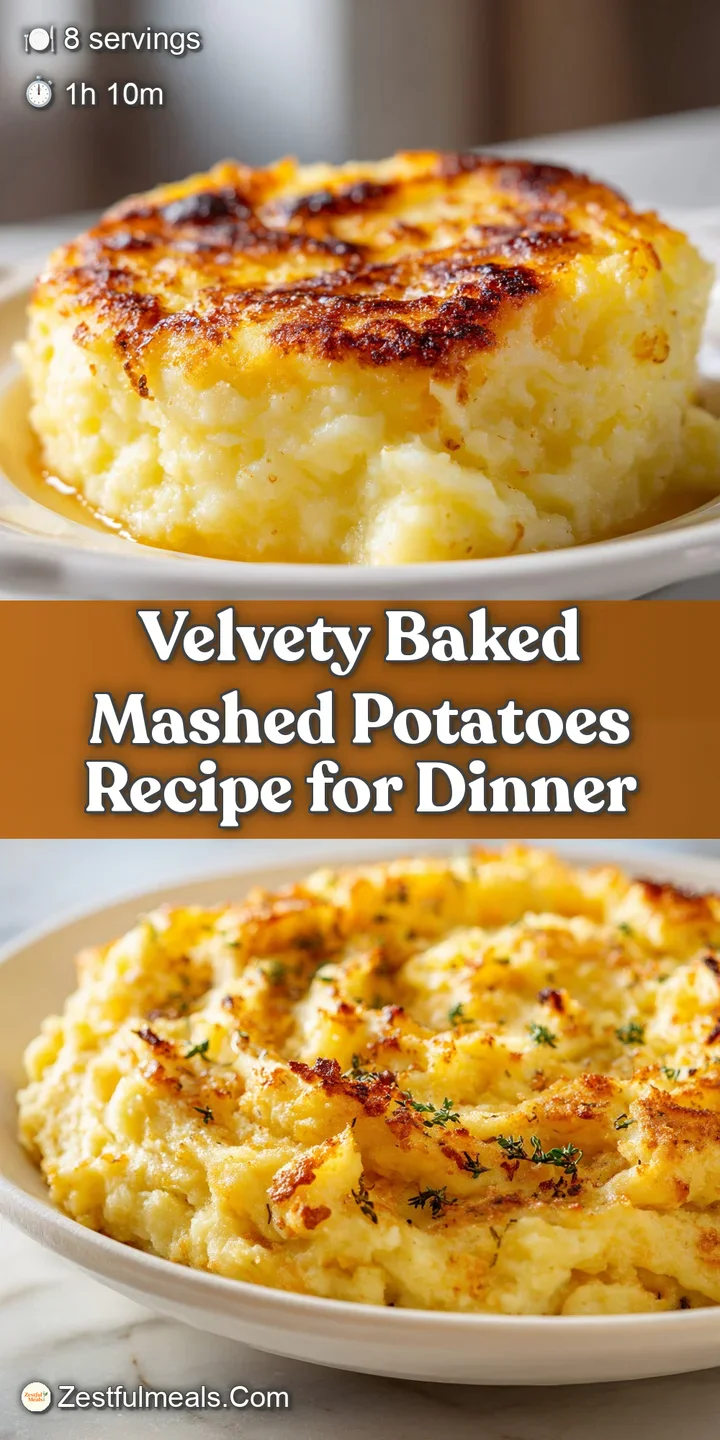
Velvety Baked Mashed Potatoes Casserole
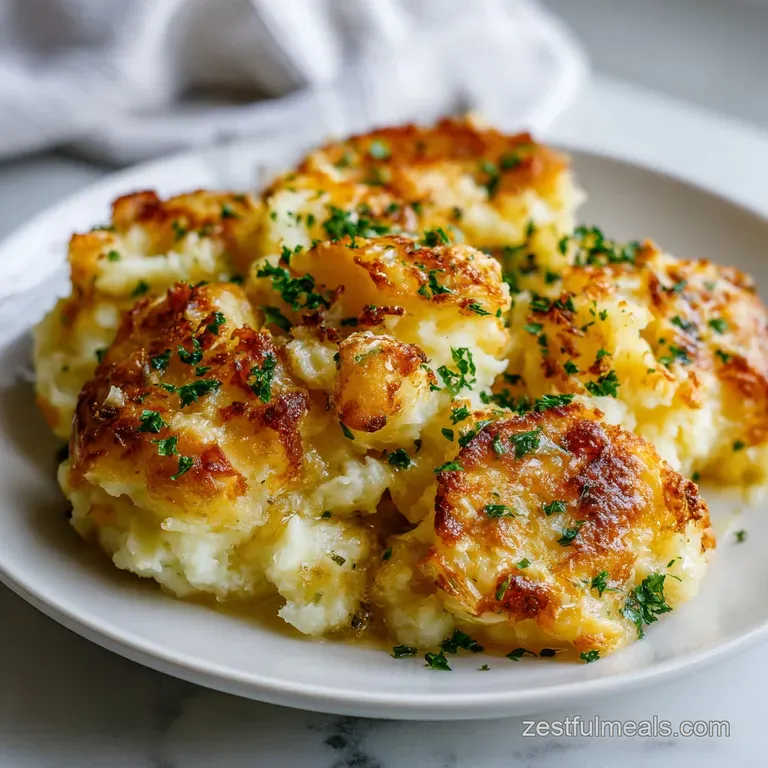
- Time: Active 20 minutes, Passive 50 minutes, Total 1 hours 10 mins
- Flavor/Texture Hook: A velvety, garlic infused center protected by a golden, shattering parmesan crust.
- Perfect for: Stress free holiday hosting, family Sunday roasts, or repurposing weeknight leftovers.
- Creating Perfect Velvety Baked Mashed Potatoes
- The Science of the Rise
- Timing and Performance Metrics
- Essential Ingredients and Substitutions
- Minimal Tools for Easy Prep
- Precise Steps for Golden Crust
- Fixing Common Texture Issues
- Healthier and Vegan Adaptations
- Storing and Reheating Leftovers
- Best Family Side Dish Pairings
- Traditional Myths Debunked
- Recipe FAQs
- 📝 Recipe Card
Creating Perfect Velvety Baked Mashed Potatoes
There is a specific sound that happens when a spoon first breaks through the crust of a well made potato casserole. It is a soft, crystalline crackle that gives way to a puff of garlic scented steam.
I remember the first time I got this right; my kitchen smelled like a high end steakhouse, and for once, my kids weren't fighting over the remote because they were too busy scraping the corners of the baking dish for the crispy bits.
Before I stumbled onto this method, my potatoes were always a bit of an afterthought sometimes lumpy, often lukewarm by the time the meat was ready. But this baked mashed potatoes recipe changed the game for our family weeknights. It turns a humble side into the main event.
We are talking about a texture that is nearly soufflé like, thanks to a few clever additions that keep the starches from collapsing under their own weight.
You don't need a culinary degree or a kitchen full of expensive gadgets to pull this off. It is all about how we handle the moisture and the heat. If you have ever struggled with "gluey" potatoes, you are in the right place.
We are going to walk through why these steps work so you can ditch the box mixes forever and serve something truly memorable.
The Science of the Rise
Understanding the "how" behind the heat helps you avoid the common pitfalls of soggy or heavy side dishes. This isn't just about mashing; it's about structural integrity.
- Starch Gelatinization: Yukon Golds have a medium starch content that, when boiled, creates a creamy base that still holds enough structure to support the added fats.
- Protein Aeration: Adding a room temperature egg causes the mixture to expand slightly in the oven, preventing the dense packing that usually makes mashed potatoes feel heavy.
- The Maillard Reaction: The combination of Parmesan and cheddar reacts with the oven's dry heat to create that characteristic brown, savory crust.
- Emulsification Stability: Using Greek yogurt instead of just heavy cream provides acidity that cuts through the richness and helps stabilize the dairy fats during the second bake.
| Method | Time | Texture | Best For |
|---|---|---|---|
| Classic Stovetop | 25 minutes | Dense and creamy | Immediate serving |
| Twice Baked | 1 hours 10 mins | Light and airy | make-ahead meals |
| Slow Cooker | 4 hours | Soft and rustic | Potluck convenience |
The main difference between a quick stovetop mash and this baked version is the moisture management. In the oven, some of the excess water from the boiling process evaporates, concentrating the potato flavor while the cheese forms a protective seal. It is a technique similar to what I use in my Garlic Herb Roasted recipe to ensure the inside stays fluffy while the outside gets that bite.
Timing and Performance Metrics
Success in the kitchen often comes down to hitting specific numbers. When you are juggling three different pots for a family dinner, these checkpoints will keep you on track without needing to hover over the stove.
| Component | Science Role | Pro Secret |
|---|---|---|
| Yukon Gold Potatoes | Medium Starch | Steaming them for 2 mins after draining removes excess water for a fluffier mash. |
| Large Egg | Structure Binder | Always whisk it separately before folding in to avoid "scrambled egg" streaks. |
| Greek Yogurt | Tangy Emulsifier | Use full fat or 2% for the best mouthfeel; the acidity prevents the potato from feeling greasy. |
Chef's Tip: Freeze your butter for 10 minutes before dicing it into the hot potatoes. This slight delay in melting allows you to incorporate it more evenly without the fat separating from the solids.
Essential Ingredients and Substitutions
To get that restaurant quality finish, we need to be specific about our components. Using the right potato is non negotiable for the texture we're chasing here.
- 3 lbs Yukon Gold potatoes: Peeled and cubed. Why this? They provide a naturally buttery flavor and a silky, non grainy texture.
- 4 cloves garlic: Smashed. Why this? Boiling them with the potatoes infuses a mellow, sweet garlic flavor throughout.
- 1.5 tsp sea salt: Fine grain.
- 1/2 cup low-fat Greek yogurt: Or sour cream.
- 4 tbsp grass fed butter: Unsalted is best so you can control the seasoning.
- 1/4 cup skim milk: Helps achieve the right consistency before baking.
- 1 large egg: Room temperature and lightly beaten.
- 1/2 cup Parmesan cheese: Finely grated for the crust.
- 1/4 cup sharp light cheddar: Shredded for extra gooiness.
- 2 tbsp fresh chives: Finely minced for a pop of color and oniony bite.
- 1 pinch smoked paprika: Adds a subtle depth and helps the crust look golden.
| Original Ingredient | Substitute | Why It Works |
|---|---|---|
| Yukon Gold | Russet Potatoes | Higher starch makes them even fluffier, but they lack the buttery flavor. |
| Greek Yogurt | Sour Cream | Similar fat and acidity. Note: Adds a richer, slightly more indulgent flavor. |
| Skim Milk | Chicken Broth | Adds savory depth while keeping the dish lower in fat. |
If you find yourself short on fresh potatoes but still want that crispy side dish vibe, you might enjoy my Garlic Parmesan Fries recipe which uses a similar cheese crusting technique but with much less prep time.
Minimal Tools for Easy Prep
We aren't looking to create a mountain of dishes. This recipe is designed for the busy home cook who wants maximum results with a few reliable basics.
- Large Pot: At least 5 quart capacity to allow the potatoes to move freely in the boiling water.
- Potato Masher or Ricer: A ricer will give you the smoothest results, but a sturdy hand masher works for a more rustic, family style texture.
- 9x13 Baking Dish: This provides the most surface area for that golden crust we all love.
- Mixing Bowls: One small bowl for beating the egg and a larger one if you prefer to mix everything outside the hot pot.
Selecting the Best Potato Type
While you can technically use any potato, the Yukon Gold is the undisputed king of the baked mashed potatoes recipe. It sits perfectly in the middle of the starch spectrum. Russets are great for frying but can become mealy when baked in a casserole. Red potatoes are too waxy and often turn gummy if over mashed.
The Yukon Gold holds its shape just enough while providing a natural creaminess that means you can use less butter and milk.
Protein for a Soufflé Effect
The addition of a single egg might seem strange if you are used to basic stovetop mash, but it is the secret to the "rise." As the casserole bakes, the egg proteins set, creating tiny air pockets. This prevents the potatoes from settling into a dense, heavy brick.
It's the difference between a side dish that feels like a lead weight and one that feels like a savory cloud.
Mashing Before the Second Bake
The reason we mash, then bake, is all about surface area. By creating peaks and valleys in the potato mixture before it hits the oven, you create more spots for the cheese to melt and the heat to crisp up the edges. It transforms the dish from a simple mash into a sophisticated casserole.
Precise Steps for Golden Crust
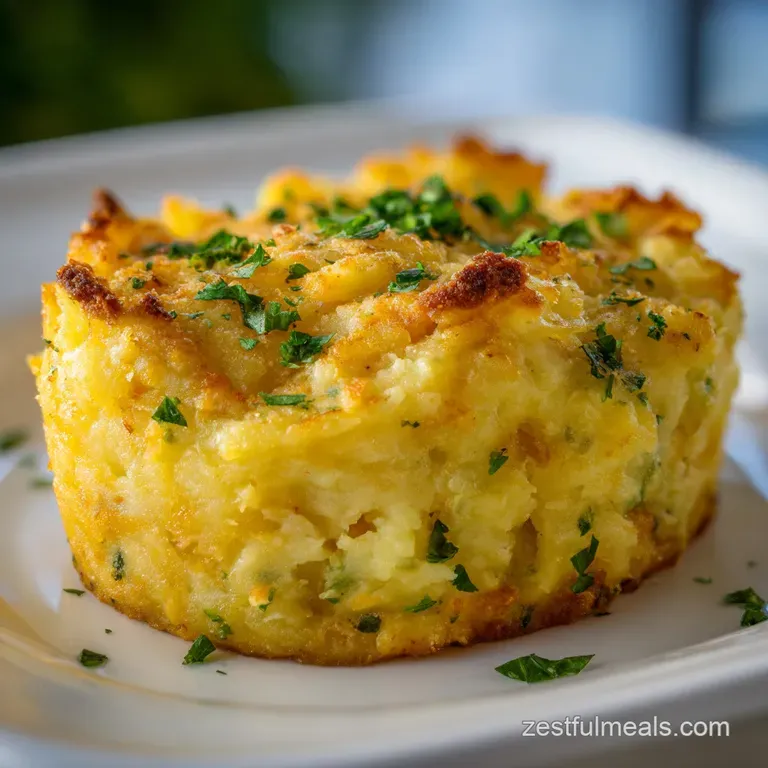
- Place your 3 lbs of cubed Yukon Gold potatoes and 4 smashed garlic cloves in a large pot.
- Cover with cold water and add 1.5 tsp sea salt. Note: Starting with cold water ensures the potatoes cook evenly from edge to center.
- Boil for 15-20 minutes until a fork slides easily into the center of the largest cube.
- Drain the potatoes thoroughly and return them to the warm pot for 2 minutes to let the steam escape.
- Mash the potatoes and garlic until no large lumps remain.
- Fold in 4 tbsp butter, 1/2 cup Greek yogurt, and 1/4 cup milk until the mixture is velvety and smooth.
- Add the lightly beaten egg and half of the Parmesan cheese, folding gently to combine.
- Spread the mixture into a greased baking dish, using a fork to create textures on the surface.
- Top with the remaining Parmesan, 1/4 cup cheddar, and a pinch of smoked paprika.
- Bake at 400°F (200°C) for 20-25 minutes until the top is bubbling and the edges are golden brown.
Chef's Tip: Use the tines of a fork to "rake" the top of the potatoes before putting them in the oven. Those little ridges will become the crispiest parts of the crust.
Fixing Common Texture Issues
Even with the best intentions, things can go sideways in the kitchen. Usually, it comes down to moisture or temperature.
Potatoes Turn Gummy or Gluey
This is the most common heartbreak. It happens when the starch cells are broken too aggressively, usually from over processing. If you use a food processor or a high speed blender, you’re basically making wallpaper paste.
The Casserole is Too Runny
If your mash looks more like soup than a side dish, you likely didn't drain the potatoes well enough or added too much liquid. The egg helps bind it, but it can't perform miracles against a puddle.
| Problem | Root Cause | Solution |
|---|---|---|
| Gummy Texture | Over mashing or using a blender | Use a hand masher and stop as soon as lumps disappear. |
| Bland Flavor | Water wasn't salted enough | Fold in a bit of extra salt or a splash of lemon juice before baking. |
| Soggy Bottom | Excess water in boiled potatoes | Let them steam dry in the hot pot for 2 mins after draining. |
Common Mistakes Checklist
- ✓ Never start potatoes in boiling water; always start with cold water for even cooking.
- ✓ Ensure the egg is at room temperature to prevent it from curdling when hitting the warm mash.
- ✓ Don't skip the steam dry step; water is the enemy of a firm, fluffy casserole.
- ✓ Avoid pre shredded cheese if possible; the anti clumping agents prevent a smooth melt.
- ✓ Use a 400°F (200°C) oven; anything lower will steam the potatoes rather than crisping them.
Healthier and Vegan Adaptations
For families with dietary restrictions, this baked mashed potatoes recipe is surprisingly flexible. You can lighten it up or remove the dairy entirely without losing that comforting soul.
To make this vegan, swap the butter for a high-quality olive oil or vegan butter substitute. For the Greek yogurt, a plain unsweetened soy or almond yogurt works well, though you may want to add a teaspoon of nutritional yeast to mimic that cheesy tang.
The egg can be replaced with a "flax egg" (1 tbsp ground flax mixed with 3 tbsp water), which helps with the binding, though you won't get quite as much lift.
If you’re looking for a different kind of healthy potato fix, you might consider my Frozen Sweet Potatoes recipe. It’s a great way to get those complex carbs in a fraction of the time, especially on those nights when peeling 3 lbs of potatoes feels like a mountain you can't climb.
Storing and Reheating Leftovers
Potatoes are notorious for changing texture in the fridge, but because we've added fats and an egg binder, these hold up better than most.
- Fridge: Store in an airtight container for up to 4 days.
- Freezer: You can freeze the baked casserole for up to 2 months. Thaw in the fridge overnight before reheating.
- Zero Waste: Don't throw away those potato peels! Toss them with a little oil and salt, then bake at 400°F until crispy for "kitchen chips" while the main dish cooks.
- Reheating: Avoid the microwave if you want to keep the crust. Instead, pop it back in a 350°F (180°C) oven for 15 minutes. If it looks a little dry, add a tiny splash of milk before heating.
Best Family Side Dish Pairings
These potatoes are hearty enough to stand up to bold flavors. I love serving them alongside a simple roast chicken or a slow cooked pot roast where the gravy can pool in the nooks and crannies of the mash.
If you’re planning a big spread, they pair beautifully with other classic sides. Sometimes I'll serve these alongside my Cheesy Potatoes for recipe if I'm hosting a huge crowd and need two different styles of potato to keep everyone happy. One is slow and gooey, while this one is fast and crispy.
For a holiday finish, you can’t go wrong following up this savory side with a slice of Sweet Potato Pecan recipe. It keeps the root vegetable theme going from dinner straight through to dessert, which is always a hit at our house.
Traditional Myths Debunked
Many people believe you must peel potatoes for a "proper" mash. In reality, leaving a bit of the skin on Yukon Golds adds an earthy flavor and extra nutrients. For this specific baked version, we peel them to ensure the egg and yogurt can create that ultra smooth, soufflé like interior.
Another myth is that you should add milk and butter while they are cold. Cold dairy shocks the potato starches and can lead to a grainy texture. Always make sure your butter is at least room temperature, and if you have time, warm the milk slightly before pouring it in.
This keeps the starches relaxed and leads to that velvety mouthfeel we’re all chasing.
Finally,, don't believe the idea that you can't over boil a potato. If they cook too long, they absorb excess water, making the final dish heavy and bland. Aim for "fork tender" meaning the fork goes in with no resistance but the potato doesn't immediately fall apart into the water.
This is the sweet spot for the perfect bake.
Recipe FAQs
Can you bake mashed potatoes?
Yes, baking transforms them. Baking takes standard mash and turns it into a casserole topped with a crisp, flavorful crust, which is a fantastic way to serve them at a gathering.
Is it better to bake your potatoes for mashed potatoes?
No, you should boil or steam the potatoes first. Baking raw potatoes prevents them from achieving the necessary softness for mashing; the baking step here is for finishing the casserole texture.
Are baked potatoes good for mashing?
No, baked potatoes are generally too dry for excellent mash. Baking evaporates moisture, leaving starches dry and crumbly, which makes achieving a smooth texture difficult.
What temperature should I bake mashed potatoes at?
Bake at 400°F (200°C). This high heat is necessary to quickly crisp the cheese topping and set the egg binder without overcooking the potato interior.
How long should I boil the potatoes before baking?
Boil until a fork easily pierces the center, typically 15 to 20 minutes. Ensure you let them steam dry in the pot for a few minutes afterward; this moisture control is crucial for a light final product, similar to what we focus on for fluffy results in our Potato Flake Sourdough Starter recipe.
Why do my baked mashed potatoes always turn out dense or heavy?
You likely over processed the potatoes during the mashing stage. Over mashing breaks down the starch walls, releasing excess gluten, which causes a gluey texture; use a ricer or a hand masher and stop when just smooth.
Can I make this ahead of time for a holiday meal?
Yes, assembly can be completed up to 24 hours ahead of time. Cover the assembled, unbaked casserole tightly and refrigerate; just add an extra 10 minutes to the bake time when you pull it out cold.
Golden Baked Mashed Potatoes
Ingredients:
Instructions:
Nutrition Facts:
| Calories | 241 kcal |
|---|---|
| Protein | 9.3 g |
| Fat | 8.9 g |
| Carbs | 31.6 g |
| Fiber | 3.7 g |
| Sugar | 2.5 g |
| Sodium | 537 mg |
