Mushroom Bisque Soup: Restaurant Quality

- Time: Active 20 minutes, Passive 40 minutes, Total 60 minutes
- Flavor/Texture Hook: Concentrated woodsman flavor with a velvety, silk ribbon finish
- Perfect for: Cozy family weeknights or a budget smart holiday starter
- Creating the Ultimate Mushroom Bisque Soup at Home
- The Science of Why it Works
- Essential Component Analysis and Ingredient Deep Dive
- Essential Tools for a Silkier Texture
- Bringing It Together Step by Step
- Troubleshooting Guide for Common Texture Mishaps
- Mix It Up with Creative Variations
- Keeping It Fresh with Storage Tips
- Perfect Complements for Your Soup
- Myths About Mushroom Cooking
- High in Sodium
- Mushroom Bisque Soup FAQs
- 📝 Recipe Card
Creating the Ultimate Mushroom Bisque Soup at Home
You know that specific aroma that hits you when mushrooms hit a hot pan with butter? That earthy, nutty scent that somehow feels like a warm hug? That is exactly where we are going today.
I used to think a truly great bisque was reserved for fancy French bistros where they charge twenty dollars for a tiny bowl, but honestly, we can do it better in our own kitchens. The secret isn't about expensive truffles or rare ingredients; it is about how we treat the humble mushrooms we find at the local grocery store.
We have all been there, right? You try to make a "creamy" soup and it ends up looking like grey sludge or, worse, it tastes like nothing but heavy cream. I have made those mistakes so you don't have to.
We are going to build layers of flavor, starting with the dry heat of a sauté pan and ending with a bright splash of lemon that cuts right through the richness. It is a balance of salt, fat, and acid that makes every spoonful feel substantial.
This recipe is designed to be smart with your budget while delivering those "wow" results. We are using 1.5 lbs of mixed mushrooms, but we are also bringing in the heavy hitters: dried porcinis.
They act like a flavor bouillon cube for the woods, giving us that deep, dark intensity that fresh mushrooms alone sometimes struggle to provide. Let's get into the details of why this specific method works every single time.
The Science of Why it Works
The secret to this soup lies in the Maillard reaction, where the proteins and sugars in the mushrooms brown to create hundreds of new flavor compounds. By adding a splash of soy sauce, we are also introducing exogenous glutamates that physically bond with the natural guanylate in the mushrooms, creating a "umami synergy" that makes the soup taste meatier than it actually is.
- Maillard Browning: Sautéing mushrooms at a high enough temperature evaporates their 90% water content, allowing browning to occur rather than steaming.
- Deglazing Chemistry: The alcohol in the 0.5 cup dry Sherry dissolves flavor compounds that aren't water soluble, pulling every bit of fond off the bottom of the pot.
- Cellular Breakdown: Simmering the mushrooms for 40 minutes softens the chitin in their cell walls, ensuring a velvety texture when blended.
- Emulsification: Adding 0.75 cup heavy cream at the end creates a stable fat in-water emulsion that coats the palate and carries the scent molecules to your nose.
| Method | Prep Time | Depth of Flavor | Texture |
|---|---|---|---|
| Fresh Mushrooms Only | 10 minutes | Light, earthy | Grainy if not cooked long |
| Dried + Fresh Mix | 20 minutes | Concentrated, complex | Velvety and rich |
| Shortcut (Canned) | 2 minutes | One note, metallic | Mushy and processed |
Choosing the "Dried + Fresh Mix" method is the secret to getting that professional finish. While the fresh mushrooms provide the bulk, the 30g of dried porcinis act as the soul of the dish. If you are looking for another comfort classic that hits those same savory notes, you might also love my Simple Tomato Soup recipe.
Essential Component Analysis and Ingredient Deep Dive
Before we start tossing things into the pot, let's talk about why these specific items are on the counter. Every single ingredient in this list has a job to do. We aren't just adding liquid; we are adding layers.
| Ingredient | Science Role | Pro Secret |
|---|---|---|
| Mixed Mushrooms | Primary flavor base | Use the stems for the stock; they have more flavor than the caps. |
| Dried Porcini | Umami concentrate | Never throw away the soaking liquid; it is the most flavorful part. |
| Dry Sherry | Acidity and solvent | Avoid "cooking sherry" which is loaded with salt; use a real bottle. |
| Heavy Cream | Mouthfeel stabilizer | Add it at room temperature to prevent the soup from "breaking." |
Building this flavor profile requires a few specific items. Here is the breakdown of what you'll need and how to swap them if your pantry is looking a little bare.
- 1.5 lbs mixed mushrooms: I usually go for Cremini, Shiitake, and Portobello. Why this? Creminis provide bulk, Shiitakes add a buttery silkiness, and Portobellos bring the deep color.
- Substitute: All Cremini or Button mushrooms. Note: The color will be lighter and the flavor more mild.
- 30g dried Porcini mushrooms: These are essential for that "forest" taste. Why this? They contain high concentrations of natural glutamates.
- Substitute: Dried Shiitakes or even a tablespoon of mushroom powder.
- 4 tbsp unsalted butter: Fat is the vehicle for flavor. Why this? Butter browns slightly, adding a toasted note.
- Substitute: Olive oil for a lighter version or vegan butter.
- 2 large shallots: Sweeter and more delicate than onions. Why this? They melt into the soup without adding grit.
- Substitute: Half a small yellow onion, finely diced.
- 4 cloves garlic: Smashed and minced for maximum surface area. Why this? Garlic provides a sharp counterpoint to the earthy mushrooms.
- Substitute: 1 tsp garlic powder added with the stock.
- 0.5 cup dry Sherry: To deglaze and add a nutty acidity. Why this? It bridges the gap between the fat and the earthiness.
- Substitute: Dry white wine or 2 tbsp apple cider vinegar mixed with water.
- 4 cups beef or vegetable stock: The body of your soup. Why this? Beef stock adds a darker, richer color to the bisque.
- Substitute: Chicken stock or mushroom bouillon.
- 1 tsp soy sauce: Our secret umami weapon. Why this? It seasons the soup from the inside out without tasting like "soy."
- Substitute: Worcestershire sauce or a pinch more Kosher salt.
- 0.75 cup heavy cream: For that signature velvet finish. Why this? It provides the fat needed to carry the flavor.
- Substitute: Full fat coconut milk (note: adds a slight tropical flavor).
- 1 tsp fresh lemon juice: The final brightening agent. Why this? Acid wakes up the heavy fats.
- Substitute: White wine vinegar.
Essential Tools for a Silkier Texture
You don't need a professional kitchen to make a great mushroom bisque soup, but there are a couple of things that make the job a lot easier. First off, a heavy bottomed pot like a Dutch oven is your best friend here.
It holds heat evenly, which is vital for browning those 1.5 lbs of mushrooms without them just boiling in their own juices.
The most important tool, however, is your blender. If you have a high speed blender (like a Vitamix or Blendtec), you are going to get a texture that is absolutely ethereal. If you are using a standard blender or an immersion blender, just be prepared to blend for a few extra minutes.
Chef's Tip: When blending hot soup, never fill the blender more than halfway. Remove the center piece of the lid and cover it with a folded kitchen towel. This allows steam to escape so the lid doesn't fly off and paint your kitchen ceiling in mushroom brown!
Bringing It Together step-by-step
Ready to cook? Let's get that stove going. This process is all about patience in the beginning and speed at the end.
- Rehydrate the porcinis. Place the 30g dried porcinis in 1 cup hot water for 20 minutes. Note: This softens the mushrooms and creates a concentrated "tea" for the stock.
- Prep the fresh mushrooms. Clean and slice the 1.5 lbs mixed mushrooms. Ensure they are dry before they hit the pan.
- Sauté the mushrooms. Melt 4 tbsp butter in a large pot over medium high heat. Add mushrooms in batches and cook 10 minutes until they are deep brown and sizzling.
- Add aromatics. Stir in the 2 minced shallots and 4 cloves of garlic. Note: Adding them now prevents the garlic from burning during the long mushroom sear.
- Deglaze the pan. Pour in 0.5 cup dry Sherry. Scrape the bottom of the pot until all the brown bits have dissolved.
- Build the liquid base. Add the 4 cups stock, the rehydrated porcinis (chopped), and the reserved soaking liquid (strained through a paper towel).
- Simmer for depth. Toss in the sprig of fresh thyme and 1 tsp soy sauce. Simmer for 30 minutes until the flavors are concentrated and rich.
- Blend to perfection. Remove the thyme sprig. Transfer the soup to a blender and process until it is completely velvety and smooth.
- Finish with cream. Stir in the 0.75 cup heavy cream and return to low heat. Do not let it boil once the cream is in.
- The final polish. Add 1 tsp lemon juice, 0.5 tsp salt, and 0.25 tsp black pepper. Taste and adjust as needed.
Troubleshooting Guide for Common Texture Mishaps
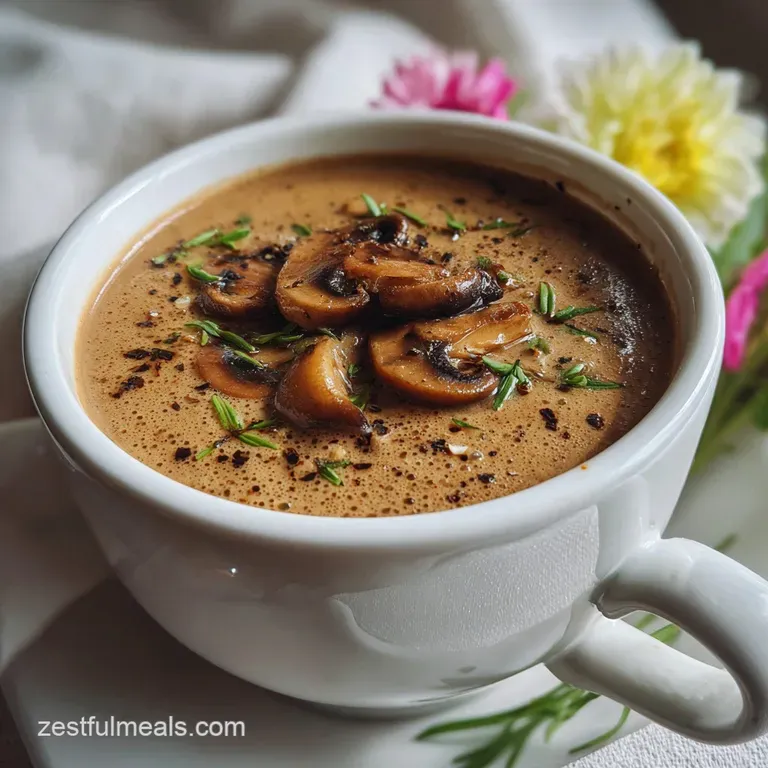
Even the best of us hit a snag sometimes. Maybe the soup feels too thin, or perhaps it looks a little grainy. Don't panic; most of these are quick fixes that don't require starting over.
Why Your Bisque Feels Grainy
If your soup has a bit of a "sand" texture, it usually means the mushrooms didn't cook long enough before blending, or the blender didn't have enough power. Mushrooms are made of chitin, which is tough. To fix this, you can pour the blended soup through a fine mesh sieve.
It takes an extra five minutes, but it will save the dish.
Fixing a Thin or Watery Body
If the soup isn't as thick as you'd like, it might be because the mushrooms were particularly watery. You can fix this by simmering the soup for an extra 10 minutes before adding the cream to reduce the liquid.
If it is already finished and still thin, a small cornstarch slurry (1 tsp cornstarch to 1 tbsp water) can be whisked in while it simmers for a quick thickening boost.
| Problem | Root Cause | Solution |
|---|---|---|
| Soup is too salty | Stock was too concentrated | Add a splash more water or a pinch of sugar to balance. |
| Cream curdled | Soup was boiling when cream was added | Use an immersion blender to try and re emulsify the fat. |
| Flavor is flat | Missing acidity | Add another 1/2 tsp of lemon juice or a splash of Sherry. |
Common Mistakes Checklist
- ✓ Don't wash mushrooms under the tap: They act like sponges. Use a damp paper towel to wipe them clean instead.
- ✓ Avoid overcrowding the pan: If you put all the mushrooms in at once, they will steam. Cook them in two batches for that golden crust.
- ✓ Strain the porcini liquid: Dried mushrooms often have bits of grit or sand in them. Always pour the soaking liquid through a coffee filter.
- ✓ Temper your cream: Add a ladle of hot soup to your cold cream before pouring the cream into the pot to prevent thermal shock.
Mix It Up with Creative Variations
While the classic version is hard to beat, sometimes you want to change the vibe based on who is coming over for dinner. This recipe is incredibly flexible.
- Crafting a Vegan Mushroom Bisque Recipe: Swap the butter for vegan butter or oil, and use a high-quality cashew cream or full fat coconut milk instead of heavy cream. It maintains that silky texture without the dairy.
- The Truffled Forest Twist: If you want to get fancy, finish each bowl with a few drops of white truffle oil and some fried sage leaves. It takes the "earthy" factor to a whole new level.
- The Chunky Woodsman: If you aren't a fan of smooth soups, only blend half of the mixture. This gives you a creamy base with meaty bites of mushroom throughout.
If you are feeding a larger crowd and need something more substantial to go alongside this, check out my Lasagna Recipe to which is baked at 350 and serves as the perfect heavy hitter after a light soup starter.
Keeping It Fresh with Storage Tips
Mushroom bisque is one of those rare dishes that actually tastes better the next day. The flavors continue to meld and the umami becomes even more pronounced.
In the Fridge: Store leftovers in an airtight container for up to 4 days. When reheating, do it over low heat on the stove. If you microwave it on high, the cream might separate and get oily.
In the Freezer: You can freeze this soup for up to 2 months. However, be aware that cream based soups can sometimes change texture once thawed. Zero Waste Tip: If you find yourself with just a small amount of leftover bisque, use it as a sauce! It is essentially a concentrated mushroom gravy. Pour it over roasted chicken or mix it into a bowl of Cheesy Potatoes for recipe for a massive flavor upgrade.
Perfect Complements for Your Soup
What you serve with your bisque can change it from a light lunch to a full on feast. Since the soup is quite rich, you want things that offer texture or a bit of sharp contrast.
- Crusty Sourdough: A thick slice of toasted bread is non negotiable for soaking up the last bits from the bottom of the bowl.
- Arugula Salad: A simple green salad with a lemon vinaigrette provides the peppery bite needed to cut through the heavy cream.
- Roasted Garlic: Squeeze some roasted garlic cloves onto your bread before dipping it into the soup. The sweetness of the garlic pairs beautifully with the mushrooms.
Decision Shortcut for the Perfect Bowl
- If you want maximum richness, use 1 cup of heavy cream instead of 0.75 cup.
- If you want more "funk," add a tablespoon of blue cheese crumbles right before serving.
- If you want a lighter meal, skip the cream entirely and blend in a boiled potato for natural creaminess.
Myths About Mushroom Cooking
There is a lot of "old wives' tale" advice floating around about mushrooms that can actually ruin your soup. Let's set the record straight so you can cook with confidence.
The "Never Wash" Rule: People say you should never let water touch a mushroom. While they do absorb water, a quick rinse under cold water followed by immediate drying with a towel is perfectly fine. It’s much better than eating grit! Just don't let them soak.
The Searing Myth: Some people think you have to sear mushrooms on high heat to "lock in juices." In reality, mushrooms don't have "juices" like a steak. They have water. Searing is about removing that water to concentrate the flavor, not locking anything in.
The Butter Timing: Many recipes say to add butter at the very start. I actually find that starting with a little neutral oil and adding the butter halfway through the searing process prevents the milk solids in the butter from burning before the mushrooms are actually browned.
At the end of the day, this mushroom bisque soup is about the joy of simple ingredients done right. It's a recipe that has taught me that patience in the kitchen pays off in flavor.
Whether you're making this for a rainy Tuesday or a fancy Saturday night dinner, I know your family is going to love it as much as mine does. Happy cooking!

High in Sodium
875 mg mg of sodium per serving (38% of daily value)
American Heart Association recommendation: limit sodium intake to about 2,300mg per day.
Tips to Reduce Sodium
-
Low-Sodium Broth-30%
Substitute the regular beef or vegetable stock with a low-sodium or no-salt added version. This can significantly reduce the sodium content without sacrificing flavor.
-
Reduce Added Salt-25%
Reduce the amount of Kosher salt added from 0.5 tsp to 0.25 tsp, or eliminate it altogether. Taste the soup before adding any salt and adjust to your preference.
-
Limit Soy Sauce-20%
Soy sauce contributes significantly to the sodium level. Reduce the amount used from 1 tsp to 0.5 tsp, or substitute with a low-sodium soy sauce alternative.
-
Enhance with Lemon-5%
Increase the amount of fresh lemon juice slightly. Lemon juice enhances the flavor of the soup and can help offset the need for salt.
-
Experiment with Herbs
Use fresh or dried herbs and spices like garlic powder, onion powder, or smoked paprika to add flavor without adding sodium. Consider adding a bay leaf during simmering for extra depth.
Mushroom Bisque Soup FAQs
What's the difference between cream of mushroom soup and mushroom bisque?
Bisque is a richer, more refined soup. A true bisque is typically made with shellfish or puréed vegetables, strained, and finished with cream, resulting in a velvety, smooth texture.
Cream of mushroom soup can be simpler, often chunkier, and may not undergo the extensive straining and finishing process of a bisque.
What is mushroom bisque?
It's a rich, intensely flavored puréed mushroom soup. Mushroom bisque focuses on developing deep, savory mushroom flavor, often using a combination of fresh and dried mushrooms, and is finished with cream for a luxurious, velvety texture.
What is a bisque soup made of?
Traditionally, bisque starts with a base of puréed shellfish or vegetables, aromatics, and stock. Key to its definition is finishing the soup with heavy cream and often a liaison, like egg yolk or roux, to achieve a smooth, thick, and emulsified texture.
What defines a soup as a bisque?
A bisque is defined by its velvety texture and rich finish. It's typically made from puréed ingredients, strained to remove solids, and always finished with heavy cream, creating a luxurious mouthfeel that distinguishes it from other cream soups.
Can I use dried mushrooms in mushroom bisque?
Yes, dried mushrooms are highly recommended. They provide an intense, concentrated umami flavor that fresh mushrooms alone can't match, deepening the overall richness and complexity of the bisque.
How do I get a truly velvety texture in my mushroom bisque?
Blend thoroughly and strain if necessary. Use a high powered blender for maximum smoothness, and consider straining the soup through a fine mesh sieve to catch any fibrous bits and ensure a silky consistency.
What's the best way to add cream to mushroom bisque?
Temper the cream before adding it. Gently warm the heavy cream by whisking in a ladleful of the hot soup before incorporating it into the main pot, then heat gently without boiling to prevent curdling.
Mushroom Bisque Soup

Ingredients:
Instructions:
Nutrition Facts:
| Calories | 383 kcal |
|---|---|
| Protein | 10.4 g |
| Fat | 28.2 g |
| Carbs | 13.8 g |
| Fiber | 2.3 g |
| Sugar | 3.8 g |
| Sodium | 875 mg |
