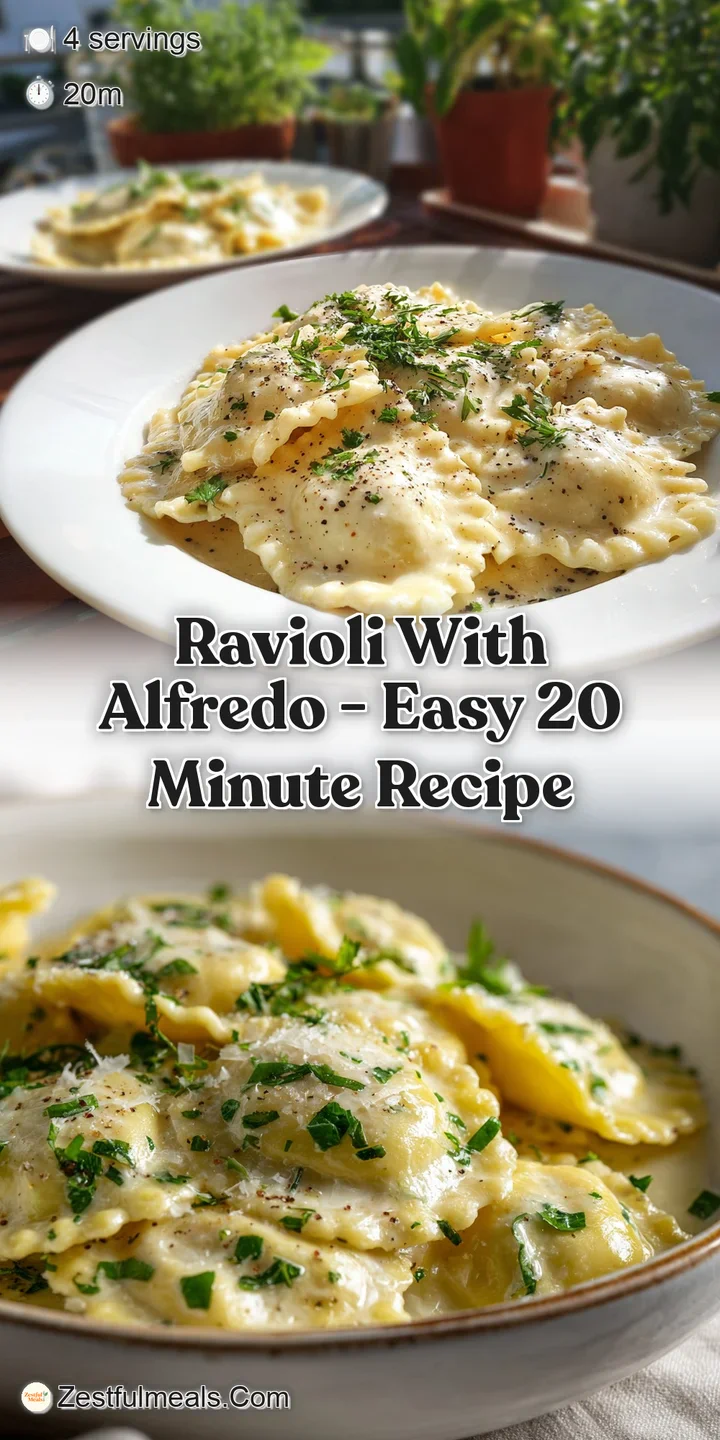
Ravioli with Alfredo: Creamy Garlic Sauce
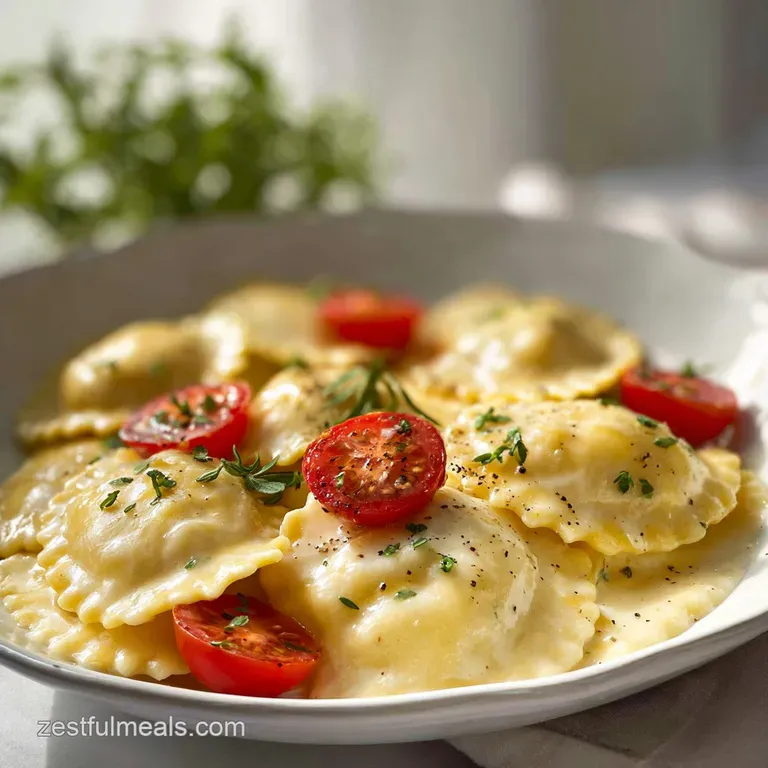
- Time: Active 5 minutes, Passive 15 minutes, Total 20 minutes
- Flavor/Texture Hook: Silky, garlic forward creaminess with a peppery bite
- Perfect for: Hectic weeknights when you need a kid approved win on a budget
- Why This Simple Dish Works
- Component Analysis and Selection
- Ingredients and Easy Substitutes
- Step-by-Step Cooking Guide
- Troubleshooting Common Sauce Issues
- Adjusting Portions and Sizes
- Stovetop Versus Oven Methods
- Debunking Common Kitchen Myths
- Smart Storage and Waste Tips
- High in Sodium
- Ravioli with Alfredo - Recipe FAQs
- 📝 Recipe Card
Why This Simple Dish Works
- Starch Emulsification: The 1/2 cup of reserved pasta water acts as a bridge between the fats in the butter and the liquids in the half and half.
- Fat Stabilization: Using half and half provides enough milk fat to create a luscious mouthfeel without the heavy, greasy weight of pure cream.
- Enzymatic Breakdown: Real Parmigiano Reggiano contains natural emulsifiers that help it melt into a smooth liquid rather than staying stringy.
- Aromatic Blooming: Sautéing the garlic in butter before adding liquids releases fat soluble flavor compounds that permeate the entire sauce.
| Cooking Method | Total Time | Final Texture | Best For |
|---|---|---|---|
| Standard Stovetop | 20 minutes | Silky and flowing | Immediate weeknight serving |
| Oven Baked Finish | 35 minutes | Bubbling with crusty edges | Potlucks or prep ahead meals |
| Quick Skillet Toss | 15 minutes | Thick and concentrated | Late night solo cravings |
Cooking this way ensures the sauce doesn't just sit in the bottom of the bowl. When you toss the 20 oz of ravioli directly into the pan, the heat helps the starch on the pasta surface bond with the cheese. This is the same principle I use when making my Alfredo and Pesto recipe, where getting that coating just right is the difference between a "meh" meal and a "wow" one.
Component Analysis and Selection
| Ingredient | Science Role | Pro Secret |
|---|---|---|
| Half and Half | Liquid base and fat source | Room temp prevents curdling when hitting the hot pan |
| Parmigiano Reggiano | Primary flavor and thickener | Grate it microplane style for instant melting |
| Reserved Pasta Water | Emulsifying agent | Use the cloudiest water from the very end of boiling |
| Unsalted Butter | Fat for blooming aromatics | Use grass fed for a deeper golden color |
Ingredients and Easy Substitutes
- 20 oz fresh or frozen ravioli: store-bought cheese or spinach versions work best. Why this? Frozen ravioli is a budget friendly staple that holds its shape well.
- Substitute: Cheese tortellini or even gnocchi.
- 4 quarts water: Necessary for boiling the pasta without it sticking.
- Substitute: No real sub, but heavily salt it like the sea.
- 2 tbsp unsalted grass fed butter: Provides the fat base. Why this? Grass fed butter has a higher beta carotene content for better flavor.
- Substitute: Salted butter (just reduce extra salt) or olive oil.
- 3 cloves garlic, minced: The soul of the dish.
- Substitute: 1 tsp garlic powder in a pinch, though it lacks the sizzle.
- 1 cup half and half: The creamy balance. Why this? Lighter than heavy cream but richer than whole milk.
- Substitute: 1/2 cup whole milk mixed with 1/2 cup heavy cream.
- 1 cup freshly grated Parmigiano Reggiano: Provides the salty, umami kick.
- Substitute: Pecorino Romano for a sharper, saltier profile.
- 1/4 tsp ground nutmeg: The secret "what is that?" ingredient.
- Substitute: A tiny pinch of mace or just omit it.
- 1/2 tsp freshly cracked black pepper: Cuts through the richness.
- Substitute: White pepper for a milder, hidden heat.
- 1/2 cup reserved pasta water: The glue for the sauce.
- Substitute: Vegetable or chicken broth if you accidentally drain the water.
step-by-step Cooking Guide
- Boil the water. Fill a large pot with 4 quarts of water and a generous palmful of salt.
- Cook the ravioli. Drop the 20 oz of ravioli into the boiling water and cook for about 4-6 minutes until they float to the surface. Note: Floating is the universal sign that the filling is hot and the dough is tender.
- Save the gold. Before draining, dip a measuring cup into the pot and grab 1/2 cup of that cloudy pasta water.
- Sauté the aromatics. In a wide skillet over medium heat, melt the 2 tbsp butter until it begins to foam.
- Bloom the garlic. Add the 3 cloves of minced garlic and sizzle for 30 seconds until fragrant but not browned.
- Whisk the base. Pour in the 1 cup of half and half and add the 1/4 tsp nutmeg and 1/2 tsp black pepper.
- Simmer gently. Let the liquid bubble softly for 2 minutes until it slightly thickens.
- Incorporate the cheese. Turn the heat to low and whisk in the 1 cup of grated Parmigiano Reggiano in three batches. Note: Adding it all at once can cause a cheese "clump" that won't break down.
- Emulsify the sauce. Slowly whisk in the reserved pasta water 1 tablespoon at a time until the sauce is velvety and glossy.
- The final toss. Add the drained ravioli to the skillet and toss gently until every piece is shrouded in cream.
Troubleshooting Common Sauce Issues
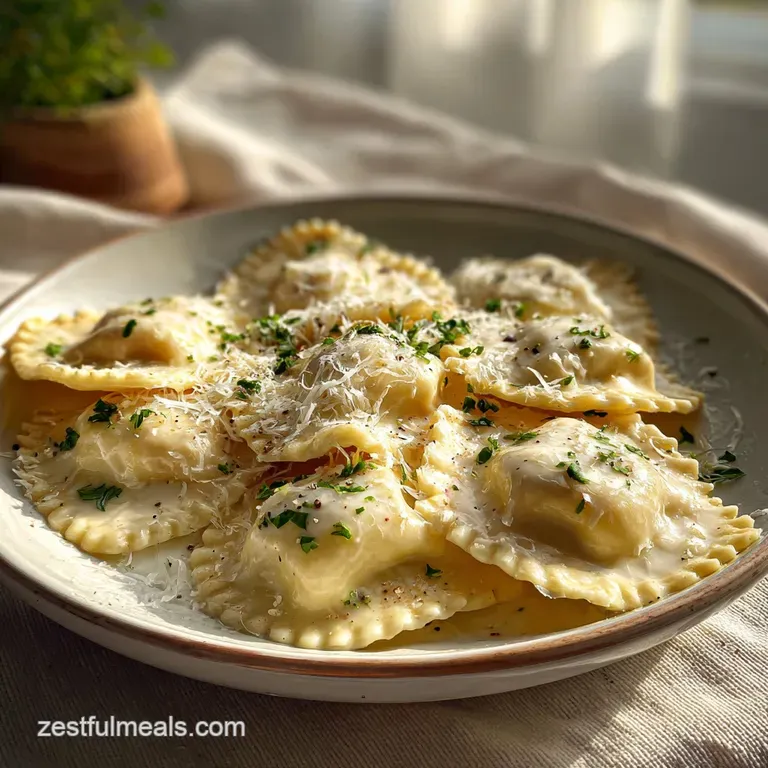
Why Your Sauce Is Grainy
This usually happens when the heat is too high. If the proteins in the cheese get too hot too fast, they tighten up and separate from the fat. It results in a "gritty" texture that feels like sand on the tongue. Always pull the pan off the burner or drop to the lowest setting before adding your Parmigiano.
Solving the Sliding Sauce
If the sauce just pools at the bottom of the plate, your emulsion is weak. This often happens if the ravioli are too wet or you skipped the pasta water. The starch in that water acts as a "velcro" that helps the sauce grip the pasta.
| Problem | Root Cause | Solution |
|---|---|---|
| Separated Sauce | Heat too high during cheese addition | Remove from heat and whisk in a splash of cold cream |
| Bland Flavor | Not enough salt in the pasta water | Add a pinch of sea salt and extra black pepper at the end |
| Watery Consistency | Too much pasta water added at once | Simmer for 1 extra minute to reduce the liquid |
Common Mistakes Checklist
- ✓ Never use pre shredded cheese from a green can or bag; the cellulose coatings prevent a smooth melt.
- ✓ Don't rinse your ravioli after boiling; you need those surface starches for the sauce to stick.
- ✓ Avoid boiling the sauce once the cheese is in; it will likely "break" the emulsion.
- ✓ Always reserve your pasta water before you head to the sink to drain the pot.
- ✓ Use a wide skillet rather than a deep pot for the sauce to allow for better evaporation and tossing room.
Adjusting Portions and Sizes
When you’re feeding a crowd or just cooking for two, scaling this Ravioli with Alfredo is fairly straightforward. If you’re cutting the recipe in half, use a smaller skillet to prevent the half and half from evaporating too quickly.
You’ll want to reduce the simmering time by about 20% since there’s less volume to heat.
Scaling up is a bit different. For a double batch (feeding 8 people), don't just double the salt and spices. Use 1.5x the nutmeg and pepper first, then taste. Liquids can be tricky; double the half and half but keep a close eye on the reduction. You might need to work in batches if your skillet isn't large enough to toss 40 oz of ravioli at once without breaking them. If you’re looking to bulk this up for a big family dinner, this works excellently with the proteins mentioned in my Chicken and Shrimp recipe, which adds a hearty layer to the meal.
Stovetop Versus Oven Methods
| Feature | Stovetop | Oven Baked (Casserole) |
|---|---|---|
| Prep Time | 20 minutes | 35-40 minutes |
| Texture | Silky and smooth | Chewy edges and bubbly top |
| Cleanup | One skillet, one pot | Baking dish plus pots |
Debunking Common Kitchen Myths
"Alfredo requires heavy cream to be authentic." Actually, the original Roman version used only butter and cheese. While we use half and half here for a kid friendly, budget aware version, the "creaminess" actually comes from the emulsification of fat and starch, not just the fat content of the dairy.
"You must add oil to the pasta water to stop sticking." This is a total myth that actually ruins your dinner. The oil coats the ravioli and prevents the with Alfredo sauce from sticking to the pasta. If you use 4 quarts of water and stir occasionally, they won't stick.
Smart Storage and Waste Tips
If you have leftovers, store them in an airtight container in the fridge for up to 3 days. To reheat, don't just microwave it on high, or you'll end up with a puddle of oil. Add a splash of milk or water and heat it on 50% power, stirring every 30 seconds to re emulsify.
I don't recommend freezing the assembled dish as the ravioli tend to get mushy and the sauce breaks upon thawing.
For zero waste, save your Parmesan rinds! Toss them into a freezer bag and drop them into your next pot of soup or stew for an incredible savory depth. If you have a tiny bit of sauce left in the pan, wipe it up with a piece of crusty bread it's too good to wash down the drain.
You can also toss leftover sauce with some steamed broccoli the next day for a quick lunch. This Ravioli with Alfredo is the gift that keeps on giving, even when the fridge looks bare.
High in Sodium
1085 mg mg of sodium per serving (47% % of daily value)
The American Heart Association recommends limiting sodium intake to about 2,300mg per day for overall cardiovascular health.
Tips to Reduce Sodium in Your Ravioli Dish
-
Reduce Cheese-15%
Parmigiano Reggiano is a significant source of sodium. Try using half the amount of cheese or substituting with a low-sodium mozzarella to reduce sodium content.
-
Rinse Ravioli-10%
Gently rinse the cooked ravioli with water before adding it to the sauce. This helps to remove excess surface sodium. Be careful to not overcook the pasta during the rinsing process.
-
Unsalted Butter
You're already using unsalted butter which is great! This simple swap makes a noticeable impact on overall sodium reduction. No change needed here.
-
Spice it Up!
Enhance the flavor with a variety of fresh or dried herbs and spices like basil, oregano, or red pepper flakes. This will help compensate for any perceived lack of flavor from reducing sodium. Fresh herbs give the most flavor.
Ravioli with Alfredo - Recipe FAQs
Can you eat ravioli with alfredo sauce?
Yes, absolutely. Ravioli with alfredo sauce is a classic and delicious combination that many people enjoy.
What sauce goes well with ravioli?
Alfredo is a top choice. Classic tomato based sauces, pesto, or a simple butter and sage sauce are also excellent pairings for ravioli.
Which pasta is best with Alfredo sauce?
Ravioli is ideal. Its pockets hold the creamy sauce beautifully. Fettuccine, linguine, or penne are also great options for Alfredo.
What goes with ravioli alfredo?
A simple green salad and crusty bread. You can also add grilled chicken, shrimp, or sautéed mushrooms to the dish itself.
How do I make ravioli alfredo creamy and not watery?
Use reserved pasta water. Whisking in about 1/2 cup of the starchy pasta water helps emulsify the sauce, creating a velvety texture instead of a thin, watery one.
Can I use frozen ravioli for alfredo sauce?
Yes, frozen ravioli works perfectly. Cook them according to package directions until they float, then drain and toss directly into the prepared Alfredo sauce.
How do I prevent my alfredo sauce from breaking when adding cheese?
Add cheese on low heat. Whisk the grated Parmigiano Reggiano into the sauce gradually, keeping the heat low or off, to allow it to melt smoothly without separating.
Ravioli With Alfredo
Ingredients:
Instructions:
Nutrition Facts:
| Calories | 584 kcal |
|---|---|
| Protein | 24.6 g |
| Fat | 30.5 g |
| Carbs | 52.4 g |
| Fiber | 2.8 g |
| Sugar | 5.3 g |
| Sodium | 1085 mg |
