Slow Cooker Beef Stew: Fork Tender and Rich
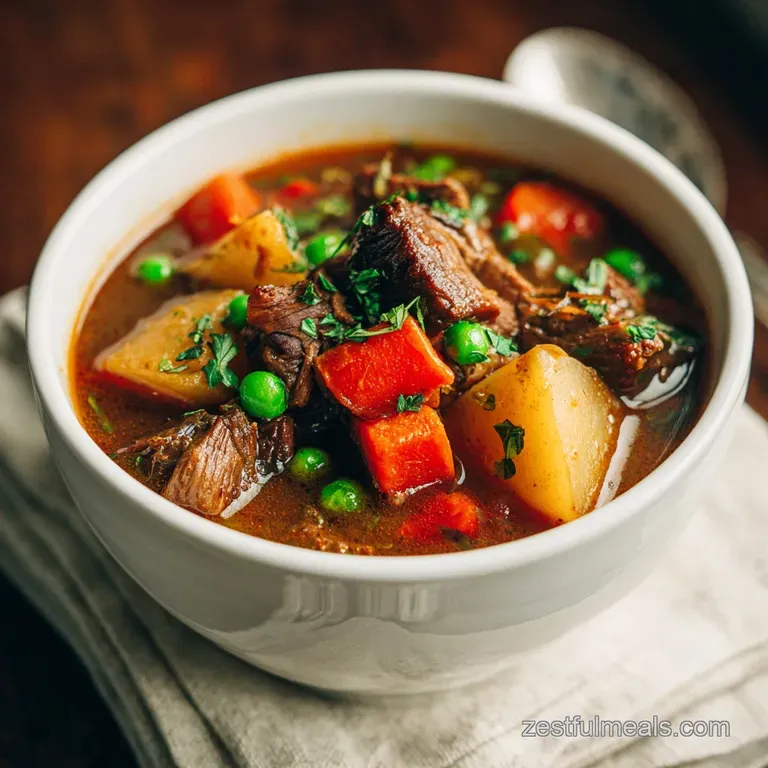
- Time: Active 20 minutes, Passive 8 hours, Total 8 hours 20 minutes
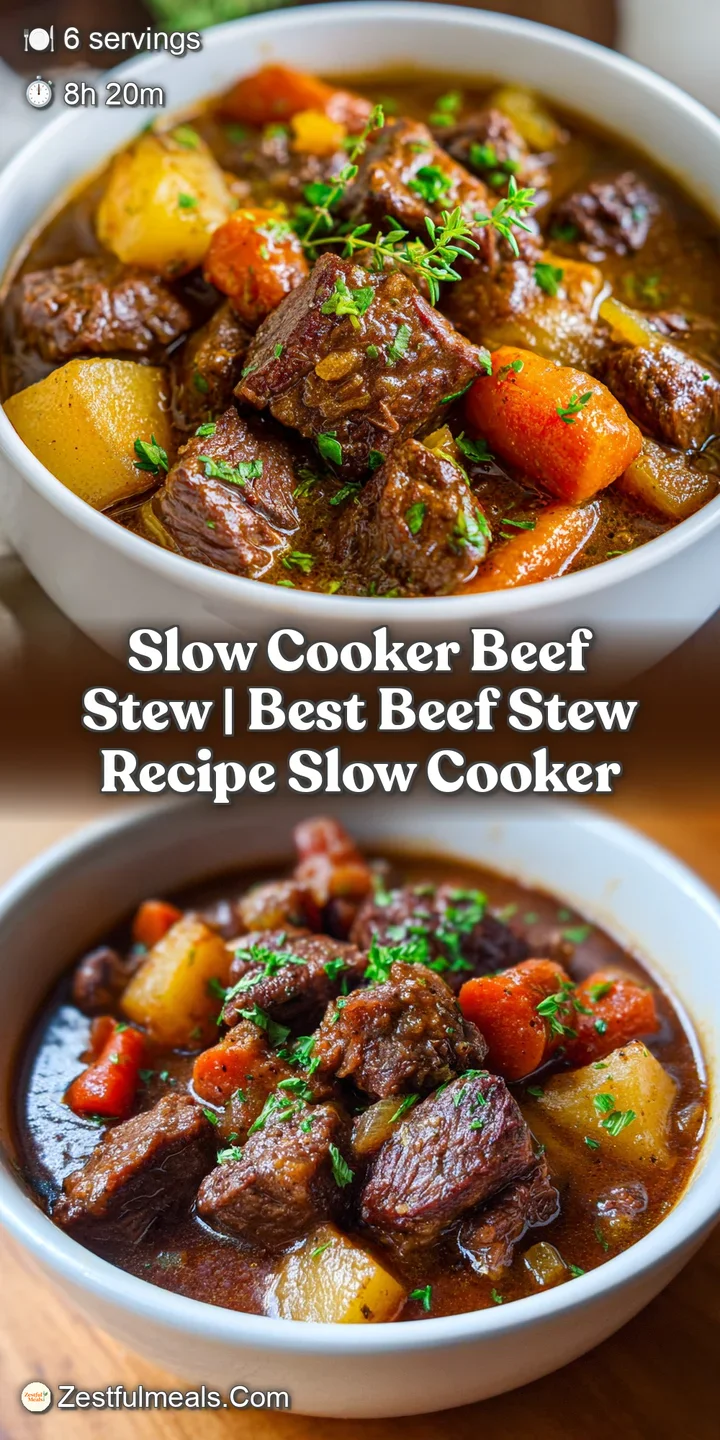
- Flavor/Texture Hook: Fork tender beef in a mahogany, silky gravy with buttery potatoes.
- Perfect for: Busy weeknights, budget conscious family dinners, and beginner level meal prep.
- How To Achieve The Ultimate Slow Cooker Beef Stew
- The Hidden Chemistry Behind Fork Tender Beef Cubes
- Decoding The Key Components For Maximum Flavor
- The Essential Tools For Your Slow Cooker Stew Journey
- The Complete Step By Step Path To Silky Stew
- Solving Common Problems For The Best Stew Results Everytime
- Smart Ways To Customize Your Stew On A Budget
- Debunking Common Misconceptions About Slow Cooking
- The Best Methods For Keeping Your Stew Fresh Longer
- Perfect Ways To Plate And Enjoy Your Hearty Meal
- Recipe FAQs
- 📝 Recipe Card
How To Achieve The Ultimate Slow Cooker Beef Stew
Forget everything you’ve been told about "dump and go" slow cooker meals being the peak of convenience. I used to think that tossing raw beef directly into the crock was a clever time saver, but honestly, I was just making gray, flavorless meat that lacked any soul.
The myth that the slow cooker "creates" flavor is a lie; it merely concentrates what you put into it. After one particularly disappointing Tuesday night where my kids poked at watery, bland beef, I realized the sear is non negotiable.
When you take that extra ten minutes to get a hard sear on those beef chunks, you aren’t just browning them; you are building a foundation of umami. The sizzle when the floured meat hits the hot oil is the sound of a great dinner being born.
That mahogany crust is what prevents your stew from tasting like a "crockpot meal" and makes it taste like it came from a high end bistro. We are talking about a velvety sauce that clings to the back of a spoon and beef that yields to the slightest pressure of a fork.
This recipe is designed for the reality of a busy kitchen. We’re using 3 lbs of beef chuck roast (1.36 kg) because it’s the king of budget cuts cheap, tough, but packed with hidden fat and connective tissue that only a slow cooker can unlock.
It’s the ultimate family meal because it stretches a few ingredients into a massive, comforting pot that feeds six people with ease. You get the richness of a red wine reduction and the heartiness of 1.5 lbs of Yukon Gold potatoes (680g) without having to stand over a stove for three hours.
The Hidden Chemistry Behind Fork Tender Beef Cubes
The reason this dish works so well isn't magic; it's about managing the physical properties of the beef and the starch in the potatoes. Here is the lowdown on why these specific steps matter:
- Connective Tissue Breakdown: At 160°F (71°C), the tough collagen in the 3 lbs of chuck roast begins to melt into gelatin, which gives the stew its velvety mouthfeel.
- The Flour Shield: Tossing the beef in 1/2 cup of all purpose flour before searing creates a protective barrier that prevents the meat from drying out while simultaneously thickening the beef stock as it simmers.
- Starch Stability: We use Yukon Gold potatoes because their waxy creamy hybrid nature allows them to hold their shape during an 8 hours braise, unlike Russets which would simply disintegrate.
- Acidity and Balance: The 1 cup of dry red wine provides essential tannins and acidity that cut through the heavy fats of the beef, preventing the stew from feeling "muddy" or overly weighted.
| Method | Time | Texture | Best For |
|---|---|---|---|
| Slow Cooker | 8 hours (Low) | Fork tender, integrated flavors | Hands off, busy workdays |
| Stovetop | 2.5 hours | Slightly firmer vegetables, thick sauce | Weekend afternoons, quick prep |
| Dutch Oven | 3 hours (300°F/150°C) | Deeply caramelized, rich crust | Maximum flavor development |
If you are a fan of low and slow cooking but want something even more "set it and forget it" for larger cuts of meat, you might find my Easy Slow Cooker Pot Roast quite helpful for those Sundays when you have a whole roast to contend with.
Decoding The Key Components For Maximum Flavor
When we talk about building a budget smart meal, the ingredients we choose must work overtime. Every single item in this list has a specific role to play in the final texture and taste of the stew.
| Ingredient | Science Role | Pro Secret |
|---|---|---|
| Beef Chuck Roast | Primary fat and protein source | Choose the piece with the most white "marbling" for the tenderest result. |
| Tomato Paste | Umami booster and thickener | Fry it in the pan for 30 seconds before adding liquids to remove the "tinny" taste. |
| Red Wine | Solvent for flavor compounds | Use a Cabernet Sauvignon; the tannins help break down beef proteins. |
| Worcestershire Sauce | Fermented salt and acid | This provides a "meaty" depth that salt alone cannot replicate. |
Using the right beef stock is also vital. I always reach for low sodium versions because it allows us to control the seasoning ourselves. If you use a full sodium stock, the 8 hours of reduction can sometimes make the final dish way too salty.
The Essential Tools For Your Slow Cooker Stew Journey
You don't need a professional kitchen to make a world class stew, but you do need a few pieces of equipment that can handle the heat.
- 6 Quart Slow Cooker: This is the sweet spot size. It provides enough surface area for the 3 lbs of beef and 1.5 lbs of potatoes to cook evenly without being overcrowded. A larger 8 quart cooker might evaporate the liquid too fast, while a 4 quart will overflow.
- Heavy Bottomed Skillet: A cast iron or heavy stainless steel pan (like a Lodge) is necessary for the searing phase. We need a pan that retains heat so that when you add the cold beef, the temperature doesn't drop, which would lead to steaming rather than searing.
- Tongs: Don't use a fork to flip your beef in the pan. A fork pierces the meat and lets those precious juices escape before they have a chance to be locked in by the crust.
- Chef's Knife: You’ll be chopping 4 large carrots and a large onion, so a sharp blade is your best friend to ensure uniform pieces that cook at the same rate.
Chef's Tip: Freeze your beef chuck for 20 minutes before cutting it. This firms up the fat and muscle fibers, making it much easier to slice into those clean 1.5 inch cubes without the meat sliding around.
The Complete step-by-step Path To Silky Stew
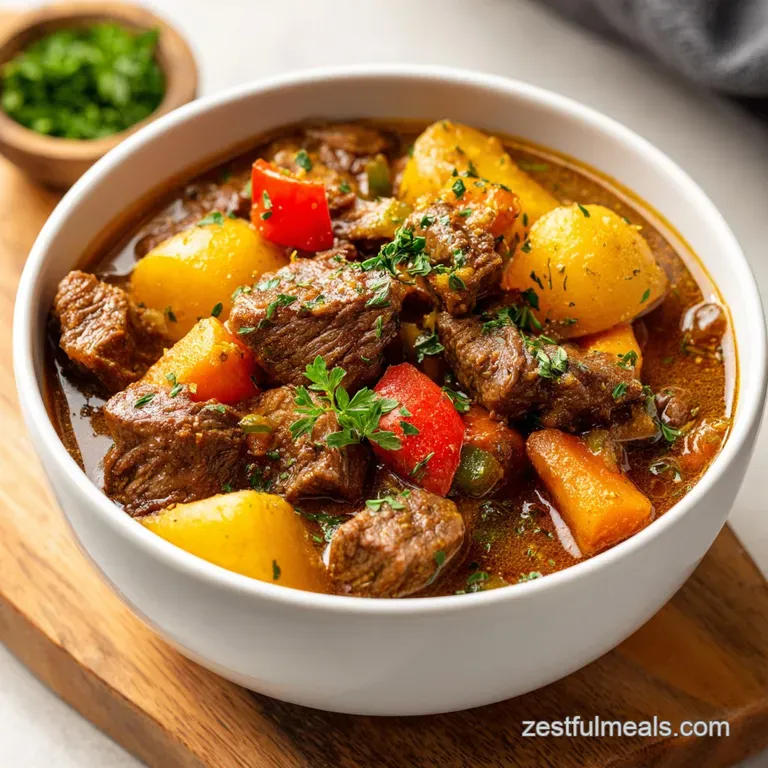
- Prep the protein. Season the 3 lbs of beef cubes with 1 tsp salt and 0.5 tsp cracked black pepper, then toss them in the 1/2 cup of all purpose flour. Note: The flour acts as the primary thickener for the entire pot.
- Sear for color. Heat 2 tbsp vegetable oil in your skillet over medium high heat. Sear the beef in batches until a deep mahogany crust forms on all sides.
- Establish the base. Layer the 1.5 lbs of Yukon Gold potatoes, 4 sliced carrots, 2 chopped celery stalks, 1 diced yellow onion, and 3 minced garlic cloves at the bottom of the slow cooker.
- Add the meat. Place the seared beef directly on top of the vegetable layer. Note: Keeping the meat on top allows the vegetables to soften in the juices while the beef stays moist.
- Deglaze the skillet. Pour the 1 cup of dry red wine and 3 cups of beef stock into the hot skillet. Whisk in 2 tbsp tomato paste and 1 tbsp Worcestershire sauce, scraping up the browned bits (fond).
- Combine the liquids. Pour that flavorful liquid mixture over the beef and vegetables in the cooker.
- Infuse aromatics. Tuck 2 bay leaves and 1 tsp dried thyme into the liquid.
- The long simmer. Cover and cook on low for 8 hours until the beef is tender and the sauce has thickened.
- The final touch. Stir in the 1 cup of frozen peas during the last 10 minutes.
- Final check. Remove the bay leaves and give it a gentle stir before serving.
Solving Common Problems For The Best Stew Results Everytime
Even with the best plan, things can go sideways. But don't panic; most stew issues are easily fixed if you know what to look for.
The Beef Is Still Tough
If you find that your beef is still chewy after 8 hours, it’s almost always because the collagen hasn't quite reached the melting point. This usually happens if the slow cooker was opened too many times, letting the heat escape.
| Problem | Root Cause | Solution |
|---|---|---|
| Thin/Watery Sauce | Too much moisture from veg | Whisk 1 tbsp cornstarch with 1 tbsp water and stir in for the last 20 mins. |
| Tough Beef | Collagen didn't melt | Cook for an additional 45-60 minutes on Low. |
| Bland Flavor | Lack of acidity or salt | Add a splash of balsamic vinegar or another pinch of salt before serving. |
The Stew Is Too Salty
This often happens if you use a high sodium stock or if the liquid reduced more than expected. To fix this, you can add a small amount of sugar or honey to balance the salt, or add more cooked potatoes to absorb some of the excess seasoning.
Common Mistakes Checklist
- ✓ Don't overcrowd the searing pan: Work in batches so the beef browns instead of steaming in its own juices.
- ✓ Avoid "High" heat settings: Cooking on "High" for 4 hours is not the same as "Low" for 8 hours; the beef needs the lower temperature to stay succulent.
- ✓ Wait on the peas: Adding frozen peas at the beginning will turn them into gray mush. Always add them at the very end.
- ✓ Don't skip the deglazing: Those brown bits in the pan are where 50% of your flavor lives!
Smart Ways To Customize Your Stew On A Budget
We all have those weeks where the grocery budget is tight or the pantry is looking a little bare. This recipe is incredibly forgiving when it comes to swaps. If you find yourself wanting to change things up but are worried about ruining the dinner, check out this guide.
| Original Ingredient | Substitute | Why It Works |
|---|---|---|
| Red Wine | Beef Stock + 1 tsp Balsamic | Provides the necessary acidity without the cost of a bottle of wine. |
| Yukon Gold Potatoes | Red Potatoes | Similar waxy texture that holds up well during long cooking times. |
| Beef Chuck Roast | Beef Shank or Short Ribs | These are also high collagen cuts that become buttery when slow cooked. |
If you're in the mood for a faster beef dinner that still hits those savory notes, you might want to pivot to a Beef and Broccoli Ramen Stir Fry which uses similar flavors but cooks in a fraction of the time.
Strategic Scaling For Large Families
- Scaling Up (2x): If you are feeding a crowd and doubling the recipe, do not double the liquid. Use 1.5x the stock (4.5 cups instead of 6) because the vegetables will release more moisture than you think. You will likely need two slow cookers or an 8 quart model.
- Scaling Down (1/2): You can easily halve the recipe for a smaller household. Use a 3.5 quart slow cooker and reduce the cook time by about 20%. Ensure you still use enough oil to get that proper sear on the smaller batch of meat.
Debunking Common Misconceptions About Slow Cooking
One of the biggest myths is that you can just throw everything in and walk away. While that’s partially true, the order of operations matters. Myth: Layering doesn't matter. Truth: Putting root vegetables at the bottom is essential because they take longer to soften than the meat.
If you put the carrots on top of the beef, they might stay crunchy even after 8 hours.
Another common one is that Myth: Alcohol doesn't cook off in a slow cooker. Truth: While it doesn't evaporate as fast as it does on a stovetop, the 8 hour cook time is more than enough to mellow the harsh alcohol bite, leaving only the complex fruit and oak notes of the wine.
The Best Methods For Keeping Your Stew Fresh Longer
Storage: This stew is a champion of the fridge. Store it in an airtight container for up to 4 days. In fact, most people swear it tastes better on day two because the starches in the potatoes have time to further thicken the sauce and the spices penetrate deeper into the beef.
Freezing: You can freeze this for up to 3 months. However, be aware that potatoes can sometimes change texture (becoming slightly grainy) after being frozen and thawed. To minimize this, make sure the stew is completely cold before freezing.
Zero Waste Tip: Don't throw away those celery leaves or onion skins. Save your vegetable scraps in a bag in the freezer to make your own homemade beef stock next time! Even the "pot liquor" left over if you eat all the beef can be used as a base for a quick noodle soup the next day.
Perfect Ways To Plate And Enjoy Your Hearty Meal
When serving this, I love to go for "rustic chic." A deep, wide bowl is perfect for holding the generous amount of gravy this recipe produces. If you want to take it to the next level, serve it over a bed of creamy mashed potatoes (yes, potatoes on potatoes trust me) or with a big hunk of crusty sourdough bread to swipe up every last drop of that mahogany sauce.
For a family friendly touch, I often set out a bowl of fresh parsley or even some sharp cheddar cheese for the kids to sprinkle on top. The brightness of the fresh herbs really wakes up the deep, earthy flavors of the braised beef.
If you're looking for a lower carb option, serving this over roasted cauliflower or simply on its own with a side of steamed green beans is a fantastic way to keep it light without sacrificing the "hug in a bowl" feeling.
Recipe FAQs
How to make the best beef stew in a slow cooker?
Sear the beef in batches to build a deep mahogany crust before adding to the cooker. Deglazing your skillet with red wine and beef stock ensures you capture every bit of caramelized flavor, a technique you can also master in our perfect pot roast.
Do you have to brown stew meat before putting it in the crockpot?
Yes, searing is essential for depth of flavor. Skipping this step leaves you with a pale, one-dimensional broth rather than a rich, complex stew.
Can you put raw beef in a slow cooker for stew?
You can, but it will lack the savory richness of browned meat. Raw beef will cook through, but the Maillard reaction achieved during searing provides the signature taste that defines a high-quality stew.
Is it true I should cook my stew on "High" to save time?
No, this is a common misconception. Cooking on low for 8 hours is the only way to ensure the beef chuck roast becomes tender and succulent, as high heat often results in tough, dry meat.
What are common mistakes when making beef stew?
Overcrowding the searing pan and adding frozen peas too early are the most frequent errors. Work in small batches to avoid steaming your meat, and always save the peas for the final 10 minutes to maintain their bright color and texture.
How to keep the beef tender while slow cooking?
Keep the lid on for the full 8 hours to maintain a consistent, low temperature. Frequent lifting of the lid releases heat and lengthens the total cooking time, which can interfere with the breakdown of connective tissues in the beef.
Why is my beef stew sauce too thin?
Ensure you toss your beef in the half cup of all-purpose flour before searing. This coating thickens the liquid as it simmers over the 8-hour cooking period, creating a silky, cohesive sauce.
Slow Cooker Beef Stew
Ingredients:
Instructions:
Nutrition Facts:
| Calories | 732 kcal |
|---|---|
| Protein | 51.4 g |
| Fat | 41.8 g |
| Carbs | 35.2 g |
| Fiber | 5.6 g |
| Sugar | 6.8 g |
| Sodium | 645 mg |
