Simple Tomato Soup from Scratch
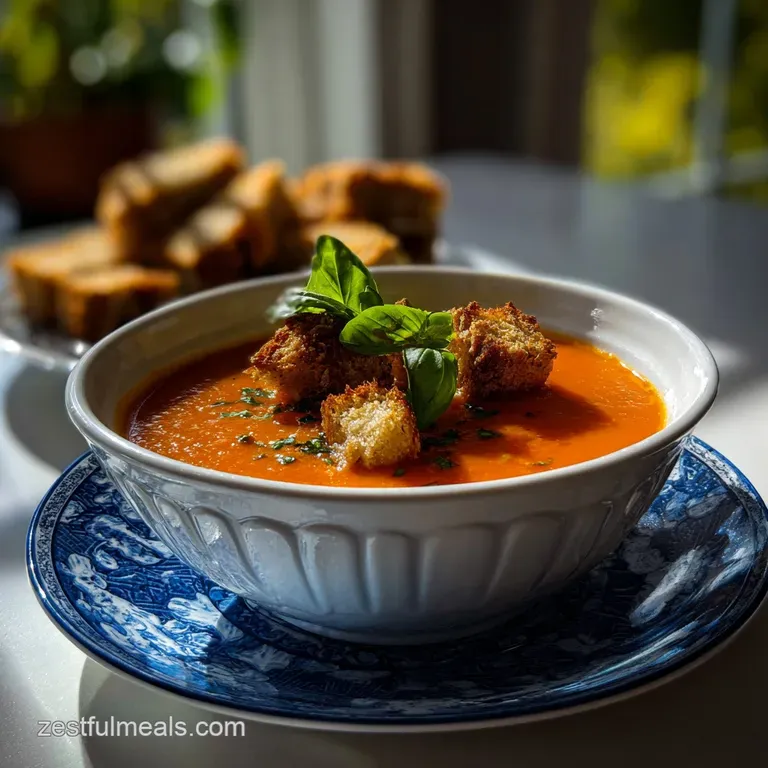
- Time: Active 10 minutes, Passive 20 minutes, Total 30 minutes
- Flavor/Texture Hook: Silky, vibrant, and deeply savory
- Perfect for: Busy weeknights when the kids need comfort food fast
- Making a Simple Tomato Soup from Scratch
- Logic Behind the Flavor Profile
- Essential Recipe Metrics and Specs
- Deep Dive into Key Components
- Minimal Tools for Efficient Cooking
- Step-by-Step Cooking Process
- Fixing Texture and Flavor Issues
- Adjusting the Recipe Size
- Smart Swaps for Dietary Needs
- Storing and Reducing Food Waste
- Toppings for the Perfect Finish
- Essential Soup Making Guidelines
- Common Questions
- 📝 Recipe Card
Imagine this: a cold, rainy Tuesday, the kids are cranky, and the fridge looks depressing. You hear the sizzle of butter hitting a warm pot, and suddenly, the kitchen fills with the scent of sweet onions and toasted garlic. That is the moment the day turns around.
We are making a simple tomato soup from scratch that actually tastes like it spent hours on the stove, even though it only takes thirty minutes.
I used to think "from scratch" meant peeling dozens of fresh tomatoes and steaming them for half a day. I was wrong. The secret to a family favorite isn't complexity, it's about treating basic ingredients with a bit of respect.
We aren't just boiling juice; we are building layers of flavor that will make your kids ask for seconds (and maybe even thirds).
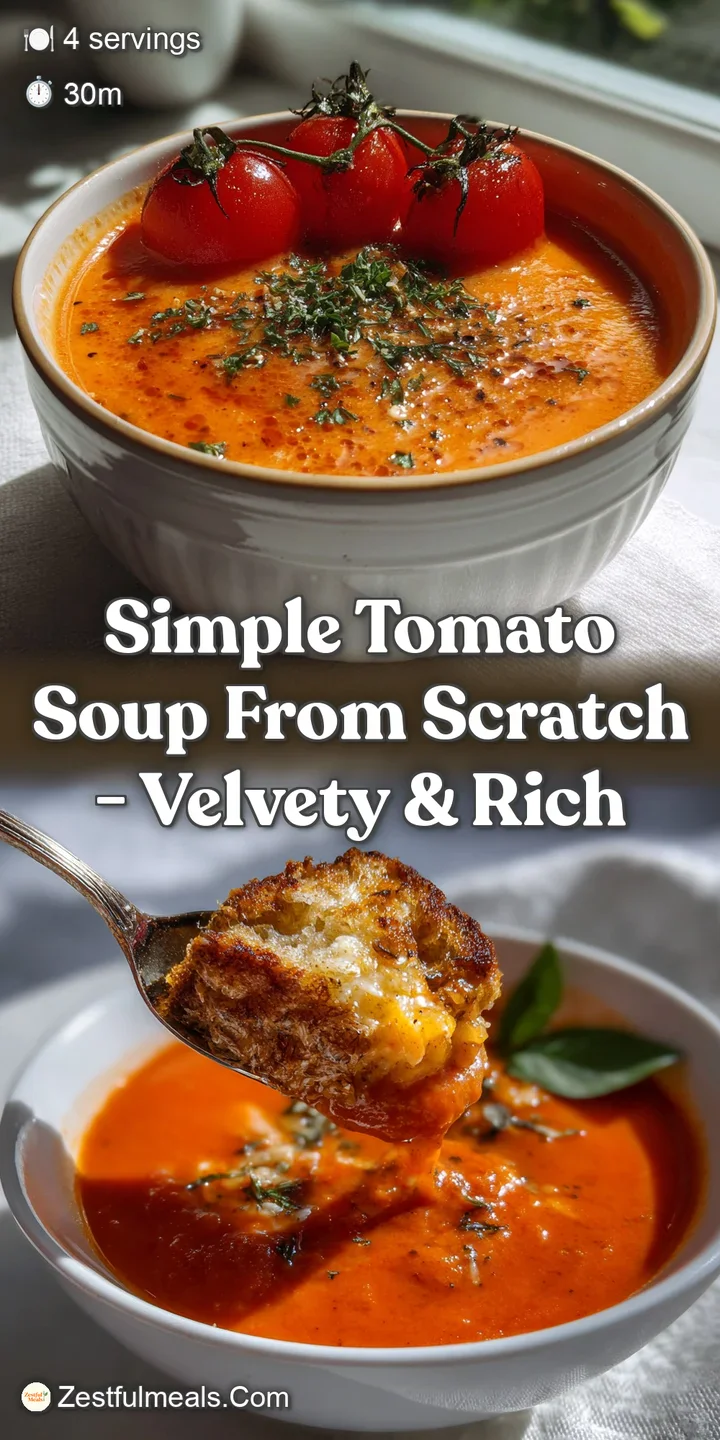
This recipe is my go-to because it uses things I already have in the pantry. No special trips to a fancy market are required. We're going to use the humble canned tomato and turn it into something spectacular. It’s thick enough to coat a grilled cheese sandwich but light enough to enjoy on its own.
Let's get into how this magic happens.
Making a Simple Tomato Soup from Scratch
To get that velvety finish we all crave, we have to look at how the ingredients play together. It isn't just about dumping things in a pot; it's about the chemistry of fat and acid. When we use this method, we ensure every spoonful has a consistent, rounded flavor that doesn't bite back with too much sharpness.
- Lipid Emulsification: Whisking in 56g of cold, unsalted butter at the end creates a temporary emulsion. This coats the tongue and softens the sharp acidity of the 800g of plum tomatoes.
- Aromatic Softening: Sautéing the 150g yellow onion and 15g garlic cloves in butter first breaks down their cellular walls. This releases sugars through a light Maillard reaction, providing a sweet foundation.
- Caramelization Balance: Adding 4g of granulated sugar isn't about making the soup sweet. It acts as a chemical foil to the citric acid in the canned tomatoes, making the overall profile taste more like sun-ripened fruit.
- Herb Rehydration: Incorporating 1g of dried oregano early in the simmer allows the heat to pull out the fat-soluble oils. This distributes the earthy scent through the entire pot rather than leaving it on the surface.
Logic Behind the Flavor Profile
The beauty of a simple tomato soup from scratch is that it relies on high-quality basics. When you understand the "why" behind each component, you can cook with more confidence. For instance, we use whole peeled plum tomatoes because they are generally packed at the peak of ripeness and have a better texture than pre-diced versions.
| Component | Science Role | Pro Secret |
|---|---|---|
| Yellow Onion (150g) | Sulfur based sweetness | Dice small for faster pectin breakdown. |
| Garlic Cloves (15g) | Allicin driven depth | Smashed cloves release flavor slower, preventing burnt bitterness. |
| Plum Tomatoes (1600g) | Acidic structure | Hand crushing leaves "flavor pockets" that a blender misses. |
| Unsalted Butter (56g) | Fat-based silkiness | Add the final half stick cold to keep the emulsion stable. |
Much like the foundation used in a Simple Spaghetti Bolognese Recipe, the onion and garlic here provide a savory "umami" base that prevents the soup from tasting like plain tomato juice.
Essential Recipe Metrics and Specs
Cooking is much easier when you know exactly what you're aiming for. This isn't a "guess and check" situation. We want consistency so that every time you make this, it's a win for the family. Use these checkpoints to stay on track while you work through the steps.
- Onion Texture: They should be translucent and soft, not brown. This takes about 5 minutes over medium heat.
- Simmer Strength: You want "lazy bubbles." If the soup is splashing out of the pot, the heat is too high.
- Final Temperature: Aim for 165°F before serving. This ensures the butter melts perfectly without breaking.
| Method | Cook Time | Outcome |
|---|---|---|
| Stovetop (Standard) | 20 minutes | Bright, fresh, and slightly chunky or smooth depending on blending. |
| oven-roasted | 45 minutes | Deeper, darker color with more concentrated sugars and a smokier edge. |
Deep Dive into Key Components
I always keep these items in my cupboard because they are the workhorses of a busy kitchen. If you run out of something, don't panic. There is almost always a way to pivot without ruining dinner.
- Whole Peeled Plum Tomatoes (2 cans, 28 oz each): These are the star. I prefer San Marzano style for their lower seed count.
- Substitute: 1.6kg of fresh, very ripe Roma tomatoes. Why this? Fresh adds brightness but requires more simmering time to reduce water.
- Unsalted Butter (4 tbsp / 56g): We divide this to use half for sautéing and half for finishing.
- Substitute: Extra virgin olive oil. Why this? It makes the soup vegan but loses that creamy, dairy mouthfeel.
- Low Sodium Stock (2 cups / 475ml): Chicken stock adds more body, but vegetable stock keeps it vegetarian.
- Substitute: Water with a bouillon cube. Why this? It’s a budget friendly way to get that salty, savory hit.
- Dried Oregano (1 tsp / 1g): This provides that classic "pizza" aroma that kids love.
- Substitute: Dried basil. Why this? It shifts the flavor to a more traditional Italian herbal profile.
Minimal Tools for Efficient Cooking
You don't need a kitchen full of gadgets for a simple tomato soup from scratch. In fact, fewer tools mean less cleanup, which is a massive win on a school night. I usually reach for my trusty Lodge Dutch Oven because it holds heat so well.
- Heavy bottomed Pot: A 5 quart Dutch oven or stockpot prevents the bottom from scorching.
- Wooden Spoon: Perfect for scraping up those tasty bits of onion from the bottom.
- Immersion Blender: This is the easiest way to get a smooth texture without transferring hot liquid to a traditional blender.
- Can Opener: A basic manual one works just fine.
Chef's Note: If you don't have an immersion blender, you can use a potato masher for a rustic, chunky soup. It’s actually quite nice to have some texture!
step-by-step Cooking Process
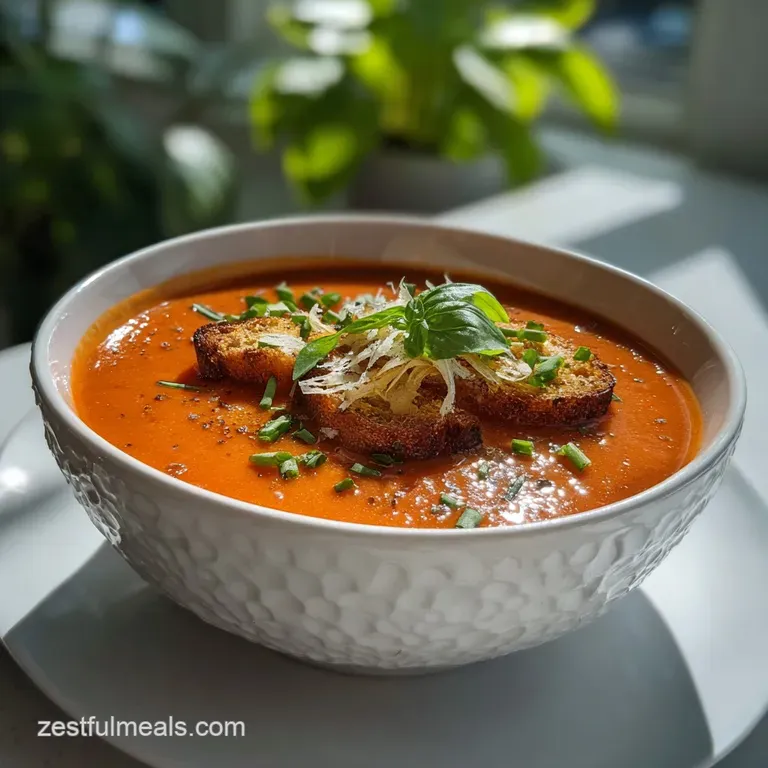
Let's get cooking. Follow these steps exactly, and you'll have a steaming bowl of comfort in no time. Pay attention to the sensory cues the smells and sounds tell you more than the timer ever will.
- Melt the fat. Place 2 tbsp (28g) of unsalted butter in your pot over medium heat until it sizzles and foams.
- Sauté the aromatics. Toss in the 150g of chopped yellow onion. Cook for 5 minutes until they are soft and see-through.
- Infuse the garlic. Add the 15g of smashed garlic cloves. Stir for 1 minute until you smell a strong, nutty aroma.
- Add the tomatoes. Pour in both 28 oz cans of plum tomatoes. Use your spoon to shatter and crush the whole tomatoes against the side of the pot.
- Liquid and spice. Pour in the 475ml of stock, 4g of sugar, 1g of oregano, 6g of Kosher salt, and 1g of black pepper.
- Simmer it down. Bring the mixture to a boil, then turn the heat to low. Let it bubble gently for 20 minutes until the liquid reduces slightly.
- Blend the base. Remove from heat. Use an immersion blender to process the soup until it reaches a velvety, smooth consistency.
- The final touch. Stir in the remaining 2 tbsp (28g) of cold butter. Stir constantly until the butter disappears and the soup looks glossy.
- Taste and adjust. Dip a clean spoon in. Does it need more salt? If it’s too tart, add another tiny pinch of sugar.
- Serve it up. Ladle the soup into bowls while it’s still piping hot and steaming.
Fixing Texture and Flavor Issues
Even the best cooks have off days. Maybe the heat was too high, or the tomatoes were extra acidic this time. Don't worry most soup problems are easily fixed with a few pantry staples.
Why My Soup Tastes Metallic
Canned tomatoes sometimes pick up a tinny flavor from the packaging. This usually happens if the soup didn't simmer long enough or if the tomatoes were low quality. You can fix this by adding a tiny pinch of baking soda (about 1/8 teaspoon). It neutralizes the metallic acidity instantly.
| Problem | Root Cause | Solution |
|---|---|---|
| Soup is too watery | Too much stock added | Simmer uncovered for 10 more minutes to reduce. |
| Bitter aftertaste | Burnt garlic | Add a splash of heavy cream to mask the bitterness. |
| Grainy texture | Under blended onions | Blend for an extra 2 minutes on high speed. |
Adjusting the Recipe Size
This recipe is very forgiving if you need to feed a crowd or just yourself. Just remember that liquids and spices don't always scale in a straight line.
- To double the recipe: Use 4 cans of tomatoes and double the onions/garlic. However, only use 3 cups of stock instead of 4 to start. You can always add more liquid later, but you can't take it out!
- To halve the recipe: Use 1 can of tomatoes. Since you're using less volume, reduce the simmer time by about 5 minutes so it doesn't get too thick. Beat one egg and use half? No, we aren't using eggs here, just stick to half the butter and aromatics.
If you are making a big batch for a weekend brunch, this soup pairs beautifully with a side of Fluffy Pancakes From recipe for those who love a sweet and savory morning.
Smart Swaps for Dietary Needs
Everyone should be able to enjoy a bowl of simple tomato soup from scratch. Whether you're avoiding dairy or looking for a lower carb option, these tweaks keep the flavor high.
- dairy-free/Vegan: Swap the butter for a high-quality extra virgin olive oil. It won't be as creamy, but the fruity notes of the oil are fantastic with tomatoes.
- Keto Friendly: This recipe is already fairly low in carbs, but you can omit the 4g of sugar and use a drop of liquid monk fruit or just let the onions provide the natural sweetness.
- Extra Protein: Stir in a half cup of red lentils while simmering. They will break down and disappear once blended, adding thickness and fiber.
Storing and Reducing Food Waste
I love a recipe that leaves no trace. If you find yourself with leftovers, you're in luck because this soup actually tastes better the next day after the flavors have had time to mingle in the fridge.
- Fridge: Store in an airtight container for up to 4 days.
- Freezer: This soup freezes beautifully! Put it in freezer bags, squeeze out the air, and it will stay fresh for 3 months. To reheat, just thaw it in the fridge overnight and warm it on the stove.
- Zero Waste Tip: Don't throw away those onion skins or garlic peels. Toss them into a bag in your freezer to make a homemade vegetable scrap stock later. If you have a tablespoon of tomato paste left in a different jar, stir it in here for an extra punch!
Toppings for the Perfect Finish
The soup is the canvas, but the toppings are the art. This is where you can get the kids involved. Set out a few bowls of "fixings" and let everyone customize their own bowl.
- Classic: A handful of goldfish crackers or homemade sourdough croutons for that satisfying "shatter" crunch.
- Grown-up: A swirl of pesto and a sprinkle of toasted pine nuts.
- Decadent: A dollop of full fat sour cream or a heavy dusting of freshly grated Parmesan cheese.
- Herby: Fresh basil leaves torn by hand right before serving.
Essential Soup Making Guidelines
To truly master a simple tomato soup from scratch, keep these final thoughts in mind. Cooking for a family is about reliability and warmth.
Myth: Fresh tomatoes always make better soup than canned. Truth: Unless it is the height of summer and you have garden fresh Romas, canned plum tomatoes are more consistent in sugar and acid content, leading to a better result year round.
Myth: You must peel the tomatoes before cooking. Truth: The immersion blender will pulverize the skins into nothingness. Don't waste your time with the "X" cut and boiling water bath unless you really enjoy the extra work.
If you want a thicker soup, do this: Add a peeled, diced potato to the simmer; it releases starches that thicken the base naturally. Reduce the stock by half a cup for a concentrated, sauce like consistency.
Stir in a piece of crusty bread before blending to create a traditional Tuscan style "Pappa al Pomodoro" texture.
There you have it. No fancy tricks, no expensive equipment just a straightforward, reliable way to put a smile on everyone's face. Trust me on the cold butter at the end; it's the difference between "okay" soup and the kind of soup people remember. Let's crack on and get that pot simmering!
Common Questions
How long is the total cook time for this simple tomato soup?
Active 10 minutes, Passive 20 minutes, Total 30 minutes.
Is this soup suitable for vegans?
Swap butter for olive oil. Olive oil provides necessary fat but omits the creamy dairy mouthfeel achieved by emulsifying butter.
My soup tastes too sharp and acidic after blending. What happened?
The final butter emulsification was incomplete or skipped. Cold fat coats the tongue, softening the tomato's inherent citric acidity.
- Add the remaining butter cold
- Whisk vigorously off heat
- Increase sugar by 1 gram
Which type of canned tomato yields the best flavor?
Whole peeled plum tomatoes. These are typically canned at peak ripeness, providing a sweeter, more balanced starting flavor than diced varieties.
Do I need to peel fresh tomatoes before using them in this recipe?
Myth: You must peel fresh tomatoes for a smooth result. Reality: The immersion blender effectively pulverizes the skins during processing, making peeling unnecessary labor.
Can I make this soup base ahead of time?
Yes, up to 3 days ahead is recommended. Prepare the soup base completely, store refrigerated, and gently reheat before stirring in the final cold butter.
Should I use salted or unsalted butter for the initial sauté?
Unsalted butter. Salted butter varies widely in sodium content (80-200mg). Unsalted butter ensures precise flavor control over the final seasoning.
Tomato Soup From Scratch Recipe
Ingredients:
Instructions:
Nutrition Facts:
| Calories | 260 kcal |
|---|---|
| Protein | 6.6 g |
| Fat | 12.2 g |
| Carbs | 36.3 g |
| Fiber | 5.8 g |
| Sugar | 19.1 g |
| Sodium | 1475 mg |
