Velvety Beef Neck Bones Recipe
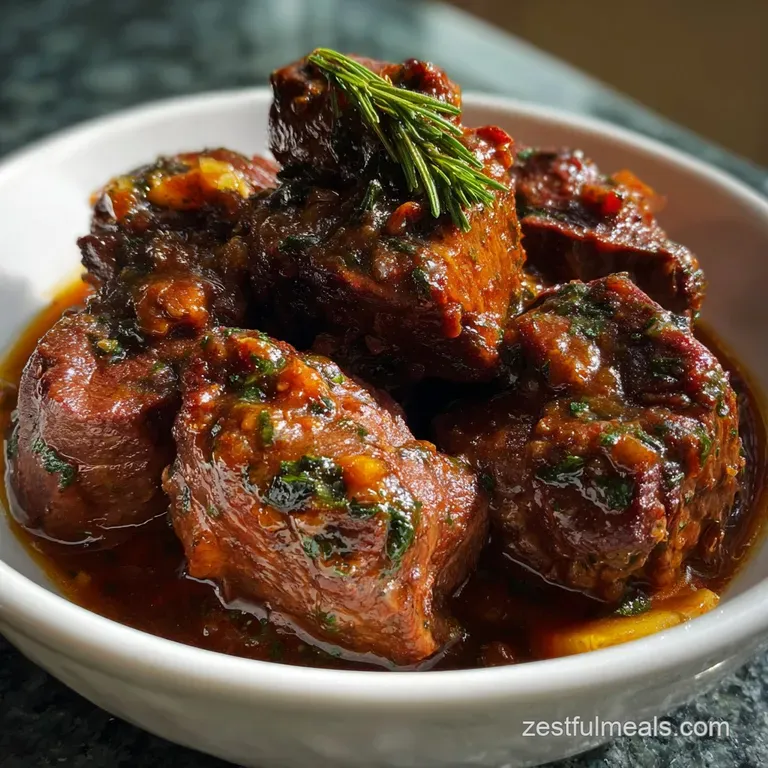
- Time: Active 20 minutes, Passive 2 hours 45 mins, Total 3 hours 5 mins
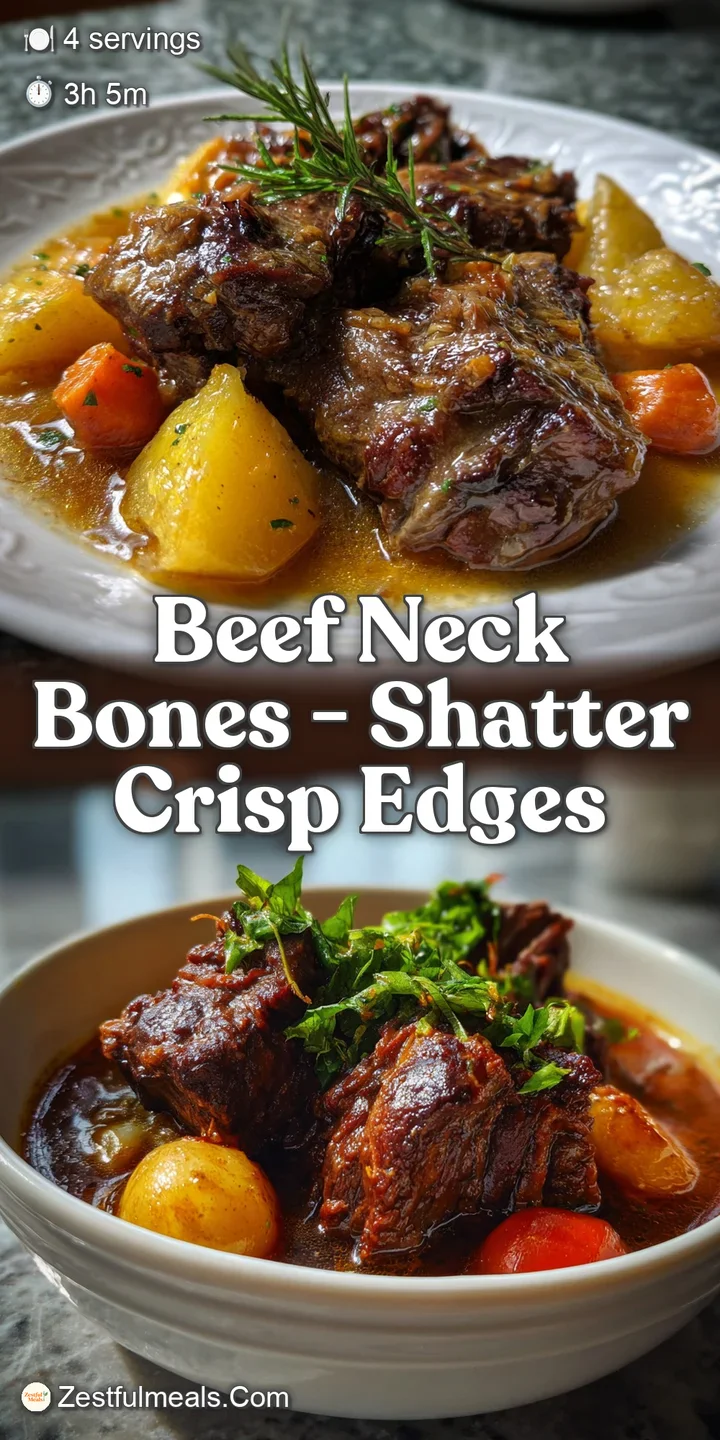
- Flavor/Texture Hook: Shatter crisp seared edges with a rich, melt in-the mouth center
- Perfect for: Budget conscious Sunday dinners or stress free meal prepping
- Mastering Savory Beef Neck Bones
- The Science of Braising Success
- Ingredient Deep Dive Analysis
- The Smart Shopping List Breakdown
- Essential Equipment for Perfect Braising
- Applying the Step-by-Step Technique
- Avoiding Common Kitchen Disasters
- Flavor Variations to Explore Now
- Preservation and Storage Secrets
- Perfect Pairing Ideas for Everyone
- Troubleshooting Your Braising Process
- The Final Word on Budget Beef
- Recipe FAQs
- 📝 Recipe Card
Mastering Savory Beef Neck Bones
If you have ever walked past the butcher counter and wondered what to do with those odd, bony cuts, you are about to discover the best kept secret in the kitchen. There is a certain sizzle that happens when beef neck bones hit a hot Lodge Cast Iron Dutch Oven that just promises comfort.
It is not the refined, lean cut of a filet, but honestly, that is the point. This is soul warming food that smells like home and tastes like you spent all day hovering over the stove, even though the oven did all the heavy lifting.
We are going to take 4 lbs of beef neck bones and turn them into something that will have your family scraping their bowls clean. The first time I made this, I was worried about the bone to meat ratio, but trust me, the meat nestled between those joints is the most flavorful bite of beef you will ever experience.
It is rich, it is succulent, and when done right, it falls away from the bone with just the slightest nudge from a fork.
But what about the grease? Or the fear of it being tough? We will get to that. The trick is all in the timing and the temperature. We are going to build layers of flavor starting with a hard sear and ending with a glossy, wine infused sauce that is practically liquid gold. Let's crack on and get this pot bubbling.
The Science of Braising Success
Connective Tissue Transformation: Collagen in the neck bones breaks down into gelatin at temperatures around 160°F, creating a silky mouthfeel and thickening the sauce naturally.
Maillard Reaction: Searing the meat at high heat creates hundreds of new flavor compounds that do not exist in raw beef, providing that deep, savory base.
Acidic Tenderization: The tannins and acidity in the 2 cups of dry red wine help weaken protein bonds, ensuring the meat becomes incredibly tender during the long simmer.
Aromatic Infusion: Fat soluble compounds in the garlic and herbs dissolve into the rendered beef fat, distributing flavor more efficiently than water based liquids alone.
Ingredient Deep Dive Analysis
| Component | Science Role | Pro Secret |
|---|---|---|
| 4 lbs Beef Neck Bones | Primary source of gelatin and collagen for body. | Look for bones with a thick "meat cap" for the best texture. |
| 2 cups Dry Red Wine | Provides acidity to balance the heavy fats and tannins for structure. | Use a Cabernet Sauvignon for a bolder, darker sauce profile. |
| 3 cups Beef Bone Broth | Adds minerals and protein while acting as the heat transfer medium. | Using Swanson Bone Broth ensures a consistent, savory salt level. |
| 2 tbsp Tomato Paste | Contributes umami and acts as a natural thickener through pectin. | Sauté the paste until it turns brick red to remove the raw metallic taste. |
The Smart Shopping List Breakdown
To get the best results without breaking the bank, stick to these specific items. I always find that 4 lbs of beef neck bones is the "sweet spot" for a family of four, especially since the bones are heavy and you want everyone to have plenty of meat.
- 4 lbs beef neck bones: Meaty with visible marbling. Why this? Provides the essential collagen for a rich, velvety sauce.
- Substitute: Beef oxtail (Adds more fat but is significantly more expensive).
- 2 tbsp Diamond Crystal Kosher salt: For seasoning. Why this? Larger grains allow for better control and even distribution.
- Substitute: Sea salt (Use only 1.5 tbsp as it is denser).
- 1 tbsp Cracked black pepper: Adds a sharp bite. Why this? Freshly cracked oils provide more aroma than pre ground powder.
- Substitute: White pepper (Offers a more earthy, less pungent heat).
- 2 large Yellow onions: Diced. Why this? Higher sugar content than white onions, which helps with caramelization.
- Substitute: Shallots (Provides a more delicate, garlicky sweetness).
- 3 large Carrots: Peeled and sliced. Why this? Provides a natural sweetness to balance the salty broth.
- Substitute: Parsnips (Adds a spicy, nutty undertone).
- 4 stalks Celery: Diced. Why this? Part of the "mirepoix" base that adds essential savory depth.
- Substitute: Fennel bulb (Adds a very slight anise note that pairs well with beef).
- 6 cloves Garlic: Smashed and peeled. Why this? Smashed cloves release flavor slowly without burning like minced garlic.
- Substitute: 1 tsp garlic powder (Use only if fresh is unavailable).
- 2 cups Barefoot Cabernet Sauvignon: Dry red wine. Why this? Cuts through the richness of the beef fat beautifully.
- Substitute: 2 cups pomegranate juice (Adds similar acidity without the alcohol).
- 3 cups Swanson Beef Bone Broth: Low sodium. Why this? Controls the saltiness while adding significant protein body.
- Substitute: 3 cups vegetable stock (Lighter flavor, less gelatinous result).
- 2 tbsp Hunt's Tomato Paste: For color and umami. Why this? Concentrates the beefy flavors of the braise.
- Substitute: 1/2 cup tomato sauce (Reduce broth by 1/4 cup to compensate for liquid).
- 3 sprigs Fresh thyme: Aromatic. Why this? Essential earthy notes that define traditional braises.
- Substitute: 1 tsp dried thyme (Use less as it is more concentrated).
- 2 sprigs Fresh rosemary: Piney aroma. Why this? Strong enough to stand up to the heavy beef flavors.
- Substitute: 1/2 tsp dried rosemary (Crush it between your fingers first).
- 2 dried Bay leaves: For background depth. Why this? Adds a subtle floral note that lightens the heavy sauce.
- Substitute: 1 fresh bay leaf (Much more potent, use sparingly).
Essential Equipment for Perfect Braising
You do not need a kitchen full of gadgets, but a few specific tools make this process a breeze. A heavy pot is non negotiable here. I swear by my Lodge 6 Quart Dutch Oven because it holds heat so consistently, which is exactly what those neck bones need to soften up.
- Lodge Cast Iron Dutch Oven: The heavy lid keeps moisture from escaping, which is vital for a 3 hour simmer.
- Mercer Culinary Chef's Knife: For clean, quick dicing of your mirepoix veggies.
- OXO Good Grips Tongs: You need these for a secure grip when flipping 4 lbs of heavy, slippery bones during the sear.
- Fine Mesh Strainer: Optional, but great if you want a silky smooth sauce at the end.
Applying the step-by-step Technique
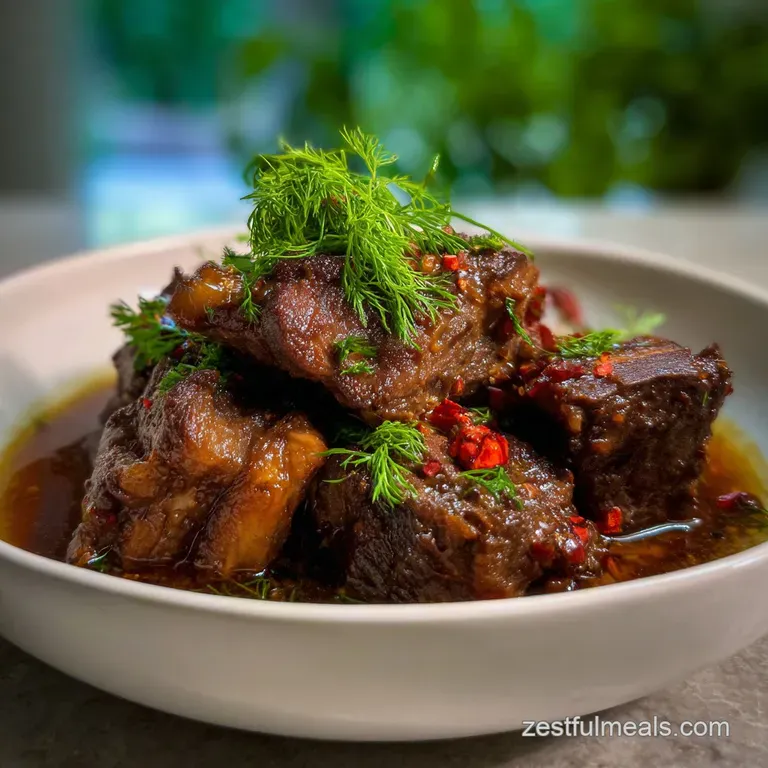
Extraction of Rich Gelatin
Before you start, make sure your beef neck bones are at room temperature for about 20 minutes. This ensures they sear rather than steam when they hit the hot fat.
- Season the meat: Pat the 4 lbs of beef neck bones dry with paper towels and coat them generously with the 2 tbsp Kosher salt and 1 tbsp black pepper. Note: Drying the surface is the only way to get a proper crust.
- The Critical Hard Sear: Heat your Lodge Dutch Oven over medium high heat with a splash of oil. Sear the bones in batches for about 4-5 minutes per side until a dark, mahogany crust forms.
- Building the Flavor Base: Remove the bones and set them aside. Lower the heat to medium and toss in your 2 diced yellow onions, 3 sliced carrots, and 4 diced celery stalks. Cook for about 8 minutes until the onions are translucent and slightly golden.
- Aromatic Foundation: Add the 6 smashed garlic cloves and 2 tbsp tomato paste. Stir constantly for 2 minutes until the paste smells sweet and looks dark red.
- The Deglaze: Pour in the 2 cups of dry red wine. Use a wooden spoon to scrape all those brown bits (the fond) off the bottom of the pot. Note: This is where all the flavor lives!
- The Liquid Build: Let the wine reduce by half, which should take about 5 minutes. Then, pour in the 3 cups of beef bone broth.
- Adding the Aromatics: Place the seared bones back into the pot, ensuring they are mostly submerged. Tuck in the 3 sprigs of thyme, 2 sprigs of rosemary, and 2 dried bay leaves.
- The Slow Simmer Phase: Bring the liquid to a gentle simmer, then cover with the heavy lid. You can leave it on the stovetop on low or pop it into a 325°F oven.
- The Long Wait: Cook for 2 hours 45 mins. Check the meat around the 2.5 hour mark; it should be tender enough to pull apart with a spoon.
- Final Sauce Polish: Remove the bones and herbs. If the sauce is too thin, simmer it uncovered for 10 minutes until it coats the back of a spoon like velvet.
Avoiding Common Kitchen Disasters
Even the best cooks run into trouble. With neck bones, the most common issue is either tough meat or a sauce that feels like a grease slick.
Tough Meat Solutions
If the meat is still clinging stubbornly to the bone after the timer goes off, do not panic. It simply hasn't reached the temperature where the collagen melts. Every cow is different! Just add 20-30 minutes of extra cook time. It is almost impossible to overcook this cut in a liquid heavy braise.
Greasy Sauce Fixes
Neck bones are fatty. If you see a thick layer of yellow oil on top of your sauce, you have two choices. You can use a wide spoon to skim it off, or my favorite "hack": drag a clean paper towel lightly across the surface. The towel will soak up the grease while leaving the flavorful sauce behind.
| Problem | Cause | Fix | Pro Tip |
|---|---|---|---|
| Meat is dry/tough | Heat was too high, or not enough time. | Add a splash of broth and simmer longer on low. | Use a cartouche (parchment paper lid) to trap moisture. |
| Sauce is bitter | Burned tomato paste or garlic. | Add a pinch of brown sugar to balance the acidity. | Sauté aromatics on medium heat only. |
| Sauce is too thin | Too much broth or lid wasn't tight. | Remove meat and boil the sauce to reduce it. | Whisk in a teaspoon of cold butter at the end for shine. |
Flavor Variations to Explore Now
I love the classic red wine version, but sometimes the family wants something a bit different. These are easy swaps that change the entire vibe of the dish without changing the core technique.
Pomegranate Twist Variation
Instead of red wine, use 2 cups of unsweetened pomegranate juice and add a teaspoon of ground cumin. This gives the beef a Middle Eastern flair that is incredible when served over couscous. The fruitiness cuts the fat in a way that feels lighter than the wine version.
Spicy Stout Braise Option
Swap the wine for a heavy Guinness or another dry stout. Add a tablespoon of molasses and a pinch of red pepper flakes. The result is a dark, slightly bitter, and incredibly hearty gravy that was made for cold winter nights.
| Method | Variation | Outcome |
|---|---|---|
| Fresh | Recipe as written with red wine and bone broth. | Deep, classic French style flavor with a clear, rich finish. |
| Shortcut | Use a jar of high-quality marinara instead of tomato paste/wine. | Brighter, more acidic, and much faster to prep. Note: Lacks the complexity of the wine reduction. |
Preservation and Storage Secrets
Honestly, don't even bother eating all of this on day one. The flavor of beef neck bones actually improves after a night in the fridge because the gelatin sets and then re melts, creating an even more cohesive sauce.
- Fridge: Store in an airtight container for up to 4 days. The fat will solidify on top; you can easily scrape it off before reheating.
- Freezer: This freezes beautifully for up to 3 months. I recommend shredding the meat off the bones first to save space.
- Reheating: Always reheat on the stovetop over low heat. If you use a microwave, the meat can become rubbery. Add a tablespoon of water or broth to loosen the sauce back up.
Zero Waste Tip: Never throw away those bones after eating! Even though we've braised them, they still have enough life left for a "remake" stock. Toss them into a pot with water and some scrap onion skins for a light beef broth you can use for soup later in the week.
Perfect Pairing Ideas for Everyone
Since this dish is so rich, you want sides that can either soak up that sauce or provide a sharp contrast to the fat.
Perfect Sides for Gravy
Nothing beats a big pile of creamy mashed potatoes. I use Yukon Golds because they have a naturally buttery texture that mimics the silkiness of the braised meat. If you want a budget friendly option, buttery egg noodles are a massive hit with my kids. They catch the sauce in all their little ripples.
Adding a Fresh Contrast
A simple gremolata (minced parsley, lemon zest, and garlic) sprinkled over the top right before serving makes a world of difference. It cuts through the heavy beefiness and makes the whole dish feel "fresher." A side of roasted Brussels sprouts with a splash of balsamic vinegar also provides a nice, bitter edge to balance the sweet carrots in the braise.
Decision Shortcut: If you want maximum comfort, serve over cheesy grits or polenta. If you want meal prep, shred the meat and use it for street tacos the next day. If you want low carb, serve alongside mashed cauliflower or sautéed kale.
Troubleshooting Your Braising Process
One mistake I once made was overcrowding the pan during the searing phase. If you put too many bones in at once, the temperature drops and they start to "grey" and steam instead of getting that beautiful brown crust. Do it in two or even three batches if you have to.
It's the difference between a "good" dinner and a "restaurant quality" one. Trust me on this.
Evaporating Liquid Concerns
If you notice your liquid has dropped by more than half during the 2 hours 45 mins, your lid might not be as tight as you think. Simply add another half cup of water or broth and turn your heat down a notch. You want the bones to stay mostly submerged so they don't dry out on the top.
Why is my sauce too greasy?
As mentioned earlier, neck bones are a fatty cut. It is just the nature of the beast. If the paper towel trick isn't for you, try making the dish a day ahead. Once it chills in the fridge, the fat will form a hard white disk on top that you can literally lift off with a fork.
It is the cleanest way to enjoy a rich braise without the heavy oil.
How to fix a "tough" result?
If the meat isn't falling off the bone, it simply hasn't finished the journey (oops, I mean the process!). Check your oven temp with an external thermometer. Sometimes "325°F" on the dial is actually 300°F. Give it more time; you cannot rush the breakdown of collagen.
It happens when it happens.
What if my liquid is evaporating too fast?
This usually happens if you're using a lighter pot or a lid that doesn't seal well. You can create an extra seal by placing a piece of aluminum foil over the pot before putting the lid on. This traps the steam and ensures the liquid stays where it belongs flavoring your beef.
The Final Word on Budget Beef
You don't need expensive cuts to make a meal that everyone remembers. Beef neck bones are proof that with a little patience and the right technique, the humblest ingredients can become the star of the table.
Whether you're feeding a hungry family on a Tuesday or hosting a low key Sunday lunch, this recipe delivers every single time. Just remember: sear it hard, simmer it low, and don't forget the bread to mop up that incredible sauce. Happy cooking!
Recipe FAQs
Is beef neck meat suitable for quick cooking methods like grilling?
No, slow braising is required. Neck bones are full of tough connective tissue (collagen) which needs low, moist heat over several hours to break down into gelatin for tenderness.
Why is searing the bones so important before adding liquid?
Yes, searing develops deep flavor through the Maillard reaction. This process creates hundreds of new savory compounds that form the essential flavor base for the resulting sauce, which water alone cannot achieve.
Can I substitute the dry red wine with a non-alcoholic liquid?
Yes, but you must add acidity back. Use pomegranate juice or increase the acidity with a tablespoon of balsamic vinegar to mimic the wine's role in tenderizing the meat.
How do I know when the neck bones are perfectly tender?
The meat should easily fall apart with slight pressure. After 2.5 to 3 hours, test a piece; if it resists a fork, it needs another 30 minutes to fully convert its collagen to silky gelatin.
Is the sauce naturally thick, or do I need a thickener like flour?
The sauce should thicken naturally from the collagen. If after removing the bones it remains too thin, simmer it uncovered until it reduces, or whisk in a small amount of cold butter for shine.
What is the best way to remove excess fat after cooking?
Chill the dish overnight for easy removal. The fat solidifies into a hard white layer on top when refrigerated, allowing you to simply lift or scrape it away before reheating.
Are beef neck bones an expensive cut of meat?
No, they are considered a highly budget conscious cut. Their low cost is contrasted by the high yield of deeply flavorful meat and gelatinous body achieved through long, slow cooking.
Velvety Beef Neck Bones
Ingredients:
Instructions:
Nutrition Facts:
| Calories | 742 kcal |
|---|---|
| Protein | 54g |
| Fat | 48g |
| Carbs | 16g |
| Fiber | 3.5g |
| Sugar | 6.2g |
| Sodium | 2180mg |
