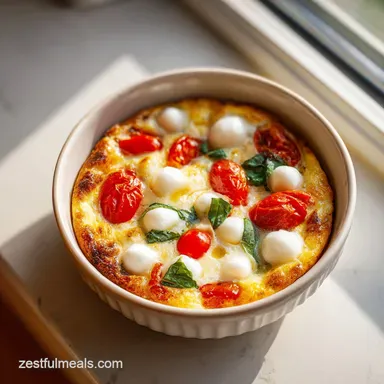
Crustless Caprese Quiche Salad: Silky and Fresh
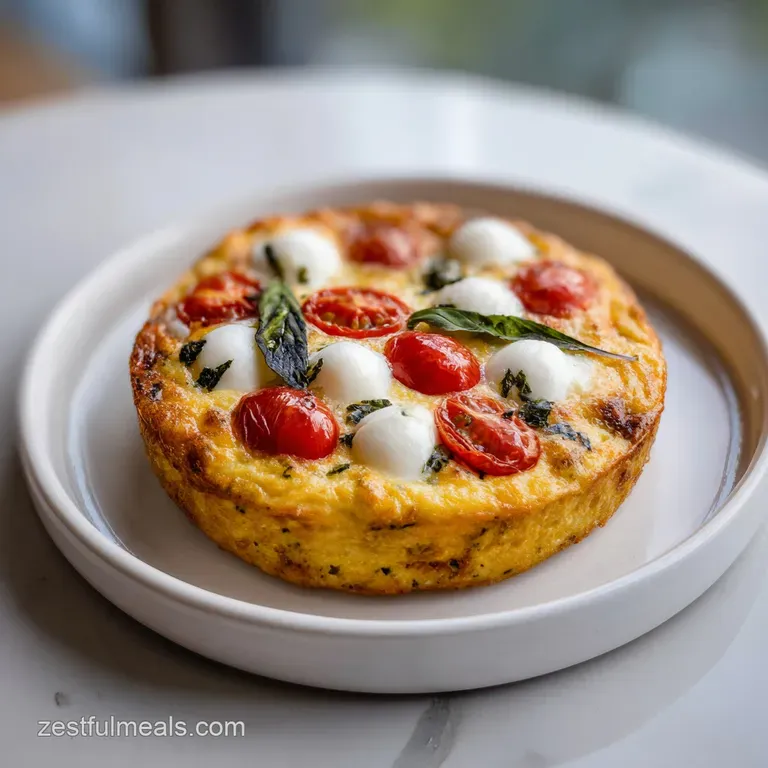
- Time:15 minutes active + 45 minutes baking = Total 60 minutes
- Flavor/Texture Hook: Silky custard with bursting, juicy cherry tomatoes
- Perfect for: Lazy Sunday brunch or a light morning gathering
- The Best Crustless Caprese Quiche Salad Recipe
- The Secret to Silky Eggs
- Component Analysis
- Everything You'll Need
- The Essential Gear
- Step by Step Baking Guide
- Fixing Common Baking Blunders
- Troubleshooting Common Issues
- Customizing Your Brunch Bake
- Scaling Your Bake
- Common Kitchen Myths
- Storage and Waste Tips
- The Best Serving Ideas
- Recipe FAQs
- 📝 Recipe Card
Imagine your kitchen filling with that sharp, sweet scent of roasting cherry tomatoes and the peppery punch of fresh basil. It's the kind of smell that actually wakes you up better than a double espresso.
But for a long time, my mornings were ruined by "sponge quiche." You know the kind, where the eggs are so overcooked they feel rubbery, and the bottom is a watery mess because the tomatoes leaked everywhere.
I realized the problem was treating a crustless bake like a frittata. When you take away the crust, you lose the structural support and the moisture barrier. If you just throw everything in a pan, you end up with an omelet that's trying too hard.
This crustless caprese quiche salad recipe fixes that by focusing on a high fat custard and a specific layering technique that keeps the moisture where it belongs.
You're going to get a slice that's almost like a savory cheesecake, but with the brightness of a summer garden. It's lighter than a traditional quiche but feels just as indulgent. Let's get into how to actually make this without the rubbery texture or the soggy bottom.
The Best Crustless Caprese Quiche Salad Recipe
When I first started making these, I thought more eggs meant a firmer, better slice. I was wrong. Adding too many eggs makes the dish dense and bouncy, which is the opposite of what we want for a brunch. The secret is the heavy cream.
It interferes with the egg proteins so they can't bond too tightly, which is what gives you that velvety, melt in-your mouth feel.
Another thing people get wrong is the tomato placement. If you stir the cherry tomatoes into the egg mix, they release their juices into the custard as they cook, which leads to a watery consistency.
By placing them cut side up on top, the water evaporates into the oven air, and the sugars caramelize, giving you those little concentrated bursts of flavor.
This dish is essentially a Caprese salad that decided to become a breakfast bake. It's brilliant because it works just as well warm as it does at room temperature. If you're hosting, you can bake it early, let it set, and serve it without any stress.
The Secret to Silky Eggs
Since we're skipping the crust, the "science" here is all about the custard. We want a stable set that doesn't feel like a rubber band.
- Fat Interference: Heavy cream coats the egg proteins, preventing them from tightening up too much during the bake.
- Moisture Control: Placing the cheese and basil at the bottom creates a protective layer that stops the eggs from sticking too hard to the pan.
- Heat Distribution: A lower temperature of 175°C ensures the edges don't burn before the center is set.
- Air Incorporation: Whisking the eggs and cream until smooth but not foamy prevents huge air bubbles from forming, which keeps the texture dense and creamy.
| Method | Time | Texture | Best For |
|---|---|---|---|
| Oven Bake | 45 mins | Velvety, set | Brunch crowds, meal prep |
| Stovetop | 20 mins | Fluffier, softer | Quick weekday breakfast |
| Air Fryer | 25 mins | Crispier edges | Individual portions |
Component Analysis
To get this right, you need to understand what each part is actually doing in the pan. It's not just about flavor, it's about how the ingredients behave under heat.
| Ingredient | Science Role | Pro Secret |
|---|---|---|
| Heavy Cream | Texture Modifier | Don't swap for milk or the quiche will weep water |
| Parmesan | Flavor/Binder | Grate it finely so it melts into the custard |
| Mozzarella Pearls | Moisture Pocket | Keep them whole so they create "cheese caves" |
| Cherry Tomatoes | Acid/Brightness | Halve them and face them up to avoid sogginess |
Everything You'll Need
I've listed these exactly as I use them. Trust me, don't skip the heavy cream, or you're just making a fancy omelet.
- 6 large eggs Why this? Provides the structure and richness
- 1 cup heavy cream Why this? Ensures a velvety, non rubbery texture
- ½ tsp salt Why this? Enhances the natural tomato sweetness
- ¼ tsp cracked black pepper Why this? Adds a subtle heat to balance the cream
- ¼ cup grated Parmesan cheese Why this? Adds a salty, umami depth to the base
- 8 oz fresh mozzarella pearls Why this? Melts into creamy pockets
- 1 ½ cups cherry tomatoes, halved Why this? Concentrated flavor when roasted
- ¼ cup fresh basil leaves, chiffonade Why this? Classic aromatic pairing
- 2 tbsp basil pesto Why this? Intense herbal punch in every bite
Substitution Guide
| Original Ingredient | Substitute | Why It Works |
|---|---|---|
| Heavy Cream (1 cup) | Full fat Coconut Milk (1 cup) | Similar fat content. Note: Adds a coconut hint, best if adding a pinch of nutmeg |
| Mozzarella Pearls | Cubed Fresh Mozzarella | Same flavor and melt. Note: Cut into small 1/2 inch cubes |
| Parmesan Cheese | Pecorino Romano | Similar salty profile. Note: Slightly sharper and saltier than Parmesan |
| Heavy Cream (1 cup) | Half and Half (1 cup) | Lower fat, still creamy. Note: Result is slightly less velvety, more "eggy" |
If you're looking for something to serve alongside this, my homemade guacamole recipe makes a surprisingly fresh, creamy side that cuts through the richness of the cheese.
The Essential Gear
You don't need a professional kitchen, but a few specific tools make this way easier. I use a 9 inch pie dish, but a springform pan is even better if you're worried about the quiche sticking.
I always use a stainless steel whisk for the custard. It gets the eggs and cream emulsified much faster than a fork. Also, a sharp chef's knife is non negotiable for the basil. If you bruise the leaves by hacking at them with a dull knife, they'll turn black in the oven instead of staying a vibrant green.
Step by step Baking Guide
Right then, let's crack on. Follow these steps and pay attention to the smells, as that's how you'll know you're on the right track.
- Preheat your oven to 350°F (175°C) and thoroughly grease a 9 inch pie dish or springform pan with butter or oil. Note: Don't be shy with the butter, crustless quiches love to cling to the sides.
- In a large mixing bowl, whisk together the eggs, heavy cream, salt, pepper, and grated Parmesan cheese until the mixture is completely smooth.
- Scatter the mozzarella pearls and sliced basil leaves evenly across the bottom of the prepared dish. Note: This creates a flavor floor for the rest of the ingredients.
- Dollop small teaspoons of basil pesto over the cheese layer. Note: Don't stir the pesto in; leaving it in dollops creates pockets of intense flavor.
- Carefully arrange the halved cherry tomatoes on top of the cheese and basil, placing them cut side up. Note: This is the key to avoiding a watery quiche.
- Slowly pour the egg mixture over the fillings, ensuring it fills all gaps. Note: Pour slowly to avoid displacing the tomatoes.
- Bake for 40–45 minutes until the edges are slightly golden and the center has a slight jiggle when shaken.
- Pull the dish from the oven. You should smell a toasted, nutty aroma from the Parmesan and a sweet, roasted scent from the tomatoes.
- Let it rest for 10 minutes before slicing. Note: This allows the custard to fully set so the slices stay clean.
Fixing Common Baking Blunders
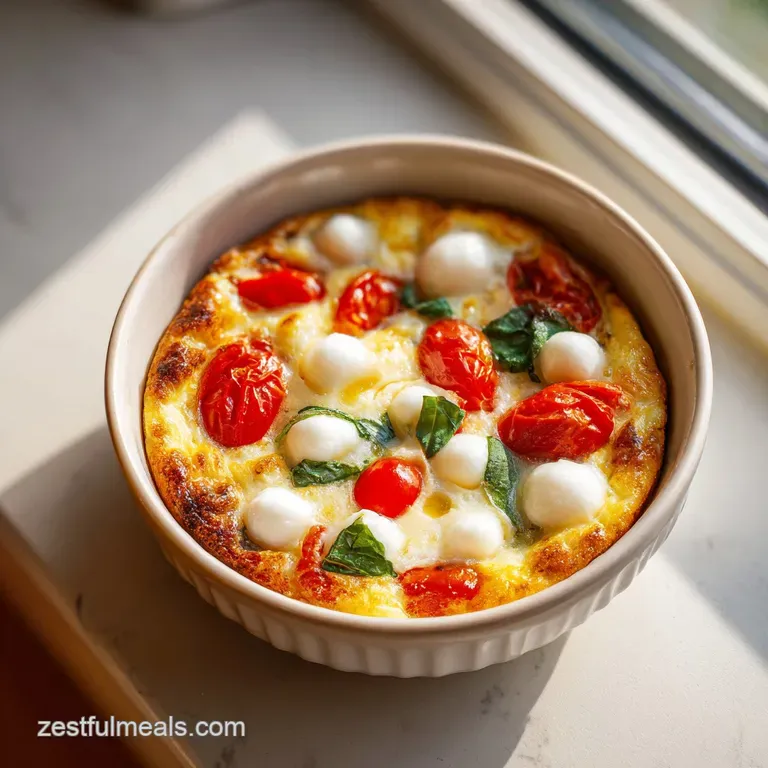
The most common issue I see with any crustless caprese quiche salad recipe is the "weeping" effect, where a pool of water forms at the bottom. This usually happens because the tomatoes were placed cut side down or the eggs were overbeaten.
Troubleshooting Common Issues
| Issue | Solution |
|---|---|
| Why Your Quiche Is Watery | This happens when tomato juices leak into the egg base or if you used frozen vegetables without thawing them first. The moisture disrupts the egg proteins and prevents a clean set. |
| Why Your Eggs Are Rubbery | Overcooking is the main culprit here. If the quiche puffs up like a balloon in the oven, it's getting too hot, and the eggs are tightening too much. |
| Why Your Cheese Sinks | If you don't use mozzarella pearls or small cubes, larger chunks of cheese can slide through the custard and stick to the bottom of the pan, sometimes burning. |
Success Checklist
- ✓ Tomatoes are all facing up
- ✓ Custard is whisked smooth, not frothy
- ✓ Pan is generously greased
- ✓ Quiche is removed while the center still jiggles slightly
- ✓ Rested for 10 mins before cutting
Customizing Your Brunch Bake
I love this recipe as is, but depending on who you're feeding, you might want to tweak it.
For a Protein Punch
If you want this to be a heartier meal, you can fold in some diced cooked ham or sautéed spinach. Just make sure the spinach is squeezed dry, or you'll run into that watery bottom problem again.
To Lower the Calories
You can swap the heavy cream for Greek yogurt. It provides a similar thickness and fat content but adds a tanginess that works well with the tomatoes. Note: The texture will be slightly denser and less "silky."
For a dairy-free Twist
Use a cashew based cream and vegan mozzarella. The Parmesan is the hardest part to replace, but a nutritional yeast blend usually does the trick for that salty, cheesy hit.
If you're doing a big spread, I highly recommend serving this with Sourdough discard garlic bread. The crunch of the toasted bread is the perfect contrast to the velvety texture of the quiche.
Scaling Your Bake
Making this for a crowd or just for yourself? Here is how to adjust.
Scaling Down (for 2-3 servings) Use a 6 inch ramekin or a small cake pan. Use 3 eggs and 1/2 cup of heavy cream. Reduce the baking time by about 20%, starting to check for doneness at 30 minutes. Since you can't easily halve an egg, beat one egg in a small bowl and use half of it.
Scaling Up (for 12+ servings) Work in two 9 inch pans rather than one giant deep pan. If the quiche is too deep, the outside will overcook before the center sets. Keep the salt and pepper at about 1.5x rather than 2x to avoid over seasoning.
Lower the oven temperature by about 10°C and extend the bake time by 10-15 minutes to ensure an even cook.
Common Kitchen Myths
I've heard a few things about crustless quiches that just aren't true. Let's clear those up.
Myth: You need to "blind bake" a crustless quiche. Some people think you need to pre bake the fillings. You don't. Because there's no pastry to get soggy, everything can go in at once. The cheese at the bottom actually protects the base from sticking.
Myth: Adding more eggs makes it firmer. Actually, too many eggs make the texture rubbery and "spongy." The firmness comes from the baking time and the temperature, not the amount of eggs. The cream is what keeps it luxurious.
Storage and Waste Tips
This quiche keeps surprisingly well. Store leftovers in an airtight container in the fridge for up to 4 days. When you're ready to eat, I recommend reheating it in the oven at 150°C for 10 minutes or in a toaster oven.
Avoid the microwave if you can, as it can make the eggs rubbery.
For freezing, you can freeze individual slices wrapped in parchment paper and foil for up to 2 months. Thaw overnight in the fridge before reheating.
Zero Waste Tips
- Tomato Stems: Don't toss the cherry tomato stems. Toss them in a freezer bag with other veggie scraps to make a homemade broth.
- Basil Stems: Blend the basil stems into your pesto for extra flavor and less waste.
- Parmesan Rind: If you used a block of Parmesan, save the rind! Toss it into a simmering pot of soup or pasta sauce for a massive hit of umami.
The Best Serving Ideas
While this is a crustless caprese quiche salad recipe, you can serve it as a standalone slice or turn it into a full salad.
I love placing a warm slice of quiche on a bed of fresh arugula tossed in a light lemon vinaigrette. The bitterness of the arugula balances the richness of the mozzarella and cream. Add a few extra fresh basil leaves and a drizzle of balsamic glaze over the top for that restaurant style look.
If you're feeling extra lazy on a Sunday morning, just serve it with a side of fresh berries and a cold glass of orange juice. It's simple, but the combination of the warm, melted cheese and the cold fruit is a total mood.
Trust me on this, the balsamic glaze is the real secret to making this look like you spent hours in the kitchen when it actually only took 15 minutes of active work.
Recipe FAQs
How to store leftover quiche?
Place in an airtight container in the fridge. This keeps the slices fresh for up to 4 days.
Why is my quiche watery?
Tomato juices likely leaked into the egg base. This extra moisture disrupts the egg proteins and prevents the quiche from setting cleanly.
Is it true I must use a pastry crust to keep the filling from leaking?
No, this is a common misconception. A 9 inch pie dish or springform pan that is thoroughly greased with butter or oil holds the filling perfectly.
Why are my eggs rubbery?
The quiche was likely overcooked. If it puffs up like a balloon, the eggs are tightening too much from the heat. If you enjoyed controlling egg texture here, the same principle of avoiding overcooking applies to our creamy silky sauce.
How to reheat a slice without ruining the texture?
Warm in the oven at 150°C for 10 minutes. Avoid the microwave, as it typically makes the eggs rubbery.
Can I use large mozzarella chunks instead of pearls?
No, stick with pearls. Larger chunks of cheese are heavier and tend to slide through the custard and sink to the bottom.
How to tell when the quiche is finished baking?
Bake for 40 45 minutes until the edges are slightly golden. The center should still have a slight jiggle when you shake the pan.
Crustless Caprese Quiche Salad