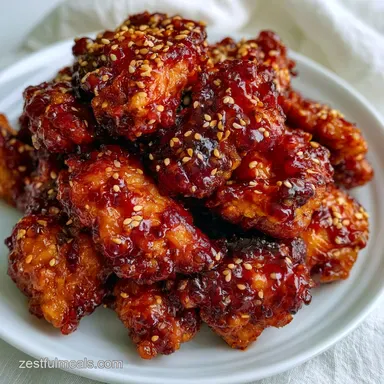
Crispy Sweet and Spicy Korean Fried Chicken
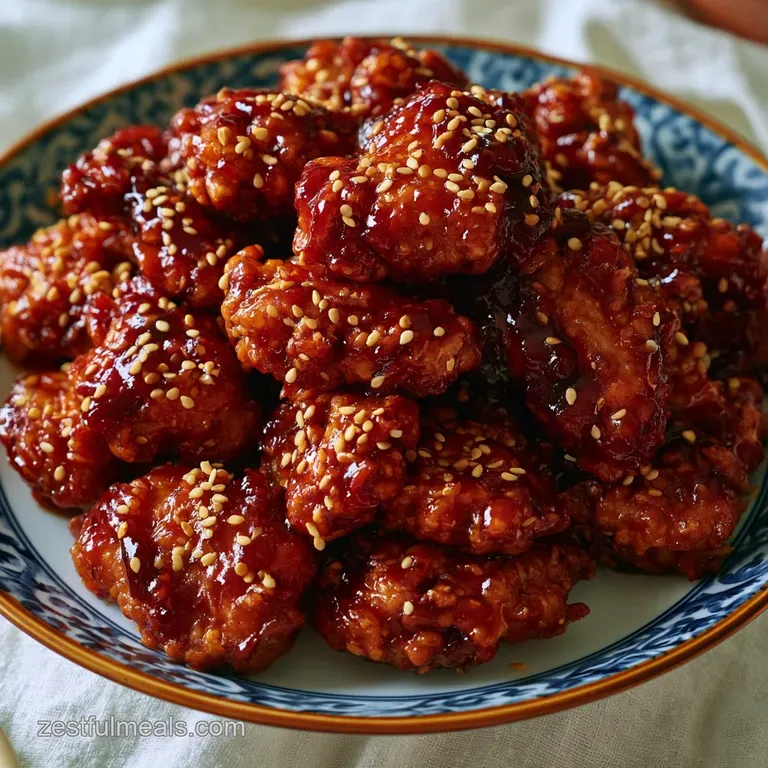
- Time:15 minutes active + 30 minutes cooking = Total 45 minutes
- Flavor/Texture Hook: Shatter crisp coating with a glossy, spicy sweet glaze
- Perfect for: Family dinner nights or a budget-friendly "fakeaway" party
- Crispy Sweet and Spicy Korean Fried Chicken Recipe
- Why This Crunch Actually Lasts
- Ingredient Component Analysis
- The Essential Ingredients List
- The Right Tools for Frying
- Step by Step Cooking Guide
- Fixing Common Frying Mishaps
- Customizing the Flavor Profile
- Scaling the Recipe
- Truth About Frying Myths
- Storage and Zero Waste Guidelines
- Best Sides for This Chicken
- Very High in Sodium
- Recipe FAQs
- 📝 Recipe Card
Crispy Sweet and Spicy Korean Fried Chicken Recipe
That loud, aggressive sizzle when the chicken hits the oil is the best part of my Friday nights. There is nothing quite like the smell of toasted garlic and Gochujang bubbling in a pan, filling the whole house. For a long time, I struggled with the "soggy crust" syndrome.
I'd fry the chicken, toss it in the sauce, and within five minutes, the coating would turn into a mushy paste. It was heartbreaking, especially when the kids were waiting for that specific crunch they get at the restaurants.
The secret isn't some fancy equipment, but the double fry. I realized that a single fry just cooks the meat, but the second fry is what actually creates the armor. This is the ultimate Crispy Sweet and Spicy Korean Fried Chicken Recipe because it fixes that texture issue once and for all.
We are talking about a coating that actually shatters when you bite into it, providing a velvety contrast to the juicy chicken thigh inside.
You can expect a dish that balances the deep, fermented funk of Gochujang with the bright sweetness of honey. It's a crowd pleaser that feels like a treat but uses basic ingredients you can find at any grocery store.
Trust me on this, once you see the color change from pale gold to a deep mahogany during the second fry, you'll never go back to the single fry method.
Why This Crunch Actually Lasts
I used to think any flour would work, but that was my mistake. After experimenting with different starches, I found that the blend is what makes the difference.
- The Starch Duo: Cornstarch provides the initial structure, while potato starch creates a lighter, crispier shell that resists moisture.
- Moisture Removal: Patting the chicken bone dry before coating prevents steam from forming under the crust, which is the main cause of sogginess.
- The Double Fry: The first fry cooks the chicken through, and the second fry evaporates the remaining surface water to lock in the crunch.
- over High heat Glazing: Tossing the chicken in the sauce on high heat for a very short time ensures the glaze sticks without soaking into the breading.
| Method | Fry Count | Texture | Best For |
|---|---|---|---|
| Quick Method | Single Fry | Soft/Tender | Quick weeknight meals |
| Classic Method | Double Fry | Shatter Crisp | Authentic Korean style |
| Air Fryer | No Oil | Dry/Crunchy | Healthier alternative |
I've found that for families on a budget, the classic double fry is still the way to go. Even though it takes a bit more oil, the result is so much better that you don't feel the need to order takeout. If you're looking for other ways to get that crunch in your meals, you might enjoy my KFC Chicken Recipe, which uses a different flour based approach for a more traditional American style.
Ingredient Component Analysis
Understanding why we use these specific items helps when you're staring at a half empty pantry.
| Ingredient | Science Role | Pro Secret |
|---|---|---|
| Potato Starch | Crispness Agent | Creates a thinner, more rigid shell than wheat flour |
| Gochujang | Flavor Base | Fermented heat that thickens the sauce naturally |
| Honey | Glaze Binder | Provides the "gloss" and balances the spicy pepper |
| Chicken Thighs | Moisture Source | Higher fat content prevents the meat from drying out |
The Essential Ingredients List
Keep it simple. I use boneless thighs because they are cheaper and far more forgiving than breasts, which tend to get rubbery if you overcook them by even a minute.
For the Crispy Chicken
- 1.5 lbs boneless skinless chicken thighs, cut into bite sized pieces Why this? More flavor and stays juicy during double frying
- 1/2 cup cornstarch Why this? Provides a sturdy base for the crust
- 1/2 cup potato starch Why this? This is the secret to the "shatter" texture
- 1 tsp salt
- 1/2 tsp black pepper
- 1 tsp garlic powder
- 2 cups neutral oil for frying Why this? Canola or vegetable oil handles high heat without smoking
For the Sweet and Spicy Yangnyeom Sauce
- 3 tbsp Gochujang Why this? Essential Korean chili paste for authentic depth
- 2 tbsp honey Why this? Better viscosity and shine than granulated sugar
- 1 tbsp soy sauce
- 1 tbsp rice vinegar Why this? Cuts through the richness of the fried oil
- 1 tbsp minced garlic
- 1 tsp grated fresh ginger
- 1 tbsp unsalted butter Why this? Adds a velvety finish to the glaze
For the Garnish
- 1 tbsp toasted sesame seeds
- 2 scallions, thinly sliced
Chef's Note: If you can't find potato starch, you can use more cornstarch, but the crust will be slightly denser and less "airy". For an even deeper flavor, I sometimes add a pinch of smoked paprika to the flour mix.
The Right Tools for Frying
You don't need a professional deep fryer. A heavy bottomed pot or a deep skillet works perfectly. According to the guides at Serious Eats, using a heavy pot helps maintain a more consistent oil temperature when you drop in the cold chicken.
I highly recommend a digital meat thermometer for the oil. If you don't have one, use the "wooden chopstick test". Dip the end of a wooden chopstick into the oil; if it bubbles steadily around the wood, it's ready.
Step by step Cooking Guide
Right then, let's get into it. Make sure your chicken is prepped and your sauce ingredients are measured out before you turn on the heat.
- Pat the chicken dry with paper towels. Toss the chicken pieces in a bowl with salt, pepper, and garlic powder. Note: Removing surface moisture is non negotiable for crunch.
- Combine cornstarch and potato starch in a large bowl or zip top bag. Coat each piece of chicken thoroughly, shaking off any excess powder.
- Heat oil to 325°F (163°C). Fry the chicken in batches for 5–7 minutes until pale golden.
- Remove the chicken and place it on a wire rack. Let it rest for 5 minutes. Note: This lets the internal steam escape so the second fry can crisp the outside.
- Raise the oil temperature to 375°F (190°C). Return the chicken to the oil for 2–3 minutes until it reaches a deep mahogany color and the coating feels rigid.
- In a saucepan over medium heat, melt the butter. Stir in Gochujang, honey, soy sauce, vinegar, garlic, and ginger.
- Simmer for 2–3 minutes until the sauce bubbles and thickens into a glossy glaze.
- Add the double fried chicken to the pan and toss rapidly on high heat for 30 seconds to coat. Note: Fast tossing prevents the sauce from soaking into the crust.
- Transfer to a platter and immediately sprinkle with sesame seeds and scallions.
Fixing Common Frying Mishaps
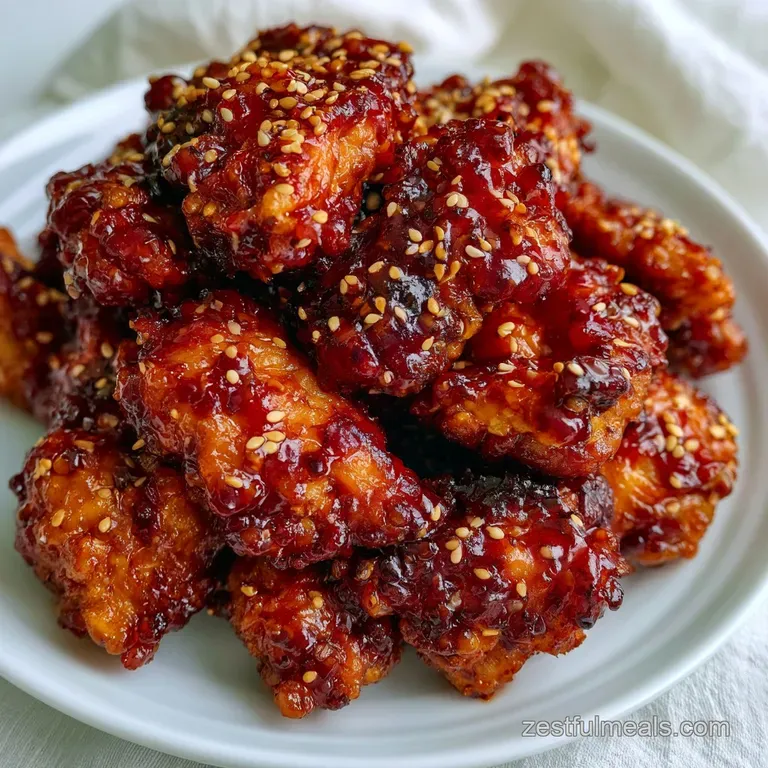
The most common complaint with this recipe is that the chicken doesn't stay crispy. Usually, this comes down to the temperature of the oil or the moisture of the chicken.
Why is my chicken soggy?
If the chicken is soggy, you likely crowded the pan or the oil temp dropped too low. When you add too many pieces at once, the oil temperature plummets, and the chicken starts to absorb oil instead of searing.
The sauce is too spicy for my guests
Gochujang varies in heat by brand. If the glaze is too intense, you can balance it by adding another tablespoon of honey or a splash of water to mellow it out.
The coating is peeling off
This happens when the chicken is too wet before dredging. The starch doesn't bond to the meat, and the steam pushes the crust away during frying.
| Problem | Root Cause | Solution |
|---|---|---|
| Soggy crust | Oil temp too low | Fry in smaller batches |
| Burnt sauce | Heat too high | Lower heat and add 1 tsp water |
| Pale chicken | Second fry skipped | Always double fry for mahogany color |
Quick Precision Checkpoints:
- Oil Temp 1: 325°F (163°C)
- Oil Temp 2: 375°F (190°C)
- Second Fry Time: Exactly 2–3 minutes
Common Mistakes Checklist:
- ✓ Did you pat the chicken dry with paper towels?
- ✓ Did you use a wire rack instead of a paper towel for resting?
- ✓ Is the oil at 375°F before the second dip?
- ✓ Did you toss the sauce on high heat for only 30 seconds?
- ✓ Did you avoid overcrowding the pot?
Customizing the Flavor Profile
If you want to change things up, this base recipe is very flexible. I often make a batch of the chicken and split it between two different sauces to keep the kids happy.
For a Non Spicy Version (Soy Garlic)
Swap the Gochujang for an extra 2 tbsp of soy sauce and 1 tbsp of brown sugar. Increase the garlic to 3 cloves for a savory, salty glaze that everyone loves.
For a Healthier Alternative (Air Fryer)
Toss the coated chicken in a bit of oil spray. Air fry at 380°F for 12 minutes, flip, and fry for another 8 minutes. Note: You won't get the same "shatter" as deep frying, but it's a great weeknight shortcut.
For a Plant Based Swap
Use extra firm tofu, pressed for 30 minutes to remove water. Use the exact same starch blend and frying method. The tofu will get an incredible crust that holds the spicy glaze perfectly.
Decision Shortcut:
- If you want maximum crunch → Use the double fry method.
- If you are short on time → Use the air fryer method.
- If you have kids who hate spice → Use the Soy Garlic swap.
Scaling the Recipe
When making this for a big party, don't just multiply everything and dump it in one pot. That's a recipe for disaster.
Scaling Down (½ batch): Use a smaller skillet to keep the oil depth consistent. You'll find the sauce reduces faster, so keep a close eye on it so the honey doesn't burn.
Scaling Up (2x-4x batch): Work in batches for the frying. I repeat: do NOT crowd the pot. For the sauce, you can double the ingredients, but only increase the salt/soy sauce by 1.5x to avoid it becoming too salty as it reduces.
If you're serving a crowd, I recommend pairing this chicken with some crispy frozen green beans. They provide a fresh, snap crisp contrast to the rich, spicy chicken and take very little effort to prepare.
Truth About Frying Myths
There are a lot of old wives' tales in the kitchen, especially regarding fried chicken. Let's clear a few up.
Myth: You need a deep fryer for authentic results. Actually, a heavy Dutch oven or cast iron pot is often better. They hold heat more steadily than cheap electric fryers, which can fluctuate in temperature.
Myth: Searing the chicken "seals in the juices." Searing doesn't create a waterproof seal. The juices stay in because we aren't overcooking the meat. The crust is there for flavor and texture, not as a physical barrier.
Myth: Frozen chicken can't be used for this recipe. You can absolutely use frozen thighs. Just make sure they are completely thawed in the fridge and patted extremely dry. If they are still icy, the oil will splatter and the crust will be soggy.
Storage and Zero Waste Guidelines
Fried chicken is best fresh, but we've all had leftovers. The challenge is keeping that crunch.
Fridge Storage: Store in an airtight container for up to 3 days. To reheat, avoid the microwave at all costs, as it will turn your chicken into a sponge. Use an air fryer at 350°F for 5 minutes or a toaster oven.
Freezing: I don't recommend freezing the glazed chicken, as the sugar in the sauce can affect the texture. However, you can freeze the double fried chicken before it's glazed for up to 2 months. Thaw in the fridge and flash fry or air fry before adding fresh sauce.
Zero Waste Tips: Don't throw away the leftover frying oil! Once it cools and is strained through a coffee filter, you can use it once more for roasting potatoes or sautéing vegetables. If you have leftover sauce, it makes a killer glaze for grilled salmon or roasted carrots.
Best Sides for This Chicken
Since this dish is quite rich and bold, you need sides that provide balance. I usually go for something acidic or fresh to cleanse the palate.
A simple cucumber salad with rice vinegar, sesame oil, and a pinch of sugar is the classic pairing. The coolness of the cucumber cuts right through the heat of the Gochujang. Alternatively, steamed jasmine rice or a bowl of kimchi provides the authentic Korean experience.
If you're looking for something more filling, a side of slaw with a lime cilantro dressing works wonders. The acidity in the lime helps break down the richness of the fried coating, making the whole meal feel lighter. Just remember to keep the sides simple so they don't compete with the star of the show.
Very High in Sodium
1410 mg 1,410 mg of sodium per serving (61% 61% of daily value)
The American Heart Association recommends a daily sodium limit of no more than 2,300 mg for most adults to reduce the risk of cardiovascular disease.
Tips to Reduce Sodium
-
Omit Added Salt-25%
Remove the 1 tsp salt from the chicken coating; the starches and other seasonings provide enough structure without the extra sodium.
-
Swap Gochujang-20%
Use a low-sodium Gochujang paste or reduce the amount and increase the honey to maintain the sweetness and viscosity.
-
Lower Sodium Soy Sauce-20%
Replace regular soy sauce with low-sodium soy sauce or coconut aminos to significantly cut the salt content.
-
Enhance Aromatics
Increase the fresh ginger, garlic, and black pepper to add punchy flavor and complexity without adding any sodium.
Recipe FAQs
Why fry the chicken twice?
It creates a superior crunch. The first fry at 325°F cooks the meat through, while the second fry at 375°F removes surface moisture and hardens the crust.
Can I use only cornstarch?
No, the potato starch blend is key. Using both starches ensures a lighter, more rigid shell that resists getting soggy once the glaze is added.
How to prevent the sauce from burning?
Simmer the sauce for only 2 3 minutes. Remove it from the heat as soon as the mixture bubbles and thickens into a glossy glaze.
Why is my chicken not crispy?
You likely didn't pat the chicken dry. Any remaining surface moisture creates steam during frying, which prevents the starch coating from adhering and crisping properly.
Is it true I should microwave leftover chicken to reheat it?
No, this is a common misconception. Microwaving turns the coating into a sponge; use an air fryer at 350°F for 5 minutes to restore the crunch.
Can I make this recipe less spicy?
Yes, reduce the Gochujang quantity. Balance the remaining heat with a bit more honey to maintain the profile. If you enjoyed the savory sweet balance here, see how we balance rich flavors in our classic Salisbury steak.
How to get the glaze to stick properly?
Toss the chicken rapidly on high heat for 30 seconds. This quickly coats the pieces without allowing the sauce to soak into the crust and soften it.
Korean Fried Chicken Recipe