Spinach Artichoke Dip: Failure-Proof and Creamy
- Time: 10 min active + 20 min baking = Total 30 mins
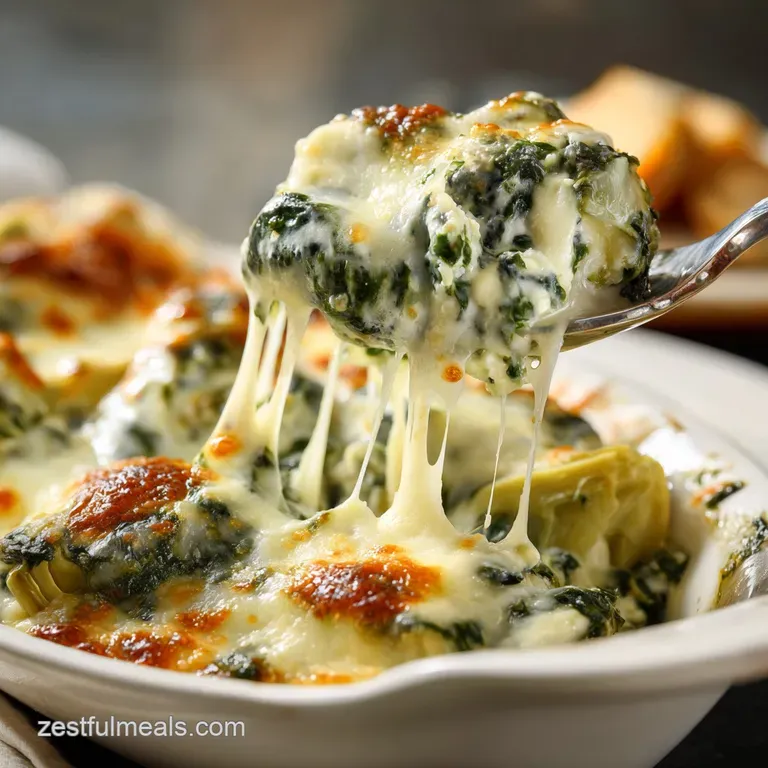
- Flavor/Texture Hook: Bubbling, golden cheese crust with a silky, tangy center
- Perfect for: Game day crowds, family potlucks, or a cozy night in
- The Best Spinach Artichoke Dip Recipe
- Why This Dip Actually Works
- Component Analysis
- Essential Ingredients and Swaps
- Must Have Kitchen Tools
- Step-by-Step Cooking Flow
- Fixing Common Dip Mistakes
- Troubleshooting Common Issues
- Fun Flavor Variations
- Scaling Guidelines
- Myths About Cheesy Dips
- Storage and Zero Waste
- Serving and Presentation Tips
- Recipe FAQs
- 📝 Recipe Card
Hear that sizzle? That's the sound of garlic hitting hot olive oil, and it's where the magic starts. I used to think the secret to a great dip was just adding more cheese until the bowl felt heavy, but I learned the hard way that more cheese doesn't fix a watery base.
Years ago, I brought a dip to a family reunion that looked great on top but turned into a salty soup the moment someone dipped a chip into the center. It was a total disaster, and I spent the rest of the afternoon pretending I wasn't embarrassed.
The real trick is managing the moisture. Spinach is basically a sponge, and canned artichokes are packed in brine. If you just mix them in raw, they release all that liquid during baking, which separates the fats and ruins the texture.
This spinach artichoke dip recipe focuses on a quick sauté to evaporate that extra water before the cheese ever touches the pan.
You can expect a dip that is rich, savory, and has that iconic pull we all love. It's a Budget friendly crowd pleaser that uses simple pantry staples but tastes like something from a high end bistro.
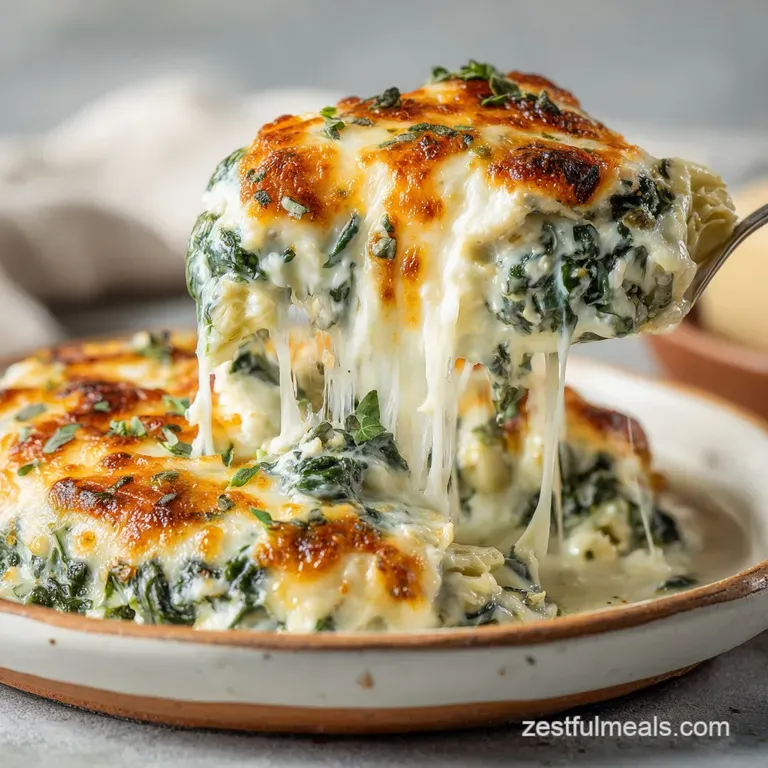
We're going for a velvety interior and a top that's golden and bubbly, providing a satisfying contrast to a crisp cracker or a toasted baguette.
The Best Spinach Artichoke Dip Recipe
Right then, let's get into the details. This is the kind of dish that makes everyone ask for the recipe before they've even finished their first serving. It's not about fancy ingredients, but about how those ingredients interact.
When we combine the tang of sour cream with the richness of cream cheese, we create a stable binder that prevents the dip from breaking.
If you enjoy these kinds of creamy, indulgent textures, you'll probably love my Chicken and Shrimp Alfredo Sauce, which uses a similar logic of balancing fats for a silky finish. For this dip, however, we're leaning into the earthy notes of the vegetables to cut through the heaviness.
The goal is a balance where you can actually taste the artichokes and the spinach, rather than just tasting "cheese." By sautéing the garlic and vegetables first, we build a layer of flavor that permeates the entire dish. It's a small extra step that makes a massive difference in the final result.
Why This Dip Actually Works
I've spent a lot of time wondering why some dips feel "heavy" while others feel "creamy." It comes down to how the fats are layered. Here is what's actually happening in your baking dish:
- Moisture Control: Sautéing the spinach and artichokes first forces the water out. This prevents the dip from separating and becoming a soup in the oven.
- Fat Emulsion: Combining mayonnaise, sour cream, and cream cheese creates a triple threat binder. This ensures the dip stays velvety and doesn't get oily.
- Cheese Synergy: Mozzarella provides the classic stretch, while Parmesan adds a salty, crystalline bite that helps the top crust shatter when you bite into it.
- Acid Balance: The natural tang in the sour cream and the slight acidity of the artichokes cut through the heavy fats, keeping the flavor bright.
Before we move on, you need to decide which route you're taking with your ingredients. Some people prefer the convenience of pre cut mixes, but the homemade approach gives you way more control over the texture.
| Feature | Fresh/Hand Chopped | Shortcut/Pre Cut | Impact |
|---|---|---|---|
| Texture | Chunky and varied | Uniform and soft | Fresh feels more "homemade" |
| Moisture | High (requires sauté) | Low (often pre dried) | Fresh tastes more vibrant |
| Prep Time | 15-20 minutes | 5 minutes | Shortcut is faster for weeknights |
Component Analysis
Understanding what each ingredient does helps you make better tweaks on the fly. According to USDA FoodData, spinach is nutrient dense but holds a high percentage of water, which is why our prep method is so specific.
| Ingredient | Science Role | Pro Secret |
|---|---|---|
| Cream Cheese | Structural Base | Soften fully to avoid lumps in the binder |
| Sour Cream | Acidity/Tang | Use full fat for a more stable emulsion |
| Parmesan | Flavor Catalyst | Use freshly grated for a better melt |
| Artichoke Hearts | Texture/Earthiness | Chop into uneven pieces for better mouthfeel |
Essential Ingredients and Swaps
Don't stress if you're missing something in the fridge. Most of these can be swapped without ruining the dish, though the texture might change slightly.
- 285 g frozen chopped spinach, thawed and squeezed dry Why this? Consistent moisture level compared to fresh (Substitute: Fresh spinach, but sauté longer)
- 400 g canned artichoke hearts, drained and chopped Why this? Budget friendly and tangy (Substitute: Marinated artichokes for more zip)
- 15 g garlic, minced Why this? Essential aromatic base (Substitute: Garlic powder, but less punch)
- 15 ml olive oil Why this? High smoke point for sautéing (Substitute: Butter for a nuttier taste)
- 225 g cream cheese, softened to room temperature Why this? Provides the thick, velvety body (Substitute: Neufchâtel for a lighter version)
- 60 ml sour cream Why this? Adds necessary tang (Substitute: Plain Greek yogurt)
- 60 ml mayonnaise Why this? Stabilizes the emulsion (Substitute: Extra sour cream, though less stable)
- 3 g salt Why this? Enhances all other flavors
- 1 g black pepper Why this? Subtle heat
- 1 g red pepper flakes (optional) Why this? Cuts through the richness
- 115 g shredded mozzarella cheese Why this? The "cheese pull" factor (Substitute: Monterey Jack)
- 50 g grated Parmesan cheese Why this? Adds salty depth (Substitute: Pecorino Romano)
Must Have Kitchen Tools
You don't need a professional kitchen for this, but a few specific tools make the process smoother. I usually use a medium skillet for the vegetables and a large mixing bowl for the base.
A rubber spatula is a lifesaver here. It helps you scrape every bit of that creamy mixture out of the bowl and into the baking dish. If you're using frozen spinach, a clean kitchen towel or a fine mesh strainer is mandatory for squeezing out the water.
Trust me, if you skip the squeeze, you'll be dealing with a watery mess.
For the baking dish, a 9 inch pie plate or a small rectangular casserole dish works best. You want the dip to be about 1 to 2 inches thick. If it's too thin, it will dry out; if it's too thick, the middle won't get bubbly enough.
Step-by-step Cooking Flow
Let's crack on with the actual cooking. Follow these steps in order to ensure the texture stays consistent.
- Heat olive oil in a skillet over medium heat. Add minced garlic and sauté for 1 minute until fragrant and shimmering. Note: Don't let the garlic brown or it will taste bitter.
- Stir in the squeezed spinach and chopped artichokes. Cook for 3-5 minutes until the sizzle slows down and moisture has evaporated.
- In a large mixing bowl, beat the softened cream cheese with a spoon or mixer until smooth.
- Fold in the sour cream, mayonnaise, salt, pepper, and red pepper flakes. Mix until the binder is velvety and uniform.
- Stir in the sautéed vegetable mixture and half of the mozzarella and Parmesan until fully incorporated.
- Transfer the mixture to your baking dish. Spread it evenly with a spatula.
- Top with the remaining mozzarella and Parmesan, creating a thick layer of cheese.
- Bake at 375°F (190°C) for 15-20 minutes until the edges are bubbling and the top is golden.
- Turn on the broiler for the final 2 minutes until the cheese crust looks toasted and browned.
Fixing Common Dip Mistakes
Even the best of us mess up occasionally. Usually, a "failed" dip is just a chemistry problem that can be fixed with a few tweaks.
Troubleshooting Common Issues
| Issue | Solution |
|---|---|
| Why Your Dip Is Watery | This is the most common complaint. It almost always happens because the spinach wasn't squeezed dry enough or the artichokes weren't sautéed. The water releases during the bake and settles at the bott |
| Why Your Dip Is Greasy | If you see a layer of oil on top, it's often because the cheese has "broken." This happens if the heat is too high or if you used low-fat cheeses, which don't emulsify as well. Stick to full fat mozza |
| Why Your Dip Is Bland | Rich cheeses can sometimes mask the salt. If the dip tastes "flat," it needs acid or salt. A tiny squeeze of lemon juice or an extra pinch of Parmesan usually wakes everything up. |
Common Mistakes Checklist:
- ✓ Squeezed spinach until bone dry
- ✓ Softened cream cheese to room temp
- ✓ Sautéed vegetables to remove brine
- ✓ Used full fat cheeses for stability
- ✓ Checked for "bubbling" before removing from oven
Fun Flavor Variations
One of the reasons this is such an easy spinach artichoke dip recipe is how well it adapts. You can change the profile based on what you have in the pantry or who you're serving.
Creating a Crock Pot Spinach Artichoke Dip
If you're hosting a party and don't want to hover over the oven, you can move this to a slow cooker. Simply combine all ingredients (skip the sauté step, but squeeze the spinach even harder) and cook on low for 2-3 hours. It won't have the toasted crust, but it stays warm for hours.
Making it a Vegan Spinach Artichoke Dip
For a plant based version, swap the cream cheese for a cashew based alternative and use vegan mozzarella. You'll need to add a teaspoon of nutritional yeast to mimic that sharp Parmesan flavor. It's surprisingly close to the original.
Lightening the Calories
For a healthy spinach artichoke dip recipe, replace the mayonnaise with extra Greek yogurt and use a part skim mozzarella. You'll lose a bit of that luxurious mouthfeel, but the flavor remains strong. This version pairs great as a side to Pan Seared Garlic Chicken Thighs for a lighter dinner.
Scaling Guidelines
Adjusting this recipe for a crowd or a solo snack is straightforward, but keep an eye on the baking time.
Scaling Down (1/2 batch): Use a smaller 6 inch ramekin. Reduce the baking time by about 20%, as a smaller mass heats through faster. Be careful with the salt; sometimes 1/2 the salt feels like too much in a smaller volume.
Scaling Up (2x-4x batch): If you're making this for a massive party, work in batches for the sautéing. If you crowd the pan with too many vegetables, they will steam instead of sear, leaving you with that watery texture we're avoiding.
For the oven, lower the temp to 350°F (175°C) and extend the time by 10-15 minutes to ensure the center is hot.
Decision Shortcut: If you want a toasted crust → Use the broiler for 2 mins. If you want a smoother texture → Pulse the vegetable mix in a food processor. If you want more "tang" → Increase the sour cream by 20ml.
Myths About Cheesy Dips
There's a lot of bad advice out there about how to make a homemade spinach artichoke dip. Let's clear some things up.
Myth 1: "Adding flour makes it thicker." Some recipes suggest a roux or adding flour to the cheese. In reality, this often makes the dip taste "pasty" or like a thick soup. The structural integrity should come from the cream cheese and the removal of water from the vegetables, not from starch.
Myth 2: "Frozen spinach tastes worse than fresh." Actually, for dips, frozen chopped spinach is often superior. It's already blanched and easier to squeeze dry. Fresh spinach has a huge volume that shrinks drastically, making it harder to judge the ratio of vegetables to cheese.
Storage and Zero Waste
Don't let leftovers go to waste. This dip keeps surprisingly well if stored correctly.
Storage: Place leftovers in an airtight container in the fridge for up to 4 days. Because of the high fat content, it can firm up significantly in the cold.
Reheating: Avoid the microwave if you can, as it can make the cheese split and get oily. Instead, put it back in a small oven safe dish and heat at 325°F (160°C) until bubbly. Add a splash of milk or cream if it seems too thick.
Freezing: You can freeze the unbaked mixture for up to 2 months. Thaw it in the fridge overnight before baking. Avoid freezing the already baked dip, as the texture of the mozzarella becomes grainy.
Zero Waste Tip: If you have leftover artichoke brine from the can, don't pour it down the drain. It's basically a pre seasoned vinegar. Use it to marinate olives or whisk it into a salad dressing for a salty, tangy kick.
Serving and Presentation Tips
The way you serve this spinach artichoke dip recipe can change the whole experience. It's all about the "crunch factor."
Pairing with Crunch: While tortilla chips are a classic, try toasted sourdough slices or pita chips for a sturdier vessel. If you want something lighter, sliced cucumbers or bell pepper strips provide a fresh contrast to the rich cheese.
Adding Fresh Contrast: Just before serving, sprinkle some fresh chopped parsley or chives over the top. The pop of green makes the dish look professional, and the fresh herbs cut through the richness of the cream cheese.
The Platter Setup: Place the bubbling dish in the center of a wooden board. Surround it with a variety of dippers and a small bowl of olives or cherry tomatoes. This turns a simple appetizer into a full party spread.
Trust me, once people see those bubbles and smell the garlic, the chips will disappear in seconds.
Recipe FAQs
What ingredients are in spinach artichoke dip?
The base consists of frozen chopped spinach, canned artichoke hearts, garlic, and olive oil. It is thickened with cream cheese, sour cream, and mayonnaise, then seasoned with salt, pepper, red pepper flakes, mozzarella, and Parmesan.
What are the common mistakes when making artichoke dip?
Failing to squeeze the spinach dry. This is the most common cause of a watery dip; you must also sauté the vegetables to evaporate any remaining moisture before mixing.
What's the secret to a creamy artichoke dip?
Use softened, room temperature cream cheese. Beating it until smooth before folding in other ingredients ensures the dip is velvety and free of lumps.
Is it true that fresh spinach is better than frozen for this dip?
No, this is a common misconception. Frozen chopped spinach is preferred because it is much easier to squeeze completely dry, which keeps the dip from becoming watery during baking.
How to reheat leftover spinach artichoke dip?
Heat in a small oven safe dish at 325°F (160°C). Avoid using the microwave, as high frequency heating can cause the cheese to split and become oily.
Why is my spinach artichoke dip greasy?
The cheese has likely "broken" due to excessive heat. Stick to the 375°F baking temperature and use full fat mozzarella to maintain a stable emulsion.
What should I serve with spinach artichoke dip?
Toasted baguette slices or tortilla chips. For a complete appetizer spread, this pairs perfectly with a zesty homemade guacamole.
Spinach Artichoke Dip Recipe