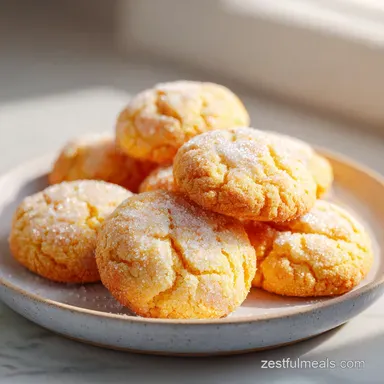
Soft Orange Sugar Cookies: Pillowy and Zesty
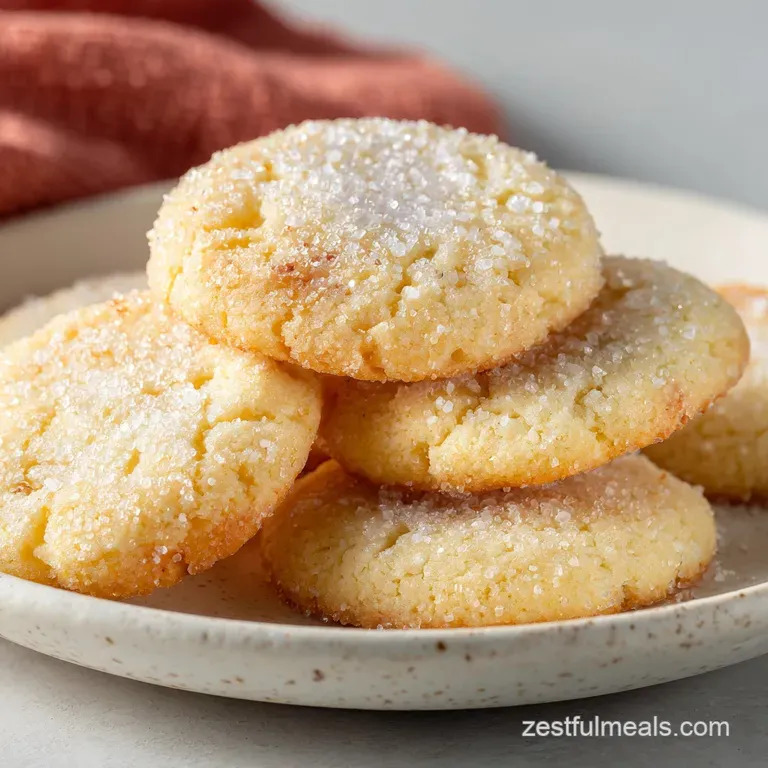
- Time:20 minutes prep + 8 minutes cook = 40 minutes total
- Flavor/Texture Hook: Pillowy soft with a bright, zesty citrus punch
- Perfect for: Afternoon tea, spring showers, or a simple homemade treat
Baking Pillowy Soft Orange Sugar Cookies
Ever wondered why some citrus cookies taste like a cleaning product while others taste like a sunny morning in a Mediterranean grove? The secret isn't just the orange you use, but how you treat the oils inside the fruit.
Most people dump in a splash of juice and wonder why their cookies are cakey or bland, but the real magic happens when you marry the zest directly into the fat of the butter.
I remember the first time I tried to make these for a friend's baby shower. I used way too much orange juice, thinking "more is better," and ended up with something that looked like a cookie but felt like a damp sponge. It was a total fail.
But once I shifted the focus to the zest and swapped granulated sugar for powdered sugar in the dough, everything changed. The texture shifted from "cookie" to "pillowy cloud," and the flavor became concentrated and bright.
You can expect a cookie that doesn't shatter when you bite into it, but instead gives way with a velvety softness. They're coated in a shimmering citrus sugar that adds a tiny bit of crackle before you hit that tender center. It's a simple process, but the results feel like something you'd find in a high end bakery.
Quick Recipe Details
Before we get into the bowls and whisks, let's look at how the bake time affects your result. Since these are meant to be soft, the window between "underdone" and "overbaked" is quite small.
| Texture Goal | Bake Time | Visual Cue | Mouthfeel |
|---|---|---|---|
| Ultra Soft | 8 minutes | Matte tops, pale edges | Pillowy & tender |
| Classic Soft | 9 minutes | Set edges, matte tops | Soft with slight bite |
| Slightly Crisp | 11 minutes | Light golden edges | Chewy & structured |
Right then, the most important thing to remember is that these cookies carry over a lot of heat. If you leave them in until they look "done" in the oven, they'll be hard by the time they cool. Pull them out when they still look a little shy.
The Essential Ingredient List
To get that specific velvety crumb, you'll need a few key items. Trust me on the powdered sugar - don't try to swap it for granulated in the dough if you want that soft baked feel.
For the Dough: 1 cup (225g) unsalted butter, softened Why this? Provides the fat needed to carry the orange oils 1 cup (120g) powdered sugar Why this? Finer crystals create a softer, tighter crumb 1 large (50g) egg, room temperature
Why this? Binds the dough and adds structure 1 tbsp (6g) fresh orange zest Why this? This is where the concentrated flavor lives 1 tsp (5ml) vanilla extract Why this? Rounds out the sharp citrus notes 2 ½ cups (315g)
All purpose flour Why this? Standard protein for a reliable hold 1 tsp (5g) baking powder Why this? Provides a gentle lift ½ tsp (3g) salt Why this? Balances the sweetness
For the Coating: ¼ cup (50g) granulated sugar Why this? Creates the outer shimmer and crunch 1 tsp (2g) orange zest Why this? Extra punch of aroma on the first bite
For the Optional Glaze: 1 cup (120g) powdered sugar 2 tbsp (30ml) fresh orange juice 1 tbsp (15ml) heavy cream or milk
Must Have Kitchen Tools
You don't need a professional kitchen to pull this off. I've made these using the bare minimum, and they still come out great. A handheld mixer is plenty, but if you have a stand mixer, feel free to use it to save your arms.
The only "must" is a parchment lined baking sheet. These cookies have a high sugar content, and if they stick to the pan for even a few seconds too long, you'll lose that pristine round shape. I also recommend a microplane or a fine zester.
You want the zest to be almost like a powder so it blends seamlessly into the butter without leaving large, bitter chunks of white pith.
Step-by-step Baking Process
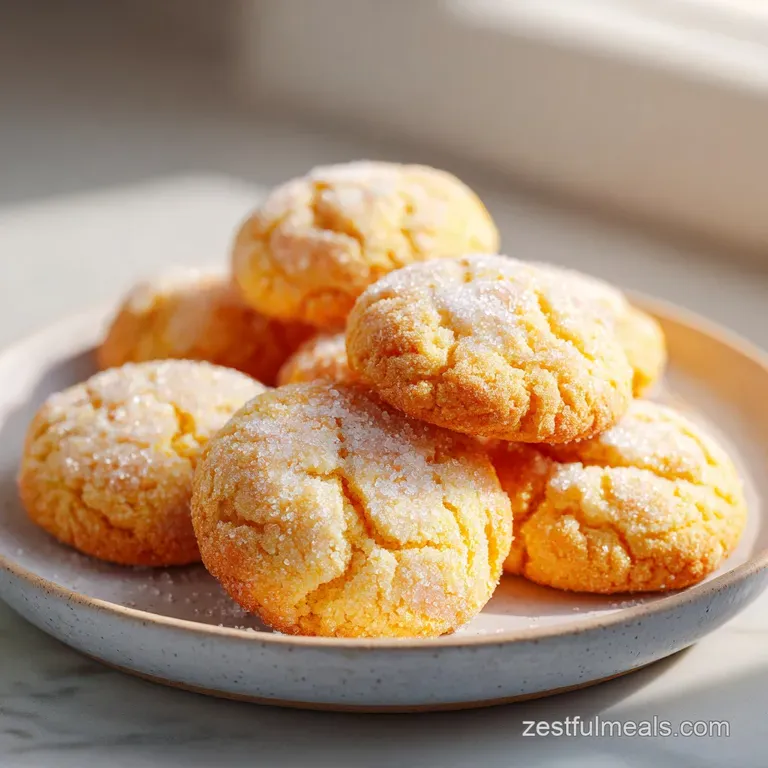
Let's crack on. The goal here is to keep the air in the butter while ensuring the flour isn't over worked.
1. Creaming the Citrus Base
Beat the softened butter and powdered sugar on medium high. Keep going for about 2-3 minutes until the mixture looks pale and fluffy. This is where you build the structure. Once it's light, mix in the egg, orange zest, and vanilla extract.
Beat it until the mixture is smooth and no longer looks separated.
2. Incorporating Dry Ingredients
In a separate bowl, whisk together your flour, baking powder, and salt. Now, turn your mixer to low. Gradually add the dry mixture to the wet ingredients. Mix only until the white streaks of flour disappear.
If you overmix here, you'll develop too much gluten, and your pillowy cookies will turn into tough biscuits.
3. Preparing the Sugar Roll
Preheat your oven to 350°F (175°C). While that's heating up, grab a small bowl and combine the granulated sugar and 1 tsp of orange zest. Use your fingers to rub the zest into the sugar - it releases the oils and makes the coating much more fragrant.
4. Shaping the Cookies
Scoop rounded tablespoons of dough and roll them into 1 inch balls. Roll each ball in the orange sugar mixture until they are evenly coated. They should look like little shimmering orange pearls.
5. The Baking Window
Place your cookies on the parchment lined baking sheet, leaving 2 inches of space between them. Bake for 8-10 minutes. Remove them when the edges are just set and the tops look matte. The centers should still look slightly underdone - this is the secret to that soft texture.
6. The Cooling Phase
Let the cookies firm up on the hot pan for a few minutes. This is called carryover cooking. Once they can be moved without breaking, transfer them to a wire cooling rack to finish setting.
Fixing Common Cookie Fails
Even the best of us have a bad batch. If your cookies aren't behaving, it's usually down to temperature or mixing.
The Spread Problem
If your cookies turned into flat pancakes, your butter was likely too warm. When butter is too soft, it incorporates too much air and melts too quickly in the oven.
| Problem | Root Cause | Solution |
|---|---|---|
| Cookies spread too much | Butter was too soft/melted | Chill dough for 30 mins before baking |
| Cookies are too flat | Oven temp was too low | Use an oven thermometer to verify 350°F |
| Bottoms are burnt | Baking sheet was too thin | Use a heavy duty pan or double layer parchment |
The Flavor Gap
If your cookies taste like plain sugar with a hint of "something," you might have missed the zest's potential. Always zest the orange before juicing it, and make sure you aren't hitting the white pith, which is bitter.
The Texture Issue
Hard or dry cookies are almost always a result of overbaking. Because these are soft orange sugar cookies, they don't look "done" like a chocolate chip cookie would.
| Problem | Root Cause | Solution |
|---|---|---|
| Cookies are hard/dry | Left in oven too long | Pull out when centers are still matte |
| Cookies are cakey | Too much flour or OJ | Measure flour by weight (315g) |
| Gritty texture | Powdered sugar didn't dissolve | Cream butter and sugar for a full 3 minutes |
Preventive Checklist:
- ✓ Use room temperature eggs to prevent the butter from curdling
- ✓ Measure flour with a scale or the "spoon and level" method
- ✓ Avoid overmixing once the flour is added
- ✓ Pull the pan out as soon as the edges are set
- ✓ Ensure butter is "cool room temperature" (should dent but not ooze)
Fun Flavor Variations
Once you've got the base down, you can play around with the flavors. If you're looking for something even simpler, my Butter Cookies recipe is a great way to practice creaming butter.
For those who love a classic base, this is very similar to my Sugar Cookie Dough but with a bright citrus twist. You can easily adapt this recipe into other citrus desserts by swapping the orange for lemon or lime zest.
- The Creamsicle
- Add a tiny pinch of almond extract to the dough and top the finished cookies with a vanilla bean glaze.
- Orange Chocolate
- Press a single dark chocolate chip into the center of each ball before rolling in sugar.
- The Zesty Glaze
- Mix the powdered sugar, orange juice, and cream into a smooth paste. Drizzle it over cooled cookies for an extra hit of acidity.
Ingredient Swaps
| Original Ingredient | Substitute | Why It Works |
|---|---|---|
| Unsalted Butter | Coconut Oil (solid) | Similar fat content. Note: Adds a coconut flavor and slightly softer edge |
| All Purpose Flour | Almond Flour | gluten-free option. Note: Results in a denser, moister crumb |
| Powdered Sugar | Granulated Sugar | Common pantry swap. Note: Cookies will spread more and be crispier |
| Heavy Cream | Coconut Milk | dairy-free glaze. Note: Adds a subtle tropical note |
Keeping Cookies Fresh
Because these are high moisture cookies, they can go stale if left in the open air. Store them in an airtight container at room temperature for up to 4 days. I like to put a piece of parchment paper between layers so the sugar coating doesn't rub off.
Freezing Guidelines: You can freeze the baked cookies for up to 3 months. Just freeze them in a single layer on a tray first, then toss them into a freezer bag. This prevents them from clumping together into one giant orange mass.
To eat, just let them thaw at room temperature for 30 minutes.
Zero Waste Tips: Don't throw away the rest of that orange! Use the remaining juice to make a quick vinaigrette or a citrusy glaze for salmon. If you have leftover orange zest, freeze it in a small airtight container to add to your morning oatmeal or smoothies.
The Best Drink Pairings
These cookies have a bright, aromatic profile that cuts through rich drinks. Since they are velvety and sweet, you want something that provides a contrast.
A strong Earl Grey tea is my absolute favorite pairing. The bergamot in the tea echoes the citrus in the cookie, creating a cohesive flavor profile. If you're more of a coffee person, a light roast or a cafe au lait works beautifully without overpowering the orange.
For a dessert pairing, try serving these alongside a bowl of fresh raspberries or blackberries. The tartness of the berries plays off the sweetness of the sugar coating, making the whole experience feel lighter and more refreshing.
Recipe FAQs
What is the secret to a soft cookie?
Pull them from the oven when the centers still look slightly underdone. They continue to cook on the hot pan, ensuring a tender texture rather than a hard crunch.
What is the secret to making soft sugar cookies?
Beat the butter and powdered sugar until pale and fluffy. This incorporates air for a light crumb; if you enjoyed mastering this aeration technique here, see how it works in our custard base.
Which cookies are good for diabetics?
These are not suitable for diabetics. They contain significant amounts of granulated and powdered sugar.
How to prevent the cookies from spreading too much?
Measure your flour accurately using a spoon and-level method. Over measuring butter or under measuring flour leads to cookies that flatten during baking.
How to store these cookies to maintain their softness?
Place them in an airtight container at room temperature. This prevents air from drying out the butter and sugar, keeping them tender for several days.
Is it true that I should bake these until the centers are fully browned?
No, this is a common misconception. Bake only until the edges are set and the tops are matte to avoid drying them out.
How to make an orange glaze for these cookies?
Whisk powdered sugar, orange juice, and heavy cream until smooth. Drizzle the mixture over cooled cookies for an extra burst of citrus flavor.
Soft Orange Sugar Cookies