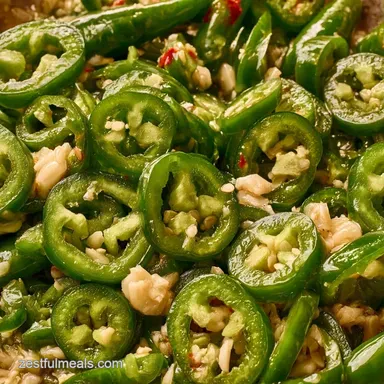
Quick Pickled Serrano Peppers in 25 Minutes
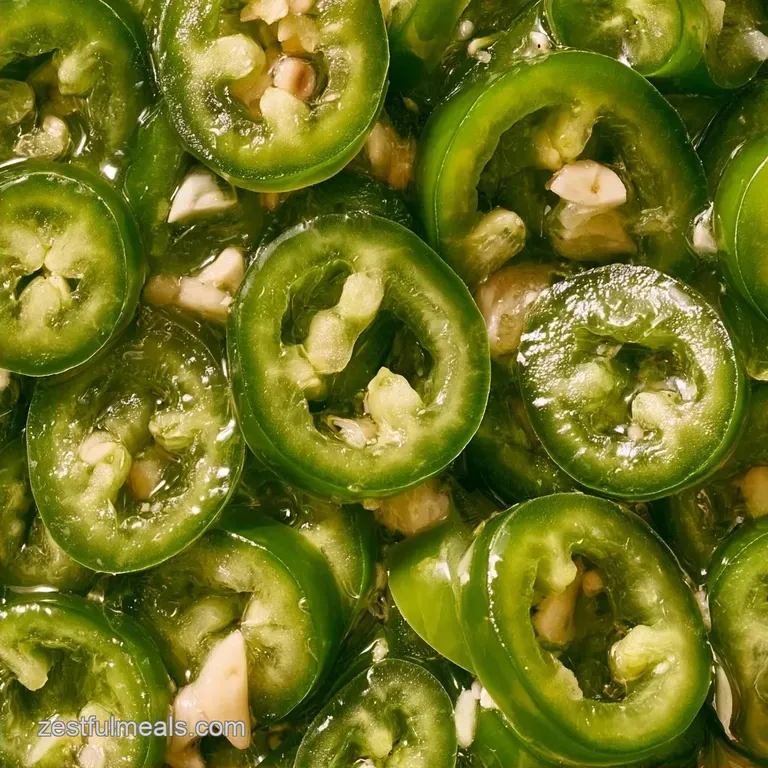
- Time: 15 min active + 24 hrs curing
- Flavor/Texture Hook: Sharp, vinegary snap with a clean heat
- Perfect for: Taco night, burger toppings, or meal prep
- Pickled Serrano Peppers
- How the Crunch Stays
- Getting Your Ingredients Ready
- Gear You'll Need
- Making the Peppers
- Why Most Recipes Get This Wrong
- Avoiding Common Blunders
- Adjusting Your Batch Size
- Keeping Your Peppers Fresh
- Different Flavor Ideas
- Best Ways to Serve
- High in Sodium
- Recipe FAQs
- 📝 Recipe Card
Pickled Serrano Peppers
The aroma of garlic and simmering vinegar always brings me back to the first time I tried to elevate our family taco night. I’ll never forget my brother's reaction to a pepper ring that looked harmless but packed a bright, zesty punch.
It offers a much more complex profile than fresh peppers, which can sometimes feel one-dimensional in their spiciness.
I rely on these Pickled Serrano Peppers for a sharp brightness that balances out heavy meats or rich avocado. You aren't simply canning a vegetable; you're making a condiment that energizes every single ingredient on the plate.
The stovetop part is quick, but the refrigeration stage requires some discipline. While the setup is fast, the 24-hour cure is what allows the brine to truly sink into the pepper skins. Trust me, if you skip the wait, you're essentially just eating raw peppers in vinegar.
How the Crunch Stays
Boiling Brine: Hot liquid creates a pressure difference that pushes salt and acid into the pepper flesh instantly.
Sugar Balance: A small amount of sugar doesn't make them sweet but stops the vinegar from tasting like harsh cleaning fluid.
| Fresh Peppers | Quick Pickled | Impact |
|---|---|---|
| Raw, sharp heat | Tangy, mellowed heat | Better balance |
| Lasts 1 week | Lasts 1 month | Less waste |
| Immediate bite | 24 hour cure | Deeper flavor |
Getting Your Ingredients Ready
I usually buy my serranos in bulk because they're cheaper, but make sure they feel firm. If they're shriveled, the brine won't penetrate evenly, and you'll end up with some mushy rings.
| Ingredient | What It Does | Best Swap |
|---|---|---|
| Serrano Peppers | Provides the heat and base | Jalapeños (milder heat) |
| White Distilled Vinegar | Preserves and adds tang | Apple Cider Vinegar (fruitier) |
| Kosher Salt | Draws out moisture/seasons | Sea Salt (adjust quantity) |
| White Sugar | Balances the acidity | Honey (may cloud the brine) |
For the Pepper Base
- 3/4 lb Serrano peppers, stems removed and sliced into rings Why this? Constant 1/4 inch thickness ensures even pickling
- 3 cloves Garlic, smashed Why this? Smashed cloves release oils better than minced
For the Quick Pickle Brine
- 1/2 cup White distilled vinegar Why this? High acidity for a clean, sharp snap
- 1/2 cup Filtered water Why this? Prevents mineral tastes from tap water
- 1 1/2 tsp Kosher salt Why this? Coarse grains dissolve predictably
- 1 1/2 tsp White granulated sugar Why this? Cuts the sharp edge of the vinegar
For the Aromatics
- 1 tsp Whole black peppercorns
- 1/2 tsp Mustard seeds
Gear You'll Need
No specialized canning equipment is required for this process. Since these are refrigerator pickles, ordinary mason jars are ideal. I suggest 16 oz jars to accommodate the 3/4 lb of peppers without overcrowding them.
A small stainless steel saucepan is the best choice for the brine. Avoid using aluminum pots, as the vinegar can react with the metal and give your Pickled Serrano Peppers a metallic aftertaste. To keep the rings consistent, a sharp chef's knife is the only other essential tool.
Making the Peppers
Let's get the process started. The aim is to move from prepping to bottling while the liquid is still steaming.
- Wash the serrano peppers and slice them into uniform 1/4 inch rings. Note: Keep the seeds for full heat.
- Place the smashed garlic, whole black peppercorns, and mustard seeds evenly in the bottom of clean 16 oz mason jars.
- Pack the sliced peppers tightly into the jars, leaving roughly 1/2 inch of headspace.
- In a small saucepan, combine the white distilled vinegar, filtered water, kosher salt, and white granulated sugar.
- Set the pan over medium high heat and heat until the liquid boils, stirring occasionally until the sugar and salt completely dissolve.
- Carefully pour the hot brine over the peppers, making sure they are entirely submerged.
- Gently tap the jars on the counter to clear any air bubbles, seal the lids, and let them rest at room temperature for 30 minutes.
- Place the jars in the refrigerator to cure for 24 hours before serving.
Chef's Tip: If the heat is too powerful, slice the peppers into thicker 1/2 inch rounds. This restricts the brine penetration and keeps the heat more contained.
Why Most Recipes Get This Wrong
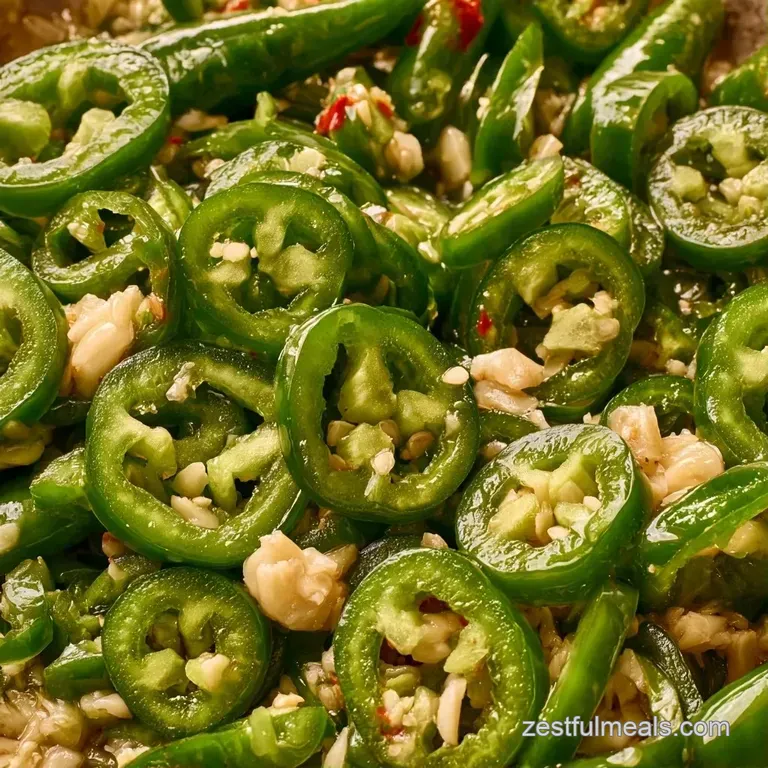
A lot of people try to "cold pickle" by just mixing the brine and pouring it in. That's where they fail. Cold vinegar doesn't break down the pepper's cellular structure, meaning the center of the pepper stays raw and the outside tastes like a vinegar bath.
The boiling method we use here creates a vacuum effect. When the hot liquid hits the cool peppers, it forces the brine into the center of the ring. This is how you get a consistent flavor from the skin to the seed in just one day.
Avoiding Common Blunders
The most frequent issue is texture. If you put the jars in the fridge while the brine is still steaming, you can actually "cook" the peppers, making them soft. This is why the 30 minute room temperature rest is non negotiable.
Another common slip is not packing the peppers tightly enough. If they float to the top and touch the air, they can soften or develop off flavors. Use a spoon to press them down firmly before pouring the liquid.
Preventing Mushy Rings
This usually happens if the salt ratio is off or the peppers weren't fresh. Use kosher salt rather than table salt to avoid a cloudy brine.
Handling Cloudy Brine
Cloudiness often comes from impurities in tap water or using an unrefined vinegar. Using filtered water keeps the liquid crystal clear.
Managing Excessive Heat
If you're worried about the spice, you can rinse the sliced rings in cold water for 30 seconds before packing them.
| Problem | Root Cause | Solution |
|---|---|---|
| Soft texture | Refrigerated too soon | Let cool 30 mins before chilling |
| Floating peppers | Loose packing | Press down with a spoon |
| Dull flavor | Low quality vinegar | Use distilled white vinegar |
Adjusting Your Batch Size
If you're scaling down to a half batch, don't simply halve the time. While the brine boiling process stays the same, you may find it reaches a boil about 20% faster. Use a smaller pot to limit liquid loss.
For larger quantities (2x or 4x), I suggest working with separate jars instead of one giant vessel to ensure the garlic and peppercorns are spread evenly. For a double batch, only increase the salt and sugar to 1.5x, as the vinegar's acidity carries the balance.
Decrease the total liquid by about 10% if the jars are packed very tightly.
| Goal? | Exact Change |
|---|---|
| Extra tang? | Replace 2 tbsp water with vinegar |
| Milder heat? | Remove seeds before slicing |
| Sweeter profile? | Add 1 tsp extra sugar |
Keeping Your Peppers Fresh
Store these in the cooler for up to 2 months. They actually peak around day three, but they stay good long after. I don't recommend freezing these; the ice crystals destroy the cell walls, and you'll end up with a soggy mess once they thaw.
For zero waste, don't toss the pepper stems. I throw mine into a freezer bag and add them to a veggie stock or a homemade roasted serrano sauce to add a bit of extra depth. The leftover brine is also gold use it to marinate chicken or splash it into a potato salad for a zingy kick.
Different Flavor Ideas
Once you've got the basic Pickled Serrano Peppers down, you can play with the aromatics. I love adding a strip of orange peel to the jar for a citrusy note that works great with pork.
If you want a different vibe entirely, try a Asian style version by swapping the sugar for a bit of honey and adding a slice of ginger. For those avoiding sugar, you can leave it out entirely; the result is a more aggressive, savory pickle that's great for keto diets.
You can also make sweet pickled serranos by doubling the sugar. These are a surprising hit on grilled pineapple or as a topping for a sharp cheddar grilled cheese.
Best Ways to Serve
These are the absolute best taco topping because they provide a crisp contrast to soft corn tortillas and fatty carnitas. I also love tossing a few rings onto a burger or slicing them into a bowl of ramen.
If you're serving a crowd, put the peppers in a small ceramic bowl with a bit of the brine. It keeps them looking glossy and prevents them from drying out. They also work as a great garnish for a Bloody Mary, providing both the heat and the acidity needed to balance the tomato juice.
Right then, that's it. Just remember to give them that full day in the fridge. The wait is the hardest part, but the snap of a perfectly cured Pickled Serrano Pepper is worth every minute.
High in Sodium
878 mg 878 mg of sodium per serving (38% 38% of daily value)
The American Heart Association recommends a daily limit of 2,300 mg of sodium to reduce the risk of high blood pressure and heart disease.
Tips to Reduce Sodium
-
Reduce Kosher Salt-25%
Decrease the amount of Kosher salt by half or use a low-sodium salt alternative to significantly lower the overall sodium content.
-
Use Salt Substitutes-20%
Replace a portion of the Kosher salt with a potassium based salt substitute to maintain the savory taste while cutting sodium.
-
Enhance with Acid-10%
Increase the amount of white distilled vinegar or add a squeeze of fresh lime juice to mimic the sharpness of salt.
-
Boost Aromatic Spices
Add more black peppercorns or a pinch of crushed red pepper flakes to add depth and heat without increasing sodium levels.
Recipe FAQs
What can I do with an abundance of serrano peppers?
Pickle them to extend their shelf life or blend them into condiments.
Tip: If you prefer a creamy heat, try making an avocado based sauce.
Are serrano peppers good for pickling?
They are ideal because their firm walls maintain a crisp snap even after soaking in brine.
Tip: Slice them into 1/4 inch rings for the most consistent texture.
Which method is best for preserving these peppers?
Quick pickling in a boiling brine of vinegar and water is the most efficient for home cooks.
Tip: Let them cure for a full 24 hours in the fridge to ensure the flavor penetrates the skins.
How to create a simple pickled serrano?
Boil white distilled vinegar, filtered water, salt, and sugar, then pour the liquid over sliced peppers and garlic in a jar.
Tip: Tap the jars on the counter to remove air bubbles before sealing.
Is it true that you must ferment peppers for weeks to get a good flavor?
No, this is a common misconception. A boiling brine forces acidity into the pepper walls quickly for a punchy result in one day.
Tip: Use filtered water to prevent impurities from clouding your brine.
Can you cook pickled chilli peppers?
You can add them to sautéed dishes or stews, though they are best enjoyed cold as a topping.
Tip: Add them at the very end of cooking to preserve their bright, vinegary tang.
Pickled Serrano Peppers 3