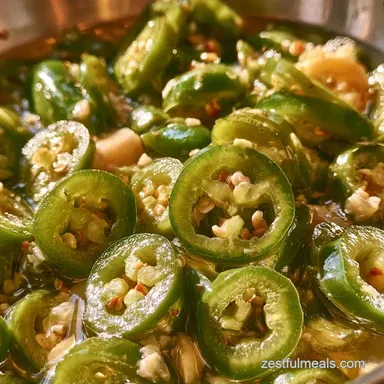
Spicy Pickled Serrano Peppers
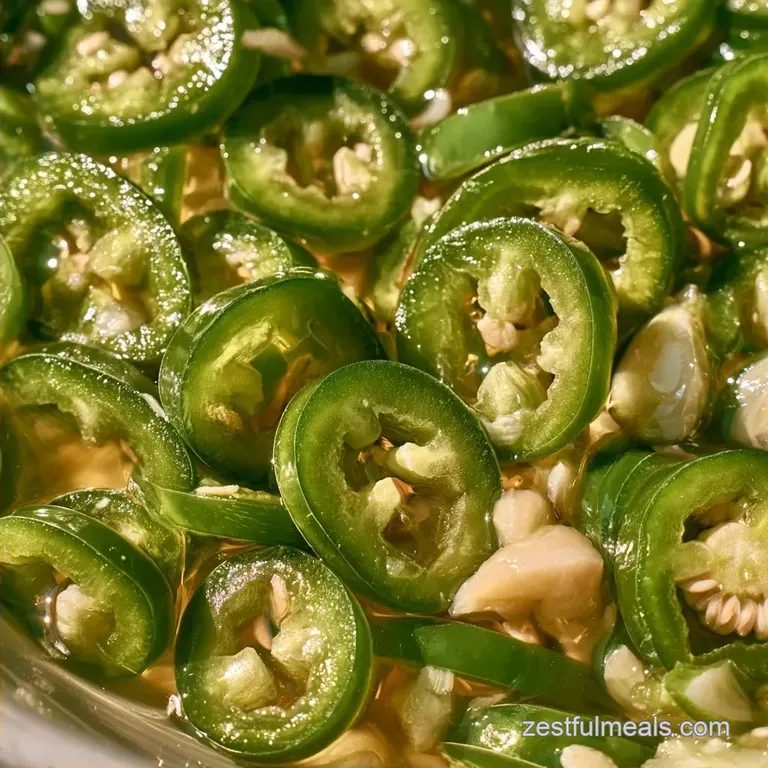
- Time: 10 mins hands-on + 30 mins cooling
- Taste Profile: Zesty, crisp, and vibrant
- Perfect for: low-cost taco parties and weekly meal planning
- Easy Pickled Serrano Peppers Specs
- How the Crunch Stays Put
- The Grocery List for Your Jar
- What You'll Need
- Basic Tools to Get it Done
- The Path from Prep to Plate
- The Trick Behind the Texture
- Fixing Common Brine Blunders
- Adjusting the Batch Size
- Debunking Pickling Myths
- Keeping Your Peppers Fresh
- Swaps and Flavor Twists
- Great Ways to Use These
- Critical in Sodium
- Recipe FAQs
- 📝 Recipe Card
Have you noticed that pre-packaged pickled peppers often turn out soggy and taste mostly of salt? I once assumed that was the standard. I would grab jars from the store, only to realize the peppers had lost their characteristic bite.
Everything changed when I started prepping them myself. There is something about the rhythmic chop of the knife and the pungent scent of white vinegar that makes the process rewarding. It is an uncomplicated method that yields a condiment with a satisfying pop.
You will see that these homemade Pickled Serrano Peppers cost far less than those high end boutique versions. They are a hit with families since you can adjust the spice level. Moreover, they keep well in the refrigerator for several weeks, making them a smart, economical addition to your pantry.
Easy Pickled Serrano Peppers Specs
Here is the breakdown. This recipe fills one 16 oz jar, which typically lasts a family of four about two weeks. While the active prep is quick, you have to be patient with the steeping process. If you eat them immediately after pouring the brine, you'll miss out on that deep garlic infusion.
Total time comes to 45 minutes, though the majority of that is just chilling time in the refrigerator. While you can get away with 30 minutes if you're in a rush, they really hit their stride after an entire night. Trust me, the extra patience ensures a much better snap.
Since we're keeping this budget friendly, we're relying on basic pantry staples. You likely already have the sugar and vinegar on hand. The only real "investments" here are the peppers and a few cloves of garlic.
How the Crunch Stays Put
I used to boil my vegetables directly in the liquid, but that's a recipe for mushy peppers. Instead, I rely on a method I call acid shock.
The Hot Pour: By pouring hot brine over raw peppers, the vinegar penetrates the skin rapidly without cooking the interior, ensuring the center stays crisp.
Sugar Salt Balance: Salt facilitates brine absorption by reducing the water content in the pepper cells. Sugar doesn't just provide sweetness; it balances the sharp bite of the distilled vinegar.
| Goal | What to change |
|---|---|
| Less Heat | Remove seeds and pith |
| Sweeter Profile | Add 1 tsp extra sugar |
| More Tang | Increase vinegar by 2 tbsp |
The Grocery List for Your Jar
When picking your peppers, look for the ones that feel firm and have a glossy skin. If they're already shriveling, they won't have that great crunch we're after. For the garlic, just use the standard cloves from a bulb, no need for the pre peeled stuff.
What You'll Need
| Ingredient | Role | If You Don't Have It |
|---|---|---|
| Serrano peppers | The heat source | Jalapeños (milder) |
| Distilled white vinegar | Acid and preservation | Apple cider vinegar (fruitier) |
| Kosher salt | Flavor and texture | Sea salt |
| Granulated sugar | Balances the acid | Honey or maple syrup |
- 1 cup (150g) Serrano peppers, thinly sliced into rounds Why this? Fast pickling due to surface area
- 3 cloves (15g) Garlic, smashed and peeled Why this? Adds a savory baseline
- 1 cup (240ml) Distilled white vinegar Why this? Clean, sharp acidity
- ½ cup (120ml) Water Why this? Tones down the vinegar punch
- 1 tbsp (18g) Kosher salt Why this? Better dissolution than table salt
- 1 tbsp (12g) Granulated sugar Why this? Cuts the sharp vinegar bite
- ½ tsp (1g) Whole black peppercorns Why this? Subtle earthy warmth
Basic Tools to Get it Done
You don't need a fancy setup for this. A standard 16 oz glass mason jar is the way to go. Glass is non reactive, which is important because the vinegar would eat away at plastic or aluminum.
For the brine, any small saucepan will do. I usually use a tiny one that's just big enough for the liquids. A sharp chef's knife is essential for those thin, uniform rounds. If the slices are uneven, some will be mushy while others stay raw.
Finally, get some gloves. Handling serranos without protection is a mistake I made once, and I spent the next hour wondering why my fingertips were burning.
The Path from Prep to Plate
Let's get started. The method is straightforward: prepare your jar, warm the brine, and then let the refrigerator do the rest.
- Wear nitrile or latex gloves when handling the peppers to avoid skin irritation from the capsaicin.
- Slice the serrano peppers into consistent, thin rounds. Note: To reduce the heat, remove the seeds and white pith before slicing.
- Place the smashed garlic cloves at the base of a 16 oz glass mason jar, then pack the pepper slices tightly on top.
- Stir together the distilled white vinegar, water, kosher salt, and granulated sugar in a small saucepan.
- Heat this over medium high heat, stirring constantly until the sugar and salt are fully dissolved. This usually takes about 2 to 3 minutes.
- Take the brine off the heat immediately. Note: Avoid letting it reach a rolling boil to keep the peppers from softening.
- Carefully pour the hot liquid over the peppers, making sure they are completely covered.
- Let the jar sit at room temperature for 10 minutes before tightening the lid.
- Chill in the refrigerator for at least 30 minutes to let the flavors develop.
Chef's Note: To get rid of any air bubbles trapped at the top, gently tap the side of the jar with a spoon. This ensures every slice of your Pickled Serrano Peppers is fully immersed.
The Trick Behind the Texture
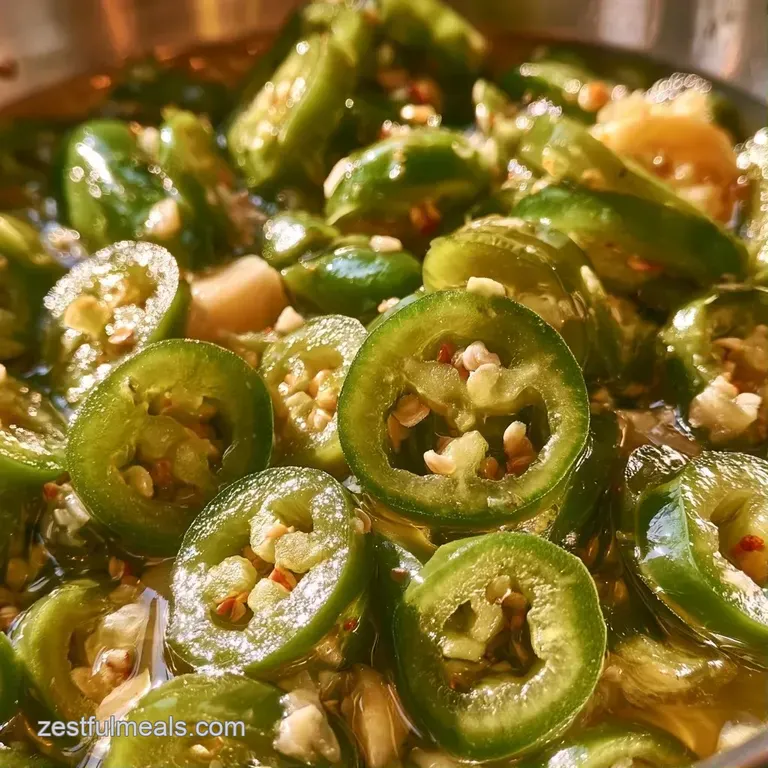
The real magic happens during those first few minutes after the pour. Because the brine is hot, it creates a pressure difference that forces the vinegar into the pepper's skin. This is why the color stays vibrant instead of turning that dull, olive green you see in cheap store brands.
It's a balance of heat and acidity. If the brine were boiling, you'd be poaching the peppers, which destroys the cell walls. By stopping just before the boil, we keep the structural integrity of the vegetable.
Since we're focusing on a family friendly budget, this method is a winner. You're using simple chemistry to create a high end condiment without needing a pressure canner or expensive additives.
Fixing Common Brine Blunders
Even with a great recipe, a few hiccups can happen. If you're troubleshooting your Pickled Serrano Peppers, check these tips.
The peppers are too soft
This typically occurs if the brine is still boiling when poured into the jars, which essentially cooks the peppers. To prevent this, take the pan off the heat as soon as the sugar has dissolved. Aim for a hot liquid rather than one that is vigorously boiling.
The liquid is cloudy
A cloudy appearance is usually just a natural reaction between vinegar and garlic, or it may be caused by minerals in your tap water. This won't impact the flavor or safety of the pickles. For a clearer result next time, try using distilled water.
The flavor is too spicy
If the peppers are too hot for some guests, there's no need to throw them out. Simply rinse a few slices under cold water before serving to remove some of the surface capsaicin. In the future, try removing more of the seeds for a milder heat level.
Adjusting the Batch Size
If you've got a huge harvest of peppers from the garden, you might want to scale up. For a double batch, don't just double everything blindly.
When scaling up to 2x or 4x, increase the salt and sugar to 1.5x first, then taste. Often, full doubling of salt can make the brine taste metallic. Keep the liquids at a 2x ratio, but work in smaller batches if your saucepan is too small to maintain a consistent temperature.
If you only have a few peppers, you can scale down to a half batch. Use a smaller 8 oz jar and reduce the brine liquids by half. Be careful with the garlic, as one large clove is usually enough for a tiny jar.
Debunking Pickling Myths
There's a lot of old school advice that just doesn't apply to fridge pickles.
One big myth is that you have to boil the peppers to make them safe. That's only true for shelf stable canning. For fridge style Pickled Serrano Peppers, the acidity of the vinegar and the cold temperature of the fridge do the work. Boiling them only ruins the texture.
Another misconception is that you need specialized "pickling salt." While pickling salt is pure, kosher salt works just as well for home cooks. The main difference is just the grain size, which is why we stir until it's fully dissolved.
Keeping Your Peppers Fresh
Store these in the fridge. They'll stay snappy and bright for about 1 month. Make sure the lid is tight to keep the vinegar smell from drifting into your milk or butter.
If you find you have leftover brine after you've eaten the peppers, don't pour it down the drain. That liquid is liquid gold. Use it as a base for a spicy vinaigrette or splash a bit into a pot of beans for an instant flavor boost.
Regarding zero waste, the stems of the serranos can be tossed into a freezer bag with other veggie scraps. Once the bag is full, boil them all together to make a basic vegetable stock for your weeknight soups.
Swaps and Flavor Twists
Feel free to customize your Pickled Serrano Peppers based on the ingredients you have on hand.
To give them a Mexican inspired flavor, toss in a pinch of dried oregano or a carrot slice. The carrot soaks up the spiciness and makes for a tasty treat. For a quicker fix to satisfy a sudden craving, check out my Pickled Serrano Peppers recipe, which features a shorter soak time.
Swap white vinegar for apple cider vinegar if you're looking for a softer, sweeter taste. Its gentler acidity and fruity undertones complement pork perfectly. You can also reduce the salt by half for a low-sodium option, though keep in mind that the peppers might lose some crunchiness over time.
Great Ways to Use These
These go far beyond just tacos. I love adding a few slices to a homemade burger to balance out the richness of the beef. They're also fantastic on a grilled cheese sandwich or chopped into potato salad for a surprising pop of flavor.
For a complete meal, serve these with some slow cooked carnitas. The acidity of the Pickled Serrano Peppers provides a perfect counterpoint to the fatty pork. If you prefer something more integrated, you can blend these into a sauce. For a spicy, spreadable option, take a look at this Roasted Serrano Hot Sauce.
Having a jar of these on hand makes it easy to spice up almost any dish. It is the simplest way to make a basic weeknight meal feel gourmet without spending extra money.
Ultimately, homemade Pickled Serrano Peppers are all about contrast. You get the sharp tang of vinegar, the warmth of garlic, and a clean, crisp heat. It's a budget friendly win that enhances any meal.
Just remember to wear gloves and keep the brine below a boil, and you'll have a jar of Pickled Serrano Peppers that beats any store-bought version.
Critical in Sodium
1161 mg 1,161 mg of sodium per serving (50% 50% of daily value)
The American Heart Association recommends a daily sodium limit of 2,300 mg, with an ideal limit of 1,500 mg for most adults to reduce cardiovascular risk.
Tips to Reduce Sodium
-
Reduce Kosher Salt-25%
The Kosher salt is the primary source of sodium; reduce the amount by half or more to significantly lower the sodium content.
-
Use Salt Substitutes-25%
Substitute the salt with a potassium based salt alternative to maintain the savory profile with less sodium.
-
Enhance Acidity-10%
Increase the distilled white vinegar slightly or add a squeeze of lime juice to provide a sharp flavor that mimics the effect of salt.
-
Add Pungent Spices
Incorporate black pepper or crushed red pepper flakes to add complexity and heat without increasing sodium levels.
Recipe FAQs
Are serrano peppers good for pickling?
Yes, they are excellent for pickling. Their thinner walls absorb the vinegar brine faster than larger peppers.
Do pickled serranos have more heat than pickled jalapeños?
Yes, serranos are generally hotter than jalapeños. You'll notice a more intense, sharp sting that lingers longer on the palate.
What do pickled serrano peppers taste like?
These taste like a bright, tangy version of a fresh serrano. The vinegar cuts through the heat, leaving a zesty flavor with a hint of garlic.
How to pickle serrano peppers quickly?
Slice the peppers and pack them into a jar with smashed garlic. Pour over a hot mixture of vinegar, water, salt, and sugar, then chill for 30 minutes.
Is it true that you must boil the brine for a long time to ensure they are safe?
Actually, no. You only need to heat the brine until the salt and sugar dissolve, as boiling it too long can make the peppers mushy.
Which method works best for turning extra fresh peppers into a sauce?
Puree fresh peppers with vinegar and salt until completely smooth. If you like this approach to heat balance, you'll also love this serrano hot sauce.
Pickled Serrano Peppers 9