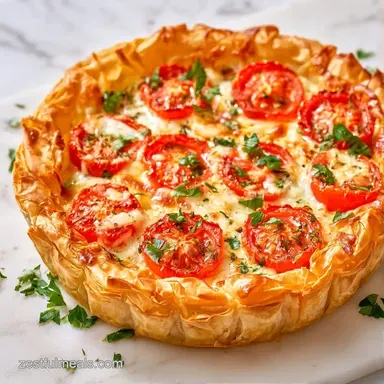
Crispy Tomato Cheese Phyllo Tart
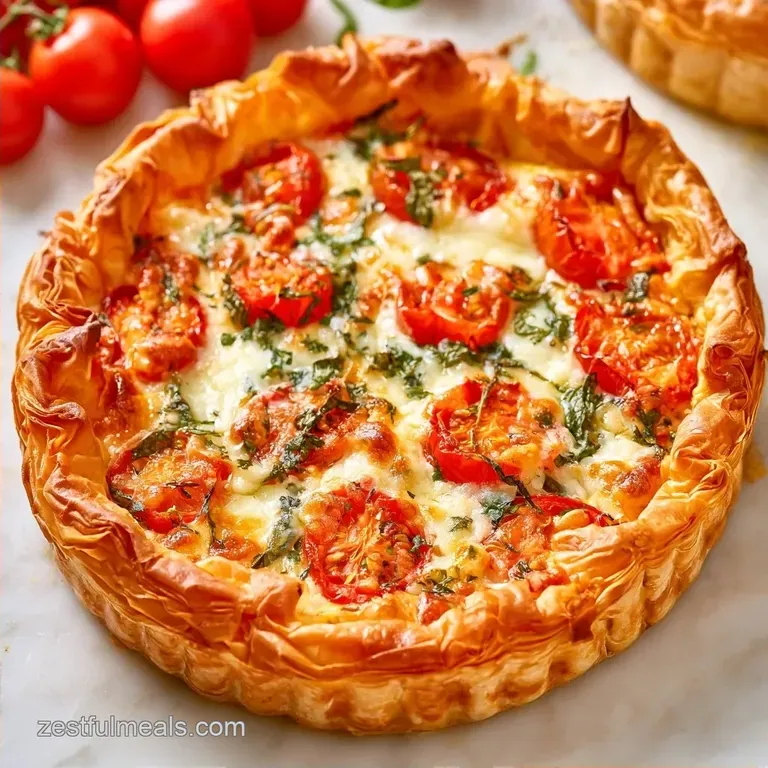
- Time: 15 min active + 30 min bake
- Flavor/Texture Hook: Crispy, mahogany edges with a tangy, salty center
- Perfect for: Family brunch or a budget-friendly appetizer for guests
Tomato Cheese Phyllo Tart
That sound when you first slice into a crisp phyllo crust is everything. It's that distinct, shattering crack that tells you the bake went right. I used to struggle with this dish, though. My first few tries ended up with a "soggy bottom" that felt more like a wet sponge than a tart.
It happened because I just plopped the tomatoes right on the dough.
The fix was actually pretty simple. I realized I needed a moisture barrier between the juicy vegetables and the fragile pastry. By creating a dense, creamy cheese foundation, the juices stay trapped in the topping and don't seep down into the layers.
This Tomato Cheese Phyllo Tart is now a go to in my house. It's great for weeknights because it uses simple ingredients that don't break the bank, and even my kids love it. It looks fancy enough for a party, but honestly, it's just a few sheets of dough and some cheese.
Why the Crust Stays Crisp
- The Cheese Buffer: The mix of ricotta and mozzarella acts as a shield. It stops the water from the cherry tomatoes from hitting the pastry, which is how we avoid that gummy texture.
- Butter Saturation: Brushing butter between every single layer creates tiny steam pockets during baking. These pockets lift the dough, making it light and flaky instead of a solid block.
- High Heat: Baking at 375°F (190°C) ensures the edges set quickly. This locks in the structure before the filling can make the dough heavy.
| Method | Time | Texture | Best For |
|---|---|---|---|
| Oven Bake | 45 mins | Shattering & Airy | Family meals, large crowds |
| Stovetop (Pan) | 20 mins | Fried & Dense | Single portions, quick snacks |
If you're feeling ambitious and want to skip the store-bought stuff, you can try making your own homemade phyllo dough, but for a Tuesday night, the frozen package is a lifesaver.
Your Shopping List
| Component | Purpose | Substitute Notes |
|---|---|---|
| Phyllo Dough | The crunchy foundation | Puff pastry is an option, though it's richer and denser |
| Ricotta Cheese | A creamy moisture shield | Drained cottage cheese provides a grainier feel |
| Egg | Binds the filling | Use a flax egg for vegan versions, but expect less lift |
| Cherry Tomatoes | Bright, acidic contrast | Grape tomatoes or patted dry diced Roma |
Full Ingredient List
- 1 package (450g) Phyllo Dough, thawed Why this? These thin sheets ensure maximum crispiness.
- 1/2 cup (115g) Unsalted Butter, melted Why this? Keeps the pastry layers separated.
- 1 tbsp (15ml) Extra Virgin Olive Oil Why this? Imparts a fruity quality to the base.
- 1 cup (250g) Ricotta Cheese, drained Why this? Less moisture means a less soggy crust.
- 1 cup (115g) Shredded Mozzarella Cheese Why this? For that classic melted stretch.
- 1/2 cup (60g) Crumbled Feta Cheese Why this? Adds a bold, salty tang.
- 1 egg (50g), lightly beaten Why this? Helps the cheese mixture set while baking.
- 1 tsp (5g) Dried Oregano Why this? For a traditional Mediterranean fragrance.
- 1/2 tsp (3g) Garlic Powder Why this? Distributes savory flavor consistently.
- 2 cups (300g) Cherry Tomatoes, halved Why this? Provides bursts of color and juice.
- 1 tbsp (15ml) Fresh Basil, chiffonade Why this? Freshness that balances the richness.
- 1/2 tsp (3g) Sea Salt Why this? Heightens the tomatoes' natural sweetness.
- 1/4 tsp (1g) Black Pepper Why this? Adds a touch of spice.
- 1 tsp (5ml) Lemon Zest Why this? Lifts the heavy notes of the cheese.
Essential Recipe Specs
- Prep time: 15 minutes
- Cook time: 30 minutes
- Total time: 45 minutes
- Yield: 8 slices
- Oven Temp: 375°F (190°C)
Tools for the Job
Standard kitchen gear is perfectly fine for this recipe; I generally rely on the basics. A large rimmed baking sheet is essential to stop butter from leaking and smoking in the oven. A pastry brush is also helpful; however, you can use a paper towel if necessary, even if it's a bit more cumbersome.
A medium mixing bowl works best for the cheese. I prefer a silicone spatula for spreading the mixture to ensure a smooth, even coat without damaging the delicate dough. For the tomatoes, a sharp paring knife is the fastest option.
Step by step Process
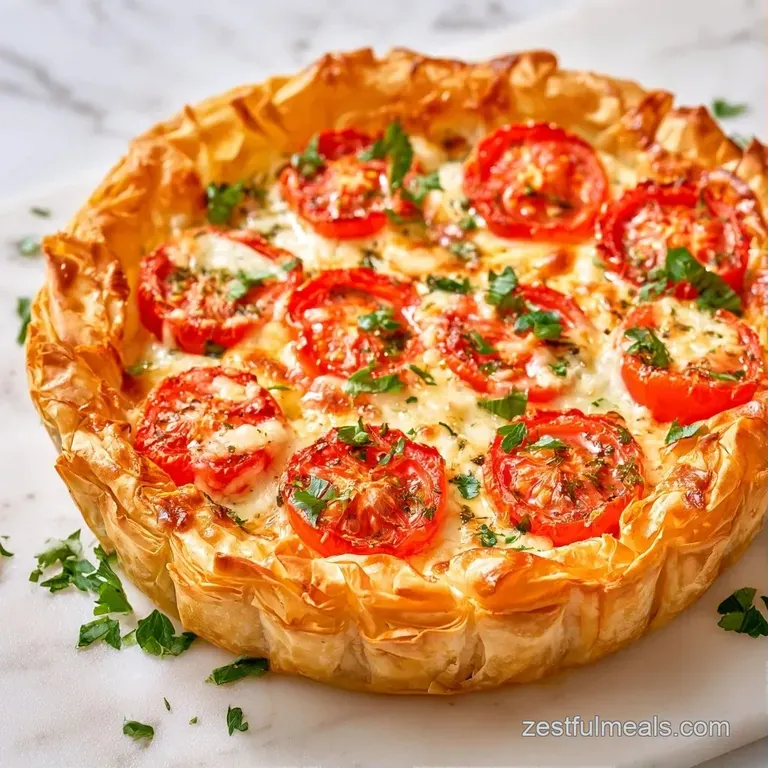
Preparing the Pastry Base
- Set your oven to 375°F (190°C) and place parchment paper on a large rimmed baking sheet. Note: This stops the dough from sticking to the metal.
- Lay one sheet of phyllo dough on the parchment, brushing the entire surface liberally with melted butter. Continue stacking the remaining sheets, applying butter between every layer.
- Fold the edges of the phyllo inward by roughly 1 inch (2.5cm) to form a raised rim. Note: This prevents the cheese filling from leaking over the sides.
Building the Cheese Foundation
- In a mixing bowl, stir together the ricotta, mozzarella, beaten egg, garlic powder, and oregano until the mixture is velvety and cohesive.
- Spread the cheese mixture evenly inside the pastry border, leaving a thin margin of phyllo exposed. Note: The exposed edges will achieve a better crisp.
- Scatter the crumbled feta evenly across the top of the ricotta.
Arranging the Tomato Toppings
- Press the cherry tomato halves into the cheese, ensuring they are cut side up. Note: This allows juices to evaporate instead of soaking into the base.
- Season the tomatoes with lemon zest, salt, and pepper.
Baking to Golden Perfection
- Bake for 25–30 minutes until the pastry edges are a deep mahogany brown.
Chef's Note: If the perimeter browns too rapidly while the middle remains pale, shield the edges with a piece of foil to prevent burning while the center finishes.
Fixing Common Pitfalls
Managing phyllo dough can feel like handling wet tissue paper. It tears easily, and it dries out in seconds. If your dough starts to crack, don't panic. Just press a little extra butter into the crack with your finger. It will disappear once it hits the oven.
The most common issue is the "soggy center." This usually happens if the ricotta wasn't drained properly. If you see liquid pooling in your ricotta container, strain it through a fine mesh sieve for 10 minutes before mixing.
Another problem is the tomatoes sliding around. This happens when the cheese mixture is too thin. Ensure you've added the egg and stirred it well to create a stable base that holds the toppings in place.
Managing the Bake
| Problem | Root Cause | Solution |
|---|---|---|
| Soggy Bottom | Too much tomato juice or wet ricotta | Pat tomatoes dry; drain ricotta for 10 mins |
| Burnt Edges | Oven rack too high or too long in oven | Move rack to center; cover edges with foil |
| Tearing Dough | Handling too roughly or dough is too dry | Brush butter immediately; use a gentle touch |
Adjusting the Batch Size
Adjusting for Fewer Servings
If you're only cooking for two, you can simply halve the recipe. Use a smaller rectangular baking dish (like an 8x8) to ensure the tart doesn't turn out too thin. Because a smaller mass bakes faster, reduce the cooking time by about 20%. To get the egg right, whisk one whole egg in a cup and use exactly half.
Scaling Up for Guests
When doubling the recipe for a crowd, I suggest preparing separate batches rather than one enormous tart. A massive tart often stays undercooked in the center while the edges burn.
If you must bake a double batch at once, lower the oven temperature to 350°F (175°C) and extend the bake time by 10-15 minutes. To prevent over seasoning, keep the salt and spices at 1.5x the original measurements.
| Goal | What to change |
|---|---|
| Extra Crunch | Add 2 tbsp more butter |
| More Tang | Increase feta by 1/4 cup |
| Lower Salt | Replace feta with goat cheese |
Common Dough Myths
Some suggest that phyllo dough must always be covered with a damp towel. Although this is useful, you can skip it if you move fast. The primary objective is simply preventing the air from drying the sheets out.
You don't actually need a professional pastry brush for applying the butter. Any soft brush or even a folded piece of parchment paper will do the trick. What matters most is the butter, not the specific tool you use to spread it.
Storage & Reheating
Storage Tips
Place leftovers in an airtight container and keep them chilled for no more than 48 hours. Keep in mind that the crust may lose some of its crispness as it absorbs moisture from the cheese.
Getting the Crunch Back
Avoid the microwave, as it will turn your tart rubbery. Instead, place a slice on a baking tray and heat in a 350°F (175°C) oven for 5-8 minutes to restore that shattering texture.
Zero Waste Tips
Don't toss any remaining phyllo sheets. Simply brush them with butter, sprinkle with cinnamon and sugar, and bake for 5 minutes for a quick snack. You can also store thawed dough in the freezer for about a week, although using it fresh is ideal.
Perfect Complements
Since this tart is quite rich and salty, it benefits from a refreshing accompaniment. A zesty arugula salad with a lemon dressing is an excellent choice, as the peppery greens balance the creamy mozzarella and feta.
When adding this to a broader selection of hors d'oeuvres, it fits right in with other savory options. I frequently pair it with a salami and cheese platter to build a full Mediterranean style board. For beverages, a crisp white wine or sparkling water with a squeeze of lime keeps the palate refreshed.
Changing Up Ingredients
Going Plant Based
You can make a vegan version by swapping the butter for melted coconut oil and using a cashew based ricotta. Replace the mozzarella with a vegan shreds alternative and use a flax egg. Note that the crust will be slightly less airy, but still very tasty.
Adding a Protein Punch
For a heartier meal, add some thinly sliced prosciutto or cooked spinach to the cheese mixture. If you use spinach, make sure to squeeze out every drop of water using a kitchen towel, otherwise, you'll end up with that soggy bottom we're trying to avoid.
Swapping the Cheese Profile
If you find feta too strong, try goat cheese for a creamier, more subtle tang. For a budget friendly version, you can use a mix of cream cheese and mozzarella, though the flavor will be milder.
Gluten-free Alternatives
Finding gluten-free phyllo is tough, but some specialty stores carry rice based versions. If you can't find it, a thin gluten-free pizza crust can work as a base, though you'll lose the layered effect. Just be sure to brush it with olive oil to help it crisp up.
Recipe FAQs
What exactly is phyllo pastry?
It is a paper thin unleavened dough used in Mediterranean baking. You layer multiple sheets with butter to get a flaky, crisp texture.
Where do I find phyllo dough in the store?
Look in the freezer section. It is usually located near the frozen puff pastry or in the international foods aisle.
Is it true that puff pastry is a direct replacement for phyllo?
Not true. Puff pastry is much thicker and richer, which would change the delicate, flaky structure of this tart.
How to prevent the phyllo sheets from drying out?
Keep unused sheets covered with a damp kitchen towel. This stops the thin dough from cracking while you brush on the melted butter.
Which oven temperature is best for this tart?
Bake the tart at 375°F (190°C). This specific heat ensures the pastry reaches a deep mahogany brown without burning the cheese.
Why did my tart base turn out soggy?
Too much moisture from the ricotta or tomatoes often causes this. Ensure your ricotta is well drained before mixing it with the other cheeses.
Can the feta be swapped for more mozzarella?
You can increase the mozzarella, but you will lose the salty tang that feta provides. If you enjoyed balancing these bold flavors here, see how the same principle works in our Butter Chicken for a creamy, savory finish.
What is the best way to reheat leftover slices?
Place slices on a baking sheet in a 350°F oven for 5 to 10 minutes. Avoid the microwave to keep the pastry from becoming soft.
Tomato Cheese Phyllo Tart